
Contents:
Key Takeaways:
1. Pipeline only the roles that score high on both business impact and scarcity. Trying to pipeline everything dilutes recruiter time until nothing gets nurtured. For priority roles, map where the talent sits (employers, cities, universities) and how many competitors are hiring from the same pool, since 400 qualified people shared with six aggressive competitors needs a different plan than 4,000. Assign an owner and a contact cadence, and if a pipeline hasn’t produced a hire in a year, either the forecast was wrong or the nurturing was ineffective.
2. Test external feasibility before committing to “buy.” Workforce planning runs from business plans to capability needs, current supply, gaps, and a sourcing route (build, buy, borrow, or automate). The step skipped most often, and the one that causes the most failed plans, is checking whether the talent exists in your target locations at a cost the plan supports. Internal mobility belongs in the TA strategy too, since promoting from within lowers recruitment costs and supports retention.
3. Build the budget bottom-up and admit the J-curve. Rolling last year’s number forward locks in last year’s mistakes. Start from forecast hiring volume by role family, apply historical cost-per-hire, and adjust for market difficulty. When asking for more money, quantify the cost of vacancy, set out baseline performance, expected impact, and the risk of not investing. Shifting spend from agencies to in-house sourcing and technology often costs more in year one, and finance leaders trust plans that say so over plans promising immediate savings.
—------------------------------------------
Beyond Recruiting: The Strategic Role of Talent Acquisition
Finding the right person for a vacancy is only one part of building a strong workforce. Organizations also need to anticipate future skills gaps, understand where talent is available and make hiring decisions that support long-term business goals.
That requires a shift from reactive recruitment to strategic talent acquisition. Internal recruitment data can show what's happening in the hiring process, but external labor market intelligence adds the context needed to understand talent availability, competition for skills and salary expectations.
This guide explores how to build a more strategic, data-driven talent acquisition function, from employer branding and proactive sourcing to workforce planning, performance measurement and budgeting.
Build Your Employer Brand to Attract Top Talent
Your Employer Value Proposition (EVP) is the deal you offer: what an employee gets in exchange for their time, skills, and commitment. Pay and benefits are part of it, along with the work itself, growth prospects, flexibility, and the people they'll work with. Employer branding is how you communicate that deal to the market.
Most EVPs fail because they are written by committee and say nothing distinctive. "New culture, great people, growth opportunities" could describe any company. Candidates ignore it.
A better process would be:
1. Interview the people you want more of. Talk to high performers who joined in the last two years. Ask why they accepted, what nearly stopped them, and what has surprised them since. Their answers describe your real company culture, which may differ from the one in the values deck.
2. Find the gap between promise and reality. Compare exit interview themes and employee survey data against what your careers site claims. Any claim that current staff would dispute will hurt you on review sites.
3. Segment by talent population. A data scientist in Bangalore and a field sales rep in Texas weigh different things. Build one core EVP with segment-specific messaging for your critical skill families.
4. Test against competitors. Pull competitor job postings and careers content for the same roles in the same markets. If your messaging is indistinguishable, rewrite it.
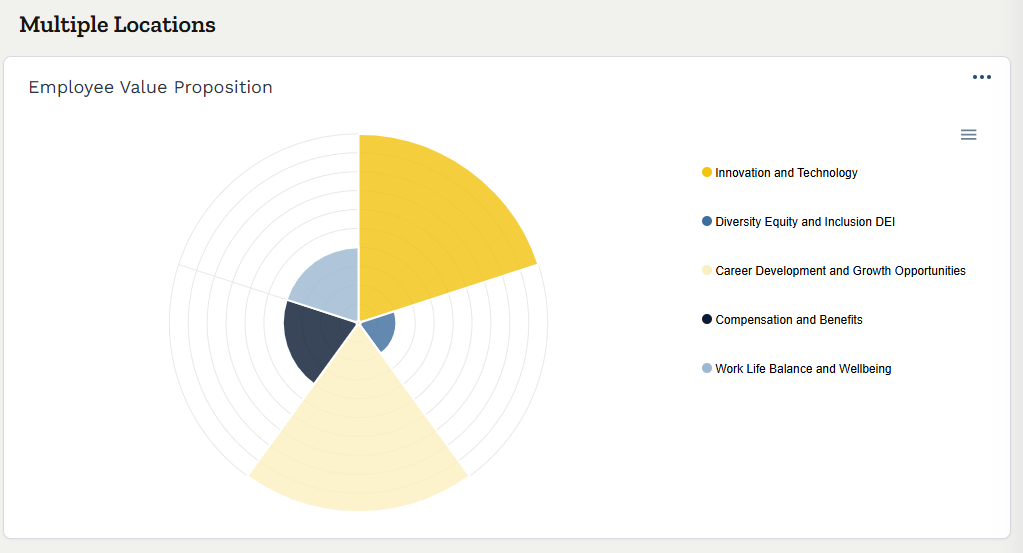
Image shows the EVP functionality within Horsefly
Build a Talent Pipeline Through Proactive Sourcing
Reactive sourcing starts when a requisition opens. For commodity roles that's fine. For niche roles (senior ML engineers, specialized regulatory experts, and bilingual clinical researchers), it guarantees long vacancies and premium agency fees.
Proactive sourcing starts with knowing which roles are worth pipelining. We recommend scoring roles on two axes: business impact if vacant and external scarcity. Only roles that rank high on both justify ongoing pipeline investment. Trying to pipeline everything dilutes recruiter time until nothing gets nurtured properly.
For those priority roles:
-
Talent mapping. Identify where the relevant talent sits: which employers, which cities, which universities. Map the size of the pool and how many competitors are hiring from it. A pool of 400 qualified people shared with six aggressive competitors calls for a different plan than a pool of 4,000.
-
Alumni networks. Former employees who left in good standing already know your systems and culture. Boomerang hires tend to ramp faster, and alumni refer people they trust.
-
Industry events and communities. Conferences, open-source projects, and professional associations put you in front of passive candidates in a setting where they're receptive.
-
Talent intelligence platforms. This is where external data does the heavy lifting. Through our Horsefly Analytics platform, we help TA teams see global talent supply and demand by skill and location, so mapping is based on market data rather than guesswork.
Remember, a pipeline needs maintenance. Assign ownership, set a contact cadence (quarterly touchpoints with useful content, not "checking in" emails), and track conversion from pipeline to hire. If a pipeline hasn't produced a hire in a year, either the role forecast was wrong or the nurturing was ineffective.
Design a Candidate Experience That Converts
Consider a common scenario: a senior candidate completes four interview rounds over five weeks, hears nothing for ten days, then gets a templated rejection. They tell their network. Some of that network are your customers.
Candidate experience has measurable consequences. It shows up in your offer acceptance rate, in referral volume, and in review site ratings that future candidates read before applying.
Map the journey and set standards for each touchpoint:
Application
Remove every field your ATS can parse from a resume. Time your own application process on a mobile phone. If it takes more than a few minutes for an experienced candidate, you are losing people before they start.
Communication
Set a service level, such as a status update within five business days at every stage, and report on adherence. Silence does more damage than bad news.
Interviews and Candidate Assessment
Brief interviewers in advance on what each round is assessing so candidates aren't asked the same questions three times. Use structured interviews with defined scoring criteria, which improves both experience and predictive accuracy.
Decision and Feedback
Give finalists specific feedback. Rejected silver-medalists are your best future pipeline, but only if they leave with respect for the process.
Measure it. Send short surveys to all candidates (hired and rejected) at defined stages, and break results down by hiring manager. A small number of managers usually account for a large share of poor experiences, and that's where coaching pays off fastest.
Use Data and AI to Strengthen Talent Acquisition and Recruitment
The Applicant Tracking System (ATS) is a system of record. It tracks requisitions and candidates through a workflow. On its own, it won't build pipelines or tell you anything about the external market.
A functional enterprise stack has four layers:
1. ATS for workflow, compliance records, and hiring manager collaboration.
2. Candidate Relationship Management (CRM) for nurturing passive candidates and pipelines before a requisition exists.
3. AI-powered sourcing and screening tools for identifying passive talent and handling high-volume screening tasks.
4. People analytics and talent intelligence for turning internal and external data into decisions: where to hire, what to pay, how long a search will take.
Start by getting your data in order before investing in new tools. Inconsistent job titles, locations and source codes across regions will undermine the reliability of any analytics platform. Standardize these first.
Be selective about AI automation. Automating interview scheduling and initial screening for high-volume roles can free up valuable recruiter time. However, fully automated candidate ranking for senior roles carries bias and compliance risks (discussed below) and can produce shortlists that hiring managers don't trust.
Predictive analytics can add further value by helping teams forecast time-to-fill for specific roles and locations, and identify which sources are most likely to deliver hires who stay. This gives TA leaders a stronger basis for setting realistic expectations before a search begins. Reliable forecasts also depend on external labor market data. That's why Horsefly Analytics focuses on global talent intelligence, helping organizations understand the markets beyond their internal recruitment data.

Align Workforce Planning with Internal Talent Mobility
Workforce planning connects hiring to business strategy. The process is simple in outline and difficult in practice:
1. Translate business plans into capability needs: If the company plans to launch in two new EU markets and shift to a subscription model, what skills will that require, in what volume, by when?
2. Assess current supply: Inventory the skills you have today, by location and level. Most enterprises find their skills data is incomplete, so expect to combine HRIS data, manager input, and self-reported profiles.
3. Identify the skills gap: Compare future need against current supply, adjusted for expected attrition.
4. Choose a sourcing route for each gap: The options are build (train internally), buy (hire externally), borrow (contractors or partners), or automate. Each has different cost and speed profiles.
5. Test external feasibility: Before committing to "buy," check whether the talent exists in your target locations at a cost the plan supports. This step is skipped most often and causes the most failed plans.
Internal mobility should be part of your talent acquisition strategy, not treated as a separate L&D initiative. Promoting from within can reduce recruitment costs while allowing employees to build on their existing knowledge of the organization. It also supports retention by giving people opportunities to progress rather than look elsewhere for career development.
A strong internal mobility strategy makes career progression visible and gives employees a fair opportunity to move into new roles. This means creating clear pathways between roles, encouraging managers to support internal applications and regularly reviewing where existing skills could meet future workforce needs.
Measuring What Matters: Essential TA Metrics and ROI
A strategic talent acquisition function needs to measure more than the number of vacancies filled. The right metrics show how efficiently the team hires, where recruitment spend goes, and whether new hires deliver long-term value.
Start with five core KPIs. Define each consistently across regions so you can compare performance and identify trends.
1. Time-to-Hire and Time-to-Fill
These metrics measure different parts of the recruitment process:
-
Time-to-Hire: The number of days between a candidate entering the recruitment pipeline and accepting an offer. It measures how quickly the team moves candidates through the process.
-
Time-to-Fill: The number of days between a requisition being approved and an offer being accepted. It also captures delays related to workforce planning and hiring approvals.
Tracking both helps distinguish recruitment bottlenecks from delays that happen before sourcing begins.
2. Cost-per-Hire
Cost-per-hire measures the average cost of recruiting each employee.
Formula:
Cost-per-Hire = Total internal and external recruitment costs ÷ Number of hires
Internal costs include TA team compensation and recruitment technology. External costs include agency fees, advertising, recruitment events and assessments.
Break this metric down by role family rather than relying on a single enterprise-wide average. The cost of hiring an executive, for example, can differ significantly from the cost of filling a high-volume hourly role.
3. Quality of Hire
Quality of Hire looks beyond whether a vacancy was filled to assess how well new employees perform and remain with the organization.
You can measure it using a combination of indicators, such as:
-
Hiring manager feedback at 90 days.
-
First annual performance rating.
-
Employee retention after 12 months.
If you combine these measures into a single score, define how each is weighted and standardized. Keep the methodology consistent so you can track changes over time.
4. Source of Hire
Source of Hire shows which recruitment channels generate successful hires.
Formula:
Source of Hire = Number of hires from a channel ÷ Total number of hires
However, volume alone doesn't tell you which channels perform best. Compare source data with cost-per-hire and retention to understand whether a channel delivers lasting value, not just a high number of hires.
5. Offer Acceptance Rate
Offer Acceptance Rate measures how many extended offers candidates accept.
Formula:
Offer Acceptance Rate = Offers accepted ÷ Total offers extended × 100
A declining rate can point to several issues, including uncompetitive compensation, lengthy hiring processes or an employer value proposition that doesn't resonate with candidates. External salary and labor market data can help determine whether your offers align with market expectations.
Calculating Talent Acquisition ROI
To demonstrate the business value of talent acquisition, measure the financial impact of recruitment improvements alongside their costs.
One useful starting point is the cost of vacancy: the estimated financial impact of leaving a role unfilled. For revenue-generating positions, you could estimate this using the role's daily revenue contribution multiplied by the number of days the vacancy remains open. This is a simplified estimate, and the calculation should reflect the role's actual business impact.
You can then use the following formula to assess the return on a recruitment investment:
TA ROI = (Value gained from improvements − Cost of investment) ÷ Cost of investment × 100
For example, imagine a new sourcing approach reduces the average time-to-fill across 50 sales roles by 15 days. You could estimate the value of those saved vacancy days using the roles' daily revenue contribution, then add any reduction in agency fees. Compare the total benefit with the cost of implementing the new approach.
This gives TA leaders a clearer way to explain how recruitment decisions affect business performance and make a stronger case for investment.
Budget for a High-Impact TA Function
TA budgets tend to be built by rolling last year's number forward. That approach locks in last year's mistakes.
Break costs into four categories:
-
Team headcount: recruiters, sourcers, coordinators, TA operations, and analytics staff. Usually the largest line.
-
Technology: ATS, CRM, sourcing tools, assessment platforms, analytics and talent intelligence subscriptions.
-
Advertising and employer branding: job boards, social campaigns, careers site, events.
-
Agency and search fees: often the most volatile and the easiest to reduce with better planning.
Build the budget bottom-up from the workforce plan. Take the forecast hiring volume by role family, apply your historical cost-per-hire for each, and adjust for market difficulty. A role family facing a tight talent supply will need more sourcing effort or agency support than last year's numbers suggest.
When you need more budget, structure the business case in five parts:
1. The business need: The hiring volume and critical roles tied to specific company objectives.
2. Current performance: Baseline time-to-fill, cost-per-hire, and quality metrics.
3. The proposed investment: What you'll spend and on what.
4. Expected impact: Projected changes to the baseline metrics, with cost-of-vacancy and agency-spend savings quantified.
5. Risk of not investing: Which business objectives slip if roles stay open.
The tradeoff to acknowledge openly: shifting spend from agencies to in-house sourcing and technology reduces cost over time, but the first year often costs more as you build capability. Say so in the business case. Finance leaders trust plans that admit a J-curve more than plans that promise immediate savings.
Integrating DEI into Your TA Framework
To make DEI part of your talent acquisition strategy, you need to consider how candidates are attracted, sourced, screened, and assessed. Each stage presents opportunities to make hiring more inclusive and identify potential barriers. Here's how to build DEI into each part of the recruitment process.
Job Descriptions
Review job postings for gender-coded language and unnecessary requirements that could discourage qualified candidates from applying. Separate essential skills from preferred qualifications and keep the latter list focused on what the role genuinely requires.
Sourcing
If your talent pipelines rely on the same universities, networks, and competitors, you may keep reaching similar candidate groups. Use labor market data to identify where talent with the skills you need is available across different locations, and broaden your sourcing accordingly.
Screening
Blind resume reviews, which remove details such as names, photos, and graduation years during the initial screening stage, can help reduce the influence of unconscious bias. However, they do not address potential bias in later stages of the hiring process.
Interviews
Use diverse interview panels and structured interviews with predefined questions and scoring criteria. Consistent assessment makes it easier to evaluate candidates against the same role-related requirements.
Measurement
Track candidate progression by demographic group at each stage of the hiring process, where legally permitted. If representation drops significantly between screening and interviews, for example, investigate what might be contributing to the difference. Overall workforce representation figures alone may not reveal where candidates are being lost.
Implementing these practices across global markets requires care. Rules around collecting and processing demographic data vary between countries, as do cultural expectations. This makes it important to align DEI measurement and recruitment practices with local legal and ethical requirements.
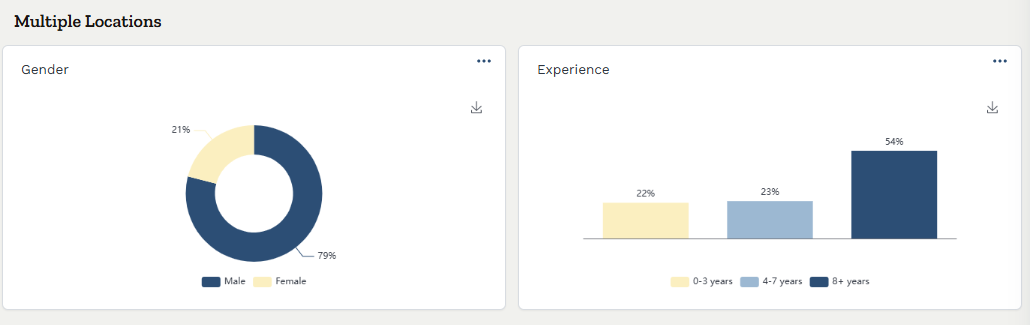
Some data showing DEI insights from Horsefly
Managing Legal and Ethical Hiring Practices
Hiring across multiple countries means navigating different employment laws, data protection requirements, and rules around the use of AI. These requirements affect everything from how candidates are assessed to how their personal information is handled. Here's what to consider when building a compliant and ethical talent acquisition process.
Key areas to cover:
-
Equal employment opportunity laws. Most jurisdictions prohibit discrimination based on protected characteristics, although the specific protections vary. Review your selection criteria, assessments, and interview guides against the requirements in each market where you hire.
-
Data privacy. Regulations such as GDPR govern how candidate data is collected, stored, and retained. Define retention periods, establish an appropriate legal basis for including candidates in talent pools, and ensure you can respond to requests to access or delete personal data. Sourcing passive candidates in Europe requires particular care.
-
Pay transparency. A growing number of jurisdictions require salary ranges in job postings or restrict employers from asking about pay history. Accurate compensation benchmarks help you set realistic, defensible salary ranges.
-
Automated decision-making. Some regulations impose specific requirements when AI is used in recruitment, including transparency and, in certain cases, bias assessments. Identify which tools score or rank candidates and document how they are used in hiring decisions.
Meeting legal requirements is only part of responsible hiring. Employers should also consider whether assessments measure skills relevant to the role, whether candidates can understand why they were unsuccessful, and whether decisions made with AI can be explained. These questions help build a process that is fair and transparent, rather than simply compliant.
This also has implications for your employer brand. Poor hiring experiences and allegations of bias can undermine candidates' trust in an organization. Involve legal and data protection teams when designing recruitment processes, and regularly review selection outcomes to identify potential issues before they escalate.
Turn New Hires into Long-Term Employees
Early attrition is a talent acquisition failure, even if it shows up in someone else's report. When a new hire leaves within six months, the full cost-per-hire is lost, and the search starts again.
Onboarding begins at offer acceptance. A strong program includes:
-
Pre-boarding: Between acceptance and start date, send practical information, introduce the manager and team, and complete paperwork. This period is when counteroffers and second thoughts happen. Regular contact reduces reneges.
-
Day-one readiness: Equipment, system access, and a schedule for the first week. Nothing signals disorganization like a new hire waiting three days for a laptop.
-
A buddy or mentor: A peer outside the reporting line who can answer the questions people hesitate to ask their manager.
-
Defined 30-60-90 day goals: Agreed with the manager, reviewed at each checkpoint, and tied to the Quality of Hire measurement described above.
-
Culture integration: Introduce how decisions actually get made, who the informal influencers are, and what good work looks like here.
Future-Proof Your Talent Acquisition Strategy
A successful talent acquisition strategy brings several connected elements together. Workforce planning identifies future hiring needs, while external labor market data helps determine whether those needs can be met and at what cost. Your employer value proposition (EVP) and talent pipelines help attract candidates, while candidate experience, DEI, and compliance practices influence who progresses through the process. Effective onboarding supports retention, and performance metrics show how the entire function contributes to business goals.
Review and Adapt Your Strategy Regularly
A talent acquisition strategy needs regular attention to remain relevant. Labor markets change as competitors expand into new locations, salary expectations shift, and employment regulations evolve. Rather than relying on an annual review alone, assess core recruitment KPIs and pipeline health quarterly, and refresh your workforce plan at least once a year.
Identify Where to Focus First
Start by auditing your current talent acquisition function. For each area in this framework, ask three questions:
-
Is there a clearly defined process?
-
Is someone accountable for it?
-
Is its effectiveness measured?
This will help you identify where your function is performing well and where processes remain inconsistent or underdeveloped. Prioritize the gaps affecting your most difficult-to-fill roles, where improvements are likely to have the greatest impact.
Give Your Strategy an External Market Perspective
One area that often needs attention is access to external labor market intelligence. Internal recruitment data shows what has happened within your organization, but it cannot provide the full picture of talent availability, competitor activity or market salary expectations.
Horsefly Analytics helps talent acquisition and workforce planning leaders access global talent intelligence to make more informed decisions about where to hire, which skills are available and how competitive different markets are. With a clearer understanding of the external talent landscape, organizations can build more realistic workforce plans, anticipate recruitment challenges and make decisions they can confidently justify to business stakeholders.

Frequently Asked Questions
What is the main difference between talent acquisition and traditional recruiting?
The main difference is that recruiting fills immediate requisitions, while talent acquisition strategically plans for future workforce needs. TA considers market conditions, long-term skill demands, and retention, ensuring hires align with broader business objectives and growth plans rather than just short-term vacancies.
How can I create an employer value proposition that truly stands out to job candidates?
To create a distinctive Employer Value Proposition, interview your high-performing new hires to understand their real motivations. Compare internal survey data with career site claims to find gaps, then segment messaging for specific talent groups. Finally, test your EVP against competitors to ensure it offers a unique and authentic appeal.
What are the most effective strategies for proactively building a talent pipeline for hard-to-fill roles?
Effective proactive pipelining involves identifying high-impact, scarce roles worthy of investment. Map where relevant talent resides through intelligence platforms, leverage alumni networks, and engage with industry events. Maintain pipelines with regular, useful content, and track conversion rates to ensure nurturing efforts are productive.
Which key performance indicators (KPIs) should I track to measure my talent acquisition team's success?
To measure success, track Time-to-Hire, Cost-per-Hire, and Quality of Hire (e.g., 90-day manager rating, first annual performance review, 12-month retention). Also, monitor Source of Hire, correlating it with quality and cost, and Offer Acceptance Rate to identify issues with compensation or process speed.
How can businesses effectively integrate diversity, equity, and inclusion into their hiring process?
Integrate DEI by auditing job descriptions for bias and wide requirements, and use labor market data to find diverse talent pools. Implement blind resume reviews and structured interviews with diverse panels and predefined scoring. Track pass-through rates by demographic at each stage to identify and address bottlenecks.
How do I convince senior leadership to invest more budget in my company's talent acquisition strategy?
To convince senior leadership, frame TA as an investment, not just a cost. Quantify the cost of vacancy for critical roles and project savings from improved time-to-fill or reduced agency fees. Present a business case detailing current performance, proposed investment, expected impact on business objectives, and risks of inaction.
Can smaller companies implement this strategic talent acquisition framework effectively, or is it only for large enterprises?
Yes, smaller companies can adapt this framework by prioritizing. Focus on building an authentic EVP, proactive sourcing for critical roles, and optimizing candidate experience. While tools may differ, the strategic principles of connecting hiring to business goals, using data, and focusing on quality and retention remain essential for growth.
Sources - Horsefly Analytics