.png?width=2000&name=Horsefly-Logo-NewTag_White%20(3).png)
Predictive HR analytics uses historical and current data to forecast future workforce outcomes. It identifies patterns and correlations in your people data, then applies statistical models and machine learning algorithms to predict what's likely to happen next.
Think of it as the difference between a weather forecast and looking out the window. Looking out the window tells you it's raining right now. A weather forecast tells you to bring an umbrella tomorrow because there's an 80% chance of storms. Predictive HR analytics does the same thing for your workforce.
It takes data from multiple sources and spots the signals that humans miss. Maybe employees who skip two consecutive team meetings are 3x more likely to resign within 90 days. Or perhaps workers who complete certain training programs perform 25% better in their next role. These patterns exist in your data right now. Predictive analytics just surfaces them so you can act on them.
The key difference from traditional HR analytics? Traditional analytics tells you what happened. Predictive analytics tells you what's going to happen and gives you time to do something about it.
How Predictive Analytics Transforms HR Functions
Recruitment: Finding Top Talent Before Your Competitors Do
HR predictive analytics helps Human Resources identify which job titles, skills, and experience combinations produce top performers in your organization. It analyzes where your best people came from, then helps you target similar talent pools.
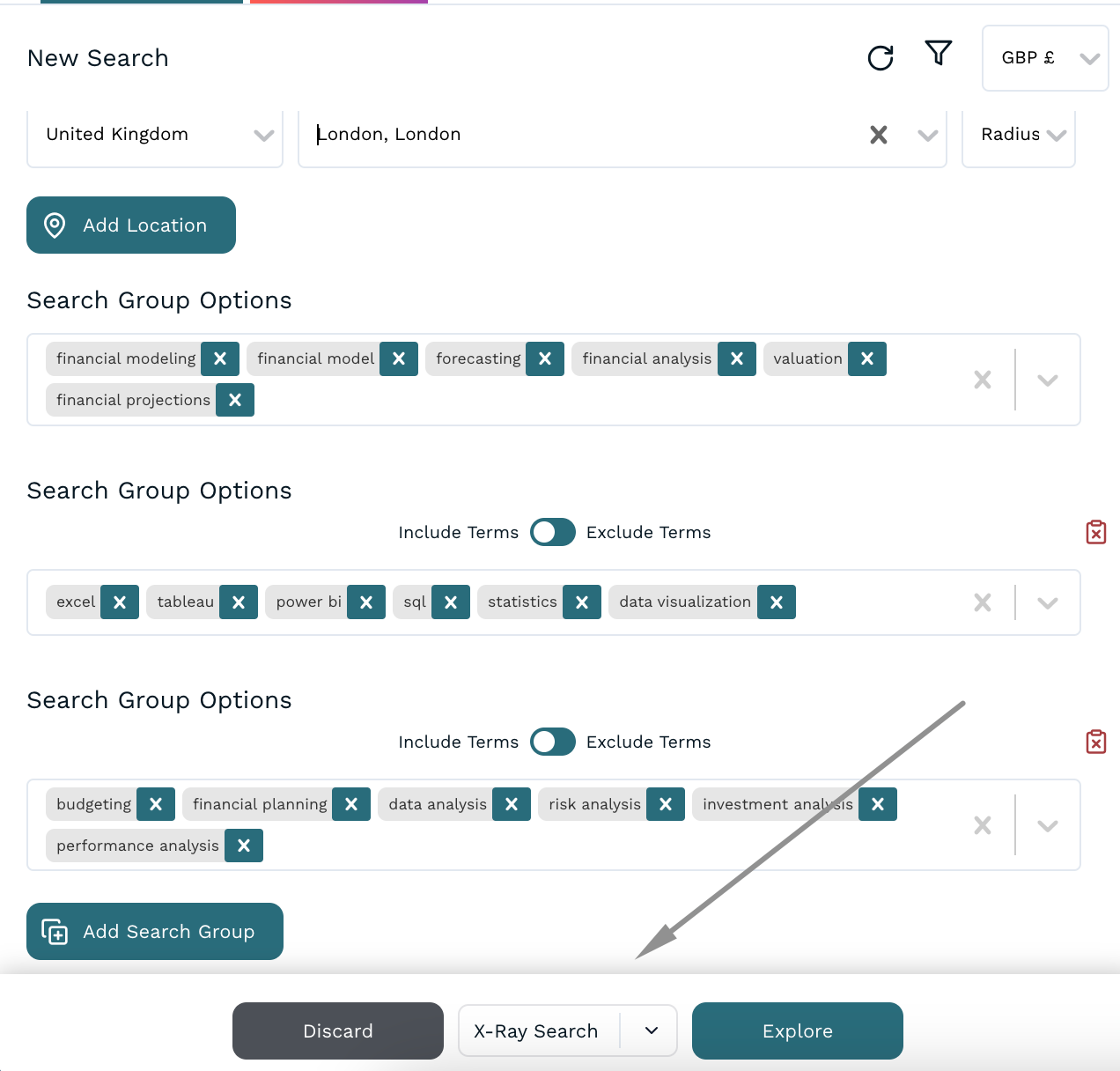
With tools like Horsefly's X-Ray Search, you can build Boolean strings in seconds and test them on real profiles instantly. No more moving between tabs trying to remember whether you need another bracket or an AND/OR operator. You can fire searches straight into Google and see live examples of the talent you're chasing. Understand how this can help your organization in more detail and get in touch for a custom consultation.
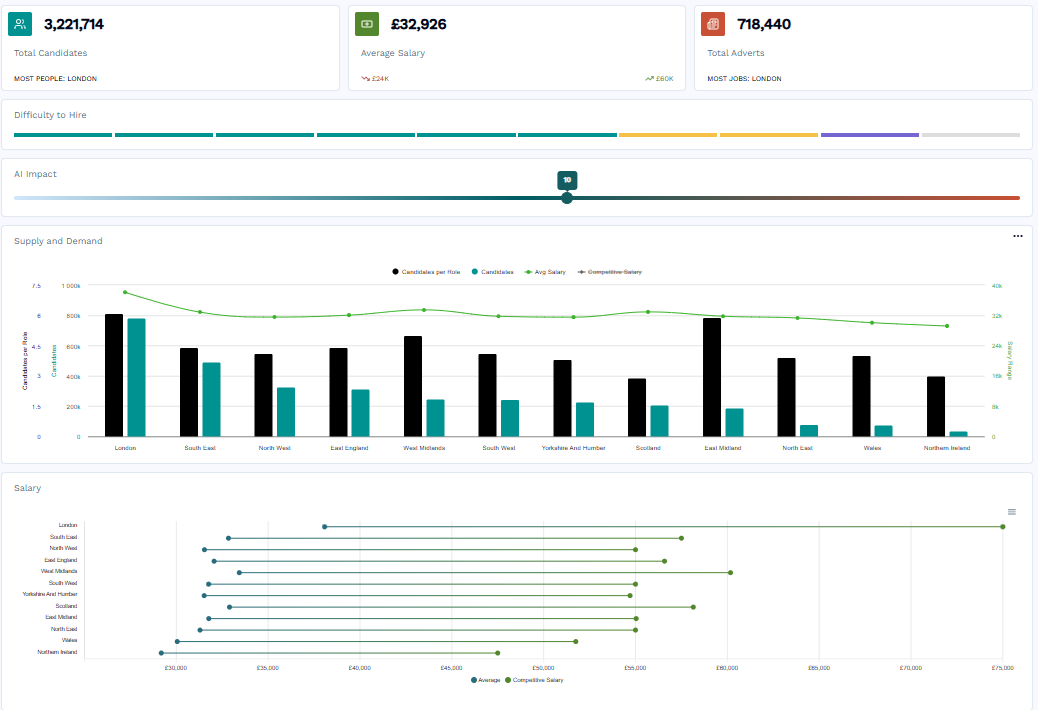
Even better? Horsefly's Difficulty of Hire Score gives you a simple rating that tells you which roles will be nightmares to fill. You can see the real market intelligence behind that number, supply, demand, and diversity factors all baked in. That means you know where to focus your time, budget, and energy on the roles that actually need it. For more expert guidance, get in touch.
Employee Retention: Stop the Revolving Door
Replacing an employee costs anywhere from 50% to 200% of their annual salary, depending on their level (LinkedIn). For a mid-level manager earning $67,000, that's up to $135,000 down the drain every time someone walks out the door.
HR predictive analytics identifies flight risk before people start polishing their CVs. It looks at factors like engagement scores, time since last promotion, manager quality ratings, and dozens of other signals that correlate with turnover. When patterns emerge, you get early warnings, giving you time to have retention conversations or address whatever's driving people away.
Workforce Planning: See What's Coming Before It Hits You
How many software developers will you need in 18 months? What about data scientists? Most organizations guess. Some do slightly more sophisticated guessing based on historical growth rates. Neither approach works when your business strategy shifts or the labor market tightens.
The statistical method of regression analysis is used to understand dependent and independent variables, so that you can predict, forecast and determine just how much impact several factors will have on an outcome. This enables you to connect business strategy to talent needs via predictive workforce planning, as it will forecast demand based on your growth plans, product launches, and market expansion. Then it maps that against supply, both internal and external.
Another method to use when it comes to decision-making is a decision tree. This is a flowchart model that’s used for both regression and classification and can be particularly helpful when predicting outcomes.
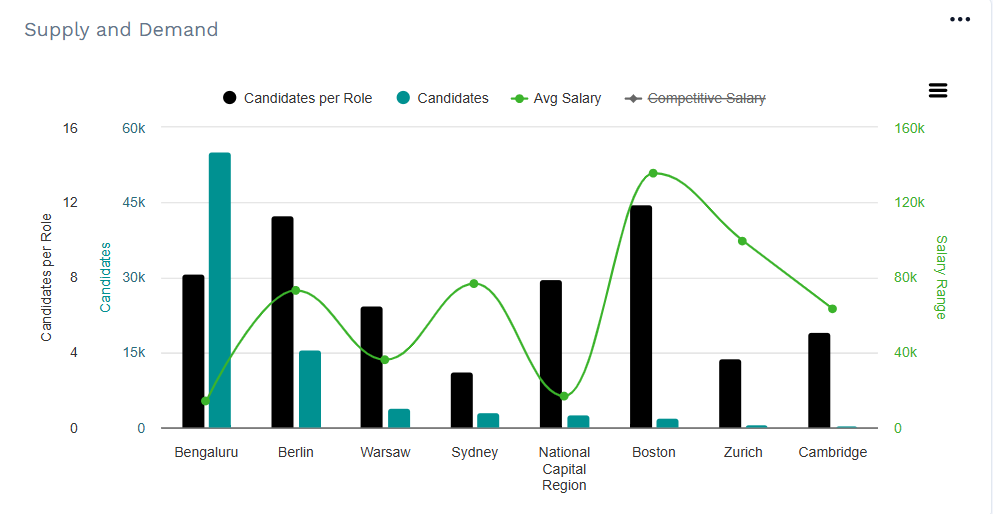
Horsefly's Supply & Demand feature taps into millions of social profiles updated daily, so you're working with current numbers, not outdated estimates. You can filter by experience, gender, job title, skills, and keywords, then see talent supply in any country or city within seconds.
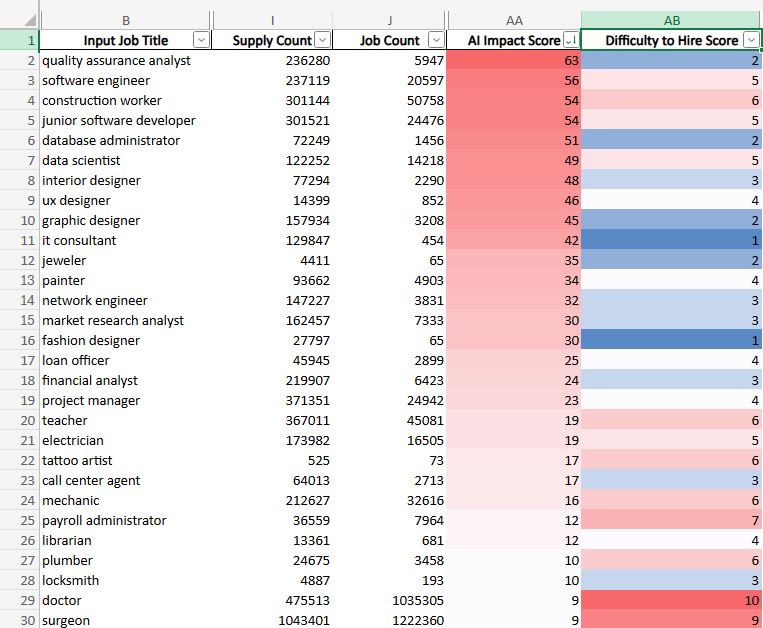
Even better, Horsefly's Roles Impact Analysis uses AI impact data to show which positions are changing and what skills you'll need tomorrow. You can spot roles that need immediate attention versus ones you can plan for later, then build training programs based on what's actually happening in the market.
Performance Management: Identify Future Stars Early
Your top 5% of performers drive disproportionate value. Identifying them early and keeping them engaged should be a strategic priority.
Predictive analytics can spot high-potential employees long before they're obvious to managers. It looks at performance trajectory, learning agility, collaboration patterns, and other leading indicators of future success. Google's Project Oxygen used predictive analytics to understand what made great managers, then built development programs around those attributes (LinkedIn).
Employee Engagement and Wellbeing: Fix Problems Before They Become Crises
Disengaged employees cost you in lower productivity, higher absenteeism, and eventually turnover. But by the time you notice someone's checked out, the damage is done, and your employee turnover is increasing.
Predictive analytics monitors engagement in real-time through pulse surveys, collaboration tools, and performance data. It spots warning signs early, like declining participation in team activities or dropping communication frequency, so you can intervene before someone mentally exits.
The Benefits: Why Predictive HR Analytics Drives Business Value
Risk Reduction: Minimize Potential Losses
Every workforce decision carries risk. Predictive analytics reduces these risks by giving you foresight. You can model different scenarios, test assumptions, and make decisions with confidence because you understand the likely outcomes.
Improved Recruitment: Hire Better People Faster
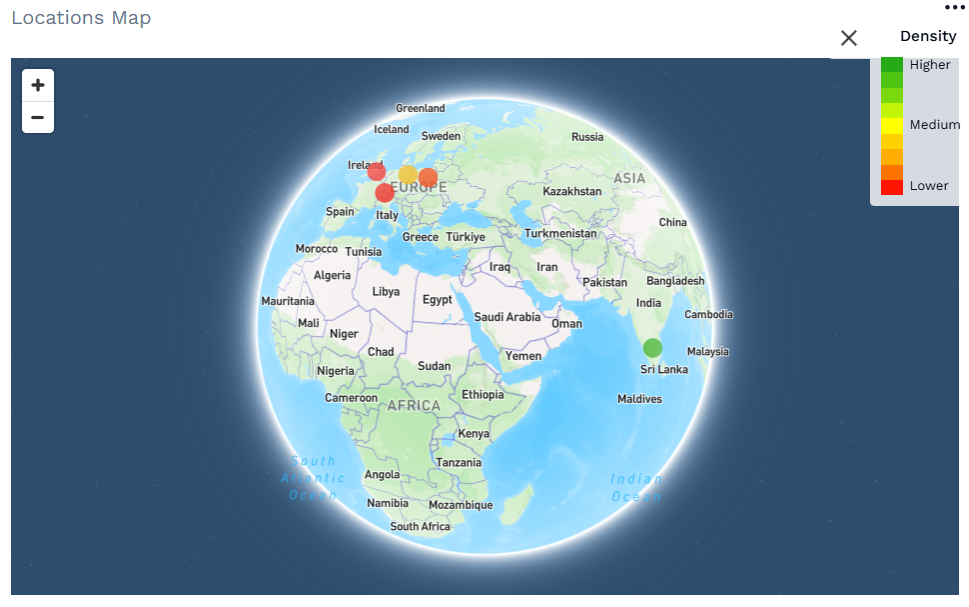
When you know which attributes predict success in your organization, you can focus your hiring efforts on finding people with those qualities. Horsefly's platform shows you where talent actually lives by tapping into millions of profiles updated daily. Their Global Heat Maps let you download data as PDF or CSV and build visual heat maps instantly to see where any skill exists, even niche ones.
Enhanced Retention: Keep Your Best People
Predictive analytics helps you hold onto high performers by identifying flight risk early and suggesting targeted retention strategies. You can also understand what drives retention in your organization and design programs that address root causes rather than symptoms.
Increased Profit: Boost Your Bottom Line
Better hiring, lower turnover, optimized workforce planning, and improved performance all drive profitability. According to this HR Analytics Trends piece, Gartner has seen that companies using predictive analytics see a 25% improvement in their decision-making speed.
Optimal Work Performance: Maximize Productivity
Predictive analytics helps you optimize team composition, identify skill gaps, and match people to roles where they'll excel. When you understand what drives productivity in your organization, you can design work environments, teams, and processes that maximize output.
How to Implement Predictive HR Analytics: Your Step-by-Step Guide
Define Your Business Objectives
Start with the business problem you're trying to solve. Don't start with "we need predictive analytics." Start with "we're losing too many sales managers in their first year" or "we can't hire software engineers fast enough."
Clear objectives keep your analytics program focused on driving real value. Common starting points include reducing turnover in critical roles, improving quality of hire, optimizing workforce costs, or forecasting skills gaps that will emerge in the workforce over the next three years.
Build Your Data Foundation
Predictive analytics needs clean, integrated data from multiple sources including your HRIS, applicant tracking system, performance management platform, engagement surveys, and external labor market data.
Horsefly's platform integrates the most diverse data sources of any talent intelligence tool, pulling from 1 trillion data points across thousands of online sources. The taxonomy tracks 815,000 job titles and skills in 39 languages, covering 170,000 towns and cities across 65 countries. If you'd like to gain expert guidance on a project you're working on, please do get in touch.
Address Ethical Considerations from the Start
Predictive analytics in HR raises legitimate concerns about privacy, bias, and transparency. Build ethics into your program from day one. Be transparent about what data you're collecting and how it's being used. Ensure models are regularly audited for bias.
GDPR and CCPA set strict requirements around employee data. Make sure your analytics program complies with all relevant regulations.
Choose the Right Technology and Partners
Consider integration with existing systems, scalability as your program grows, user-friendliness for non-technical HR professionals, data security and compliance features, and the level of support and training provided.
Choosing the Right Predictive HR Analytics Tool
Integration with Existing HR Systems: The tool needs to pull data from your HRIS, ATS, performance management system, and other sources without requiring manual uploads or complex workarounds.
Scalability: Can the system grow with you? If you're a 500-person company planning to hit 2,000 in three years, you need a platform that handles that expansion. For example, open-source predictive analytics is free-to-use software that can analyze historical data and help to forecast future trends. It’s popular with companies due to its cost efficiency, however, it’s important to ensure that the features on offer will be sufficient for your business and that it will be able to grow with you, so make sure to do your research first.
User-Friendly Interface: If only data scientists can use it, it won't get used. The best tools make sophisticated analytics accessible to HR professionals without technical backgrounds.
Data Security and Compliance: The platform must meet GDPR, CCPA, and other relevant data protection standards.
Support and Training: Look for vendors who provide comprehensive training, responsive customer service, and resources to help you maximize value.
Cost and ROI: Understand the total cost of ownership and expected return, whether that's reduced turnover costs, improved hiring quality, or faster workforce planning.
Explainability: You need to understand why the system flagged someone as a flight risk. This matters for both ethics and practical decision-making.
User Feedback and Reviews: Talk to other HR professionals using the system. Find out how the system has helped them, if it’s improved company culture, been implemented seamlessly, and what results they’ve seen. Real user experiences matter more than marketing materials.
Horsefly Analytics’ platform checks all these boxes. The user-friendly interface pulls powerful insights you can use immediately. Data refreshes daily for the most current market analysis. And the platform covers everything from X-Ray Search and Difficulty of Hire Scores to DEI gap analysis and compensation benchmarking.
Real-World Examples of Predictive HR Analytics in Action
UK Home Office: Avoiding Costly Location Mistakes
The UK Home Office, with 36,000+ global employees, relied on outdated annual reports and was struggling with delayed decision-making. They lacked the real-time data needed for strategic discussions about salary benchmarking and diversity targets. Horsefly's platform provided dynamic information that transformed their HR team into strategic advisors with data-backed insights. The platform enabled them to avoid costly location placement errors that could have wasted significant resources. Their credibility with senior leadership increased dramatically, and they achieved faster, more informed decision-making that could help prepare them for the future. The enhanced ability to identify companies within specific geographical areas also supported their diversity initiatives through data-driven targeting, fundamentally changing how they approached workforce planning.
Ørsted: Saving $40 Million Through Strategic Workforce Planning
Renewable energy leader Ørsted used predictive analytics to transform their global expansion strategy. When planning to scale from current operations to 50GW by 2030, they needed to understand where talent actually existed and what it would cost. Using Horsefly's real-time analytics, they identified locations with 60-70% salary cost reduction potential for 200-300 annual hires. The platform enabled real-time collaboration between HR and line managers, allowing them to build searches together and see results instantly. The outcome? $40 million in cost savings through strategic workforce planning while successfully expanding into new markets.
Royal London: From Outsourced Recruitment to Award-Winning In-House Team
After 15 years of relying on outsourced recruitment partnerships, Royal London made a bold move to build an in-house talent acquisition team powered by predictive analytics. The transformation was remarkable. Real-time labor market insights replaced anecdotal hiring decisions, elevating relationships with hiring managers and enabling data-backed conversations. Instead of setting arbitrary 50-50 diversity targets, they used market intelligence to understand actual talent pool demographics and set realistic, achievable goals. The platform helped them identify true competitors and build targeted attraction strategies using location and skills data. The results were an impressive 74% Net Promoter Score from hiring managers and agency usage reduced to just 4%. Their longitudinal data now helps them prepare for evolving skill requirements in the AI era, while their consistent hybrid working policies - backed by market data - create competitive recruitment advantages in a crowded market.
Ethical Considerations and Pitfalls to Avoid
Bias Prevention
Algorithms learn from historical data. If your historical hiring, promotion, or performance data reflects biased decision-making, your models will perpetuate those biases at scale. Audit your models regularly for disparate impact across protected groups.
Privacy and Transparency
Employees have a right to understand how data about them is being used. Be transparent about what data you collect, how it's used, and what decisions it informs. Give employees visibility into their own data and predictions. This type of strategy helps to build a data-driven culture and overcome any resistance, as you’ve been open and transparent throughout the process.
Human Judgment Integration
Predictive models provide recommendations, not mandates. Critical decisions about people's careers should always involve human judgment that considers context the model can't see. Always keep humans in the loop for significant decisions.
Accuracy Validation
Models degrade over time as business conditions change. Continuously monitor model accuracy. Retrain models regularly with fresh data. And be humble about the limits of prediction, even the best models are probabilistic, not deterministic.
Stronger Data Means Stronger Decisions
Predictive HR analytics isn't about replacing human judgment with algorithms. It's about giving HR professionals better information to make better decisions. It's about seeing what's coming in time to do something about it.
The organizations that win in today's talent market aren't the ones with the biggest HR budgets or the fanciest employer brands. They're the ones who see around corners. Who spot problems early. Who make data-driven decisions about their workforce while competitors are still arguing over gut feels and outdated reports.
If you're still making workforce decisions based on lagging indicators and historical reports, you're already behind. The future of HR is predictive, and that future is now.
Ready to see what predictive workforce analytics can do for your organization? Schedule a strategy session with Horsefly and discover how accurate labor market intelligence drives better talent decisions.
Sources - Horsefly Analytics, Gov.co.uk, CCPA, Upwork, LinkedIn, HR Analytics Trends, Gartner