.png?width=2000&name=Horsefly-Logo-NewTag_White%20(3).png)

What is Salary Benchmarking?
Salary benchmarking is the process of comparing your internal pay levels against external market data to understand whether what you're offering is competitive. So, how does salary benchmarking work? You take a role, match it to comparable positions in the market, and see where your compensation lands relative to what other organizations are paying.
It's not a one-time exercise; continuous benchmarking is essential for staying competitive in the 2026 UK salary market. Done properly, it's a continuous part of how you manage compensation, inform pay reviews, set salary bands, and make decisions about where to hire.
Why is Salary Benchmarking Analysis Crucial for Your Business?
The short answer is, because your talent knows their market value, even if you don't.
When pay falls below market rate, you don't always get a resignation letter explaining why. You get disengagement, declining performance, and eventually a departure that costs you significantly more than a timely pay adjustment would have. Research consistently shows that replacing an employee costs anywhere from half to twice their annual salary once you factor in recruitment, onboarding, and lost productivity.
Beyond retention, salary benchmarking shapes your ability to attract talent and retain the right people in the first place. A compensation package that looked strong two years ago may now be trailing the market; salary benchmarking tells you where you stand so you can make competitive offers with confidence, not guesswork.
There's also the matter of internal equity. Pay decisions made in isolation, without reference to a consistent framework, create compression risks and fairness gaps that are difficult and expensive to unwind, especially when considering average salaries across the UK. A structured benchmarking approach keeps your compensation structure coherent as your workforce grows.
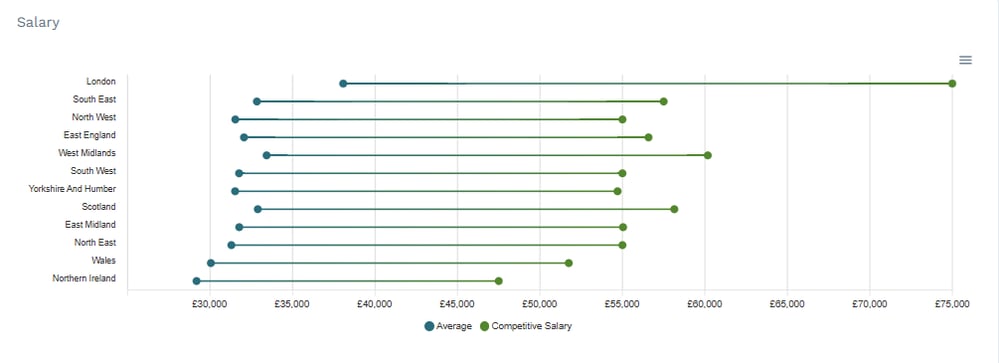
An example of salary data from the Horsefly platform
The Benefits of Effective Salary Benchmarking
For employers: You reduce costly turnover, make smarter hiring decisions, and build a compensation strategy that actually reflects the market. You can identify where you're overpaying relative to the value delivered and where you're at risk of losing people you can't afford to lose. Understanding hiring trends, external value, and being able to retain talent are essential.
For job seekers and employees: Benchmarking empowers people to understand their market worth and negotiate from a position of knowledge rather than assumption.
Step-by-Step Benchmarking Salary Guide for Businesses of All Sizes
You don't need a dedicated compensation team or a six-figure software budget to benchmark salaries effectively. Here's how to do employee salary benchmarking well:
1. Define your goals and scope. Are you benchmarking across the whole organization, or focusing on specific teams or job roles? Set a clear timeline and identify who owns the process.
2. Write accurate, detailed job descriptions. This is where most benchmarking efforts go wrong. Matching by job title alone is unreliable. A "Senior Analyst" at one organization might be doing the work of a Director elsewhere. Focus on responsibilities, skills required, scope of impact, and seniority level. This is what's known as job leveling, and it's the foundation of any credible salary comparison.
3. Collect data from credible sources. Reliable inputs include job postings data, compensation surveys, government labor databases such as the ONS, and specialist platforms built for this purpose. The quality of your benchmarking is only as good as the quality of your data, so verify your sources and understand their methodology.
4. Compare your internal pay structure against the market. Look at where your roles sit relative to the median (the middle value in a salary data set, where half of the salaries are above and half are below, often considered a good indicator of 'typical' pay), lower quartile, and upper quartile (statistical measure, dividing a data set into four equal groups (25%), used to show salary distribution) for equivalent positions. Calculate compa-ratios (an employee's salary divided by the midpoint of their range) to understand where individuals sit within their bands. Check for range penetration to see how far along the pay scale your people have progressed.
5. Adjust and set salary bands. Use your findings to define clear salary bands with minimum, midpoint, and maximum values for each role level. Build in flexibility for factors like geographic location, since London rates often differ significantly from regional UK markets.
6. Document and review regularly. Market rates change. At minimum, benchmark annually. In high-demand areas or during periods of significant economic movement, review more frequently.
Key Data Sources and Ensuring Credibility
The best compensation data comes from multiple source types: live job postings, active talent profiles, employer-reported compensation surveys, and government data. A single source is never enough. Triangulate across several, and be skeptical of any data that hasn't been updated recently. Stale industry benchmarks are worse than no benchmarks because they create false confidence.

Factors That Influence Salary Benchmarks
Location, industry, company size, and economic conditions all affect where market rates sit. So does the demand for specific skills. A software engineer with machine learning expertise commands a different rate than a generalist developer, even if the job title looks the same. Effective benchmarking accounts for these variables rather than flattening them.
Manual benchmarking is time-consuming and prone to error; however, the right tool, such as a salary calculator or a salary checker, changes that.
Horsefly's Compensation Insights capability gives you access to up-to-date compensation data drawn from over 1 trillion data points across 65 countries, covering 170,000 locations. You can compare your packages against industry standards globally, identify pay disparities within your organization, and make informed decisions about where to allocate your compensation budget. The data is refreshed and validated daily, so you're always working with a current picture of the market, not last year's numbers.
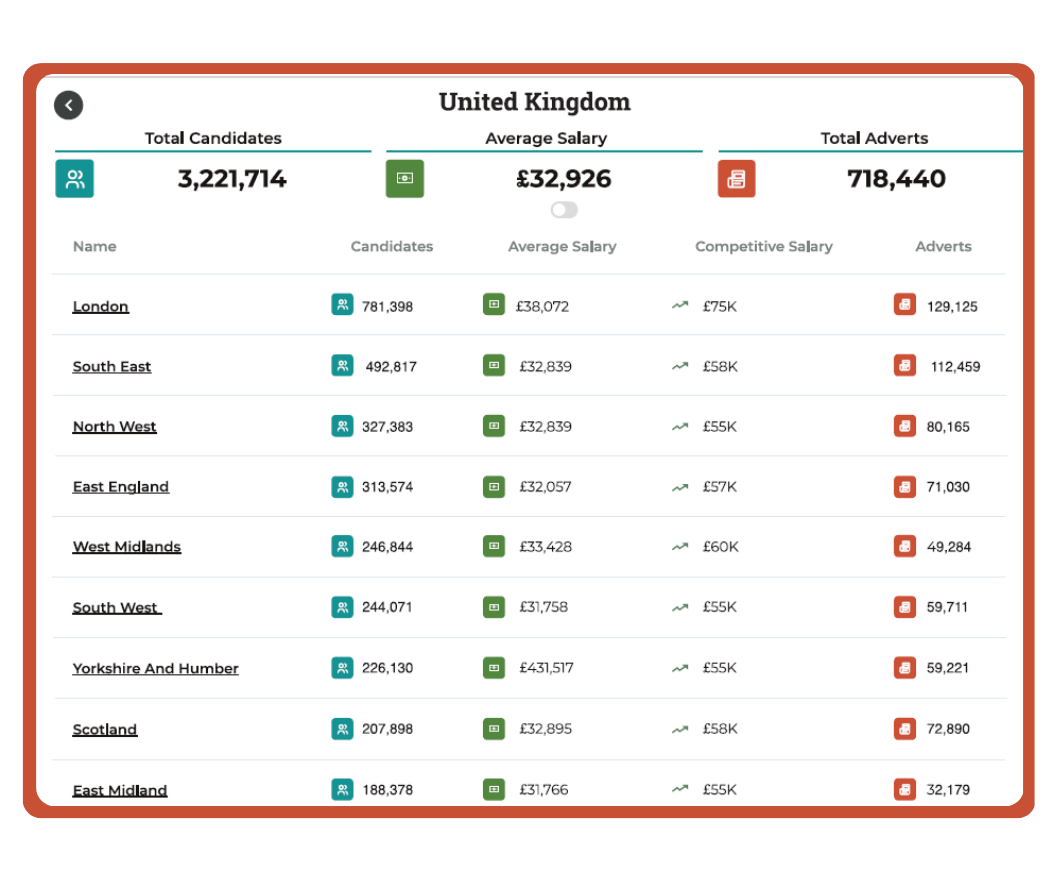 An example of compensation data from the Horsefly platform
Legal and Ethical Considerations
UK organizations are subject to gender pay gap reporting requirements, and the direction of travel on pay transparency is clear. Employees increasingly expect to understand how their pay is determined. Benchmarking helps you make that conversation easier by grounding pay decisions in data rather than subjective judgment.
When collecting and processing compensation data, follow UK GDPR requirements and ensure your data sources are compliant. Pay equity audits, which assess whether pay disparities exist across protected characteristics such as gender or ethnicity, are increasingly considered best practice even where not legally mandated.
Communicating Pay Decisions
The most technically sound benchmarking exercise can still cause problems if the results are communicated poorly. When pay adjustments follow a benchmarking review, be clear with employees about why changes are or aren't being made. People can accept being positioned below the median if the rationale is transparent and there's a clear path for career progression. What they can't accept is silence.
Train managers to have these conversations before the results land. Give them the context they need to explain the methodology, and make sure they understand the data well enough to answer questions.