Getting hiring right isn't just about posting jobs and hoping for the best anymore. The smartest organizations are using talent acquisition analytics to make hiring decisions backed by real data rather than gut feelings. If you're still relying on instinct alone, you're flying blind in a market where others in the industry are using night-vision goggles.

This guide breaks down everything you need to know about talent acquisition analytics - what it is, why it matters, and how to actually implement it.

What is Talent Acquisition Analytics?


Talent acquisition analytics is the practice of collecting, analyzing, and using data to improve your hiring process and outcomes. It's about turning the messy, often subjective world of recruitment into something you can actually measure, understand, and optimize.

Unlike traditional HR metrics that just tell you what happened last quarter, talent acquisition analytics helps you understand why it happened and what's likely to happen next. It's the difference between knowing your time-to-hire was 45 days (a backward-looking metric) and understanding which roles will be nightmares to fill three months from now so you can plan accordingly.


The Talent Acquisition Journey

The evolution of talent acquisition analytics mirrors the broader shift in business toward data-driven decision-making. Twenty years ago, recruitment was largely relationship-based and intuitive. Today, sophisticated organizations are using predictive analytics and real-time labor market intelligence to stay ahead of talent shortages, with the help of CRM (Customer Relationship Management).

Modern talent acquisition analytics encompasses everything from tracking where your best hires come from to predicting which skills you'll need next year based on market trends. It means knowing not just that a role is hard to fill, but understanding the specific supply and demand factors making it difficult - and what you can do about it.

Benefits of Talent Acquisition Analytics


The shift to data-driven recruitment isn't just about having prettier dashboards to show leadership. The benefits are concrete and directly impact your bottom line, and help you improve hiring.


Improved Hiring Quality

When you track quality of hire metrics and analyze what your best performers have in common, you stop hiring based on hunches and start hiring based on patterns. Organizations using talent acquisition analytics report a 50% improvement in employee performance, according to research from Deloitte (Psico Smart). You can identify which sources consistently deliver strong performers, which interview questions actually predict success, and which requirements in your job descriptions are unnecessarily filtering out great talent.


Reduced Time to Hire

Analytics helps you spot bottlenecks in your hiring process that you didn't even know existed. Maybe your hiring managers are taking a week to review applications. When you measure each stage of your funnel, you can see exactly where things slow down and fix it. Companies leveraging recruitment analytics typically see around a 25% reductions in time-to-hire (Software Oasis).


Lower Cost per Hire

Every day a role stays open costs your organization money in lost productivity. Analytics helps you optimize your sourcing spend by showing you which channels deliver the best ROI (Return On Investment). The average cost-per-hire is $4,700, but organizations using analytics consistently outperform this benchmark by identifying and doubling down on their most effective (and often least expensive) sources (SHRM).


Enhanced Candidate Experience

Data reveals where talent drops out of your process and why. Maybe your application takes 45 minutes to complete (seriously, fix that). Tracking candidate Net Promoter Scores and feedback helps you create an experience that doesn't make people want to leave negative reviews for you or your processes and, can also help with improving the success rate of your workforce.


Better Decision-Making

Perhaps the biggest benefit is simply making recruitment decisions based on evidence rather than whoever shouts loudest in the meeting. Should you open a new office in Austin or Denver? Analytics can show you where the talent actually lives and what it costs.

Key Metrics in Talent Acquisition Analytics


Not all metrics are created equal. Here are the ones that actually matter when measuring talent analytics.


Time to Hire

This measures the number of days between when a role opens and when someone accepts your offer. It's useful for identifying bottlenecks and setting realistic expectations with hiring managers. But be careful - optimizing solely for speed can compromise quality.


Cost per Hire

The total cost of filling a position, including advertising spend, recruiter time, technology costs, and interview expenses divided by the number of hires. More important than the absolute number is understanding which of your sources and recruitment strategies deliver the best return.


Quality of Hire

This is the holy grail metric, but also the trickiest to measure. It typically combines new hire performance ratings, retention rates, hiring manager satisfaction, and ramp-up time. Organizations measuring quality of hire are 2.5 times more likely to report recruitment process improvements (AIHR).


Source of Hire

Which channels are your best performers coming from? Employee referrals? LinkedIn? Direct sourcing? This metric helps you allocate your recruiting budget and effort where it actually pays off.


Candidate Net Promoter Score (Candidates NPS)

This measures whether talent would recommend your hiring process to others. It's a leading indicator of your employer brand health. Even people you don't hire should have a decent experience.


Yield Ratio

The percentage of talent moving from one stage of your funnel to the next. Low yield ratios suggest problems with your job descriptions, screening criteria, or candidate experience. This metric helps you spot exactly where talent is falling out of your process.

Implementing Talent Acquisition Analytics: A Step-by-Step Guide


Knowing what metrics matter is one thing. Actually implementing analytics in a way that doesn't make everyone hate you is another.


Define Recruitment Goals and KPIs

Start by understanding what you're actually trying to achieve. Are you trying to reduce time-to-hire? Improve diversity by identifying bias in recruitment and measuring how effective initiatives are? Lower costs? You can't optimize for everything simultaneously, so pick your battles. Work with leadership to identify the 3-5 metrics that genuinely move the needle for your organization.

Make sure your KPIs (Key Performance Indicators) tie back to business outcomes. "Reduce time-to-hire by 30%" is okay, but "reduce time-to-hire for critical engineering roles by 30% to support Q3 product launch" is better because it connects to something the business actually cares about.


Collect and Centralize Data

Your data is probably scattered across your ATS (Applicant Tracking System), HRIS, spreadsheets, and someone's personal notebook. This is the unglamorous work of getting it all in one place and making sure it's actually accurate.

Start with your ATS as the foundation, but recognize you'll need to pull in data from other sources. The goal is creating a single source of truth rather than five different reports that somehow never agree with each other.


Choose the Right Tools and Technologies

You need technology that can actually handle the analysis without requiring a PhD in statistics. Your ATS probably has basic reporting capabilities, but most companies need additional analytics tools to get meaningful insights.

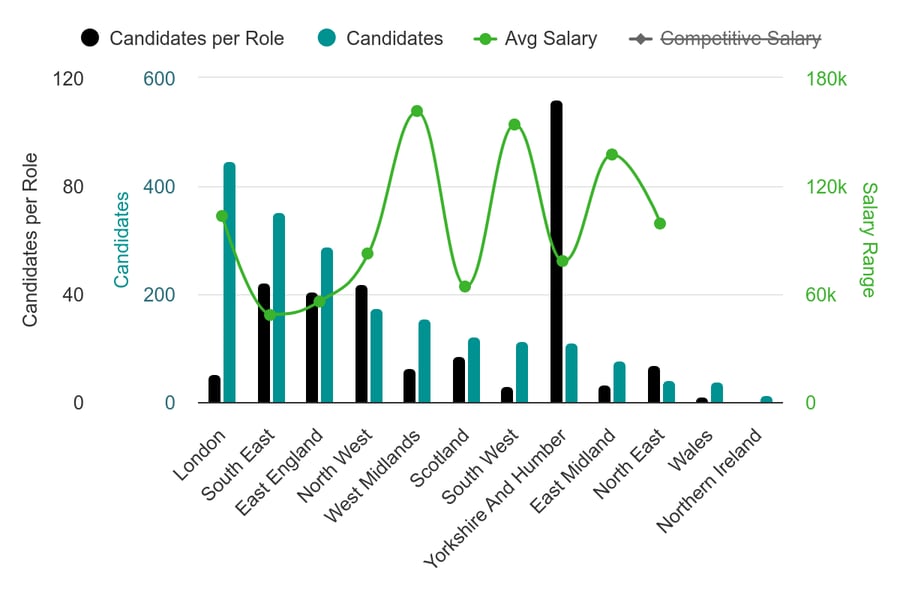
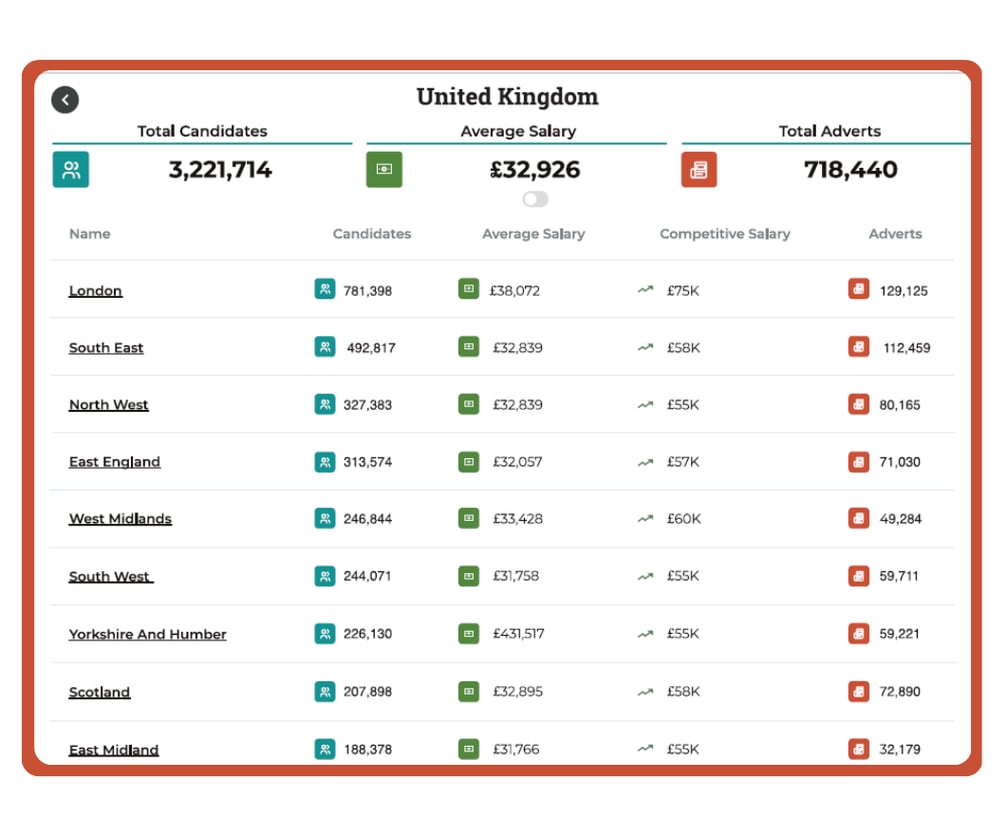
Look for platforms that offer real-time labor market intelligence, not just internal data analysis. Tools like Horsefly Analytics provide talent supply and demand data, compensation benchmarks, and predictive intelligence about where talent actually lives and what skills are emerging.

The right tool should be powerful enough to generate real insights but user-friendly enough that your recruiters will actually use it without extensive training.


Analyze Data and Generate Insights

This is where analytics stops being a reporting exercise and starts being genuinely useful. Look for patterns, not just numbers. Why are referrals consistently your highest quality source? Why does the Western region fill roles 40% faster than the Eastern region?

Use your data to test assumptions. Maybe everyone "knows" you need to hire from competitor X to get quality talent, but the data may show that your best performers may actually come from adjacent industries.

Benchmark against external data to understand whether your challenges are unique to your organization or reflect broader market conditions.


Monitor and Adjust Talent Acquisition Strategies

Analytics isn't a one-and-done exercise. Set up dashboards that update regularly so you can spot trends and problems early. Create a regular cadence for reviewing your metrics with stakeholders. Monthly is usually about right - often enough to catch problems but not so frequent that you're just reacting to normal variance.

AI and Predictive Analytics in Talent Acquisition


Artificial intelligence (AI) or machine learning (a sub-field of AI where systems can learn from algorithms) and predictive analytics (using data, machine learning and algorithms to help forecast future outcomes) are transforming recruitment from reactive to proactive. Instead of scrambling when you have a critical opening, you can anticipate skills gaps months in advance and start building talent pool pipelines before the need becomes urgent.


AI-Powered Tools and Technologies

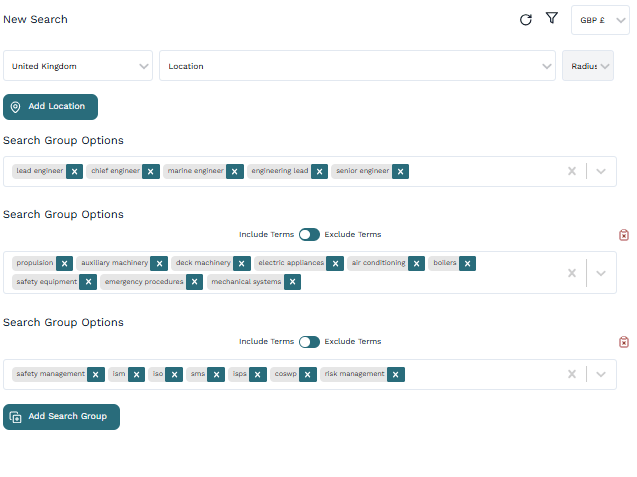
AI is handling the tedious parts of recruitment that burn out your team. Tools like Horsefly's Search Builder use AI to analyze job descriptions and automatically identify the skills that matter - including the hidden gems you'd miss if you were doing it manually.

Predictive analytics can forecast which roles will be difficult to fill based on market supply and demand trends. Horsefly's Difficulty of Hire Score gives you a simple 1-10 rating that tells you which roles will be nightmares to fill so you can plan ahead.
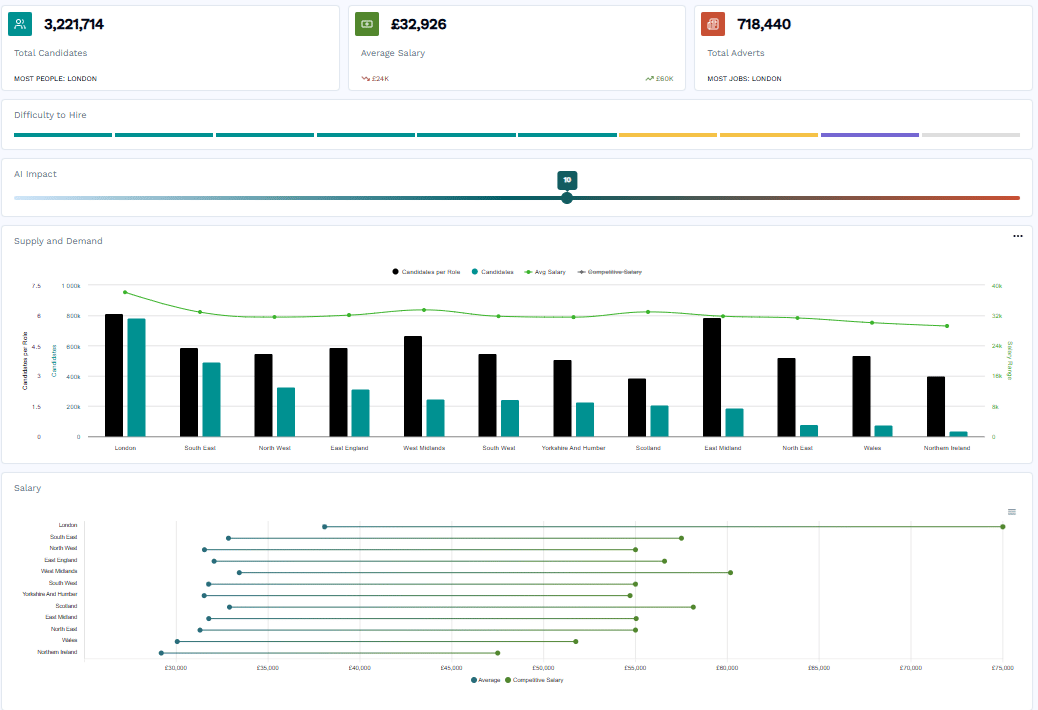
AI also helps with talent matching by analyzing millions of profiles to identify people with the right combination of skills and experience, even if their job titles don't perfectly match your search.


Benefits and Challenges

The benefits of AI in recruitment are significant: faster sourcing, reduced bias through consistent evaluation criteria, better talent matches, and the ability to process far more information than any human could manually review. 

The challenges are equally real. AI tools are only as good as the data they're trained on, and if that data reflects historical biases, the AI will perpetuate them. You need humans in the loop to understand all areas of a project, to pick up on idiosyncrasies, to provide empathy, and to make judgment calls that algorithms can't.


Ethical Considerations and Bias Mitigation

Using AI in hiring raises legitimate concerns about fairness and transparency. The key is using AI to reduce bias, not entrench it. This means regularly auditing your AI tools for disparate impact, being transparent with talent about how AI is used in your process, and ensuring humans make final hiring decisions.

Blind resume reviews, structured interviews, and diverse interview panels help counteract AI bias. Organizations that actively used AI screening reported a 30% reduction in hiring bias (Vorecol).

The legal landscape is evolving quickly, with regulations like the EU AI Act and state-level US laws imposing new requirements around algorithmic transparency and bias testing.

Overcoming Challenges in Talent Acquisition Analytics


Implementing analytics isn't just a technical challenge. The bigger obstacles are usually human and organizational.


Data Quality Issues

What you put in is what you’ll get out. If your data is incomplete, inconsistent, or just plain wrong, your insights will be worthless. Fix this by making data entry as painless as possible and building it into existing workflows rather than treating it as extra work.


Lack of Internal Data Literacy 

Your recruiters are experts at recruiting, not data analysis. Instead, invest in training that builds practical analytics skills without requiring advanced statistics. Focus on teaching people how to interpret the metrics that matter for their role and how to spot patterns that signal problems or opportunities.


Resistance to Change

"We've always done it this way" is the battle cry of organizations that wonder why their competitors are eating their lunch. Address resistance by showing results, not just talking about potential benefits. When someone sees that the data-driven approach filled roles, say, 40% faster with better quality hires, skepticism tends to evaporate.


Integrating Data from Different Sources

Your talent data lives in your ATS, but performance data lives in your HRIS, and market intelligence lives in external platforms. Look for analytics platforms with pre-built integrations to common HR systems or robust APIs that can pull data from multiple sources.

Talent Acquisition Analytics Software


The market is flooded with analytics tools promising to revolutionize your recruiting. Here's how to cut through the noise.


Overview of Different Types of Software

Basic ATS reporting gives you foundational metrics but usually lacks the depth and predictive capabilities you need for strategic planning. Dedicated people analytics platforms provide more sophisticated analysis but often require significant implementation effort.

Labor market intelligence platforms like Horsefly Analytics focus on external market data - where top talent lives, what skills are in demand, compensation benchmarks, and diversity insights. Integrated talent intelligence platforms combine internal analytics with external market data for the most comprehensive view.


Key Features to Consider

Look for real-time or near-real-time data rather than reports that are outdated as soon as they're generated. The ability to drill down from high-level metrics to granular details is critical.

Predictive capabilities matter more than historical reporting. Look for tools that provide talent supply and demand intelligence, skills trending data, and predictive difficulty scores.
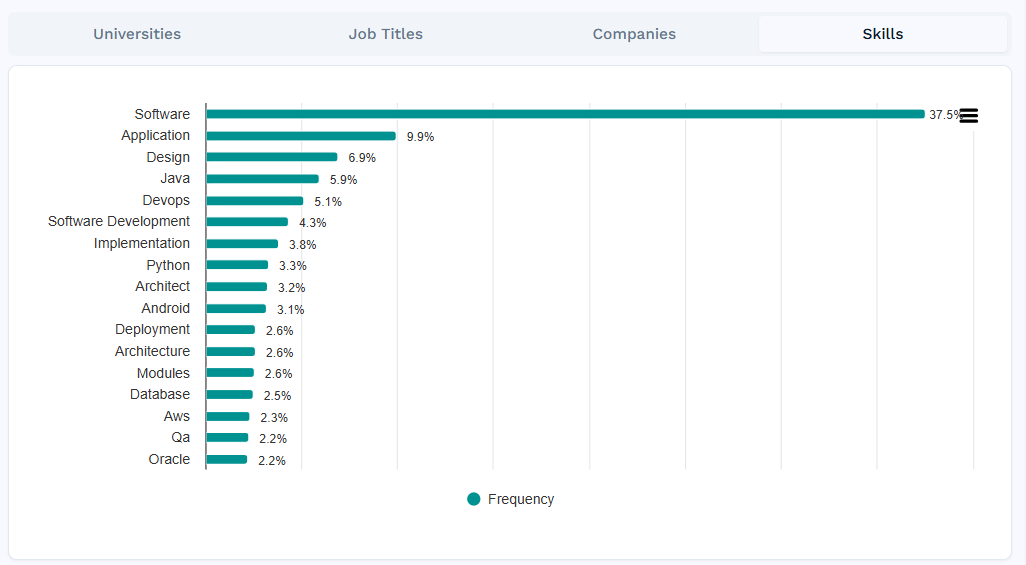
User experience matters enormously. The most powerful hiring analytics in the world are worthless if your team won't use the tool because it's clunky and confusing. Look for intuitive interfaces, customizable dashboards, and the ability to generate reports without requiring a data science degree.

Case Studies: Real-World Examples of Talent Acquisition Analytics Success


Ørsted: $40 Million in Strategic Workforce Planning Savings


Global renewable energy leader Ørsted partnered with Horsefly Analytics to transform their workforce planning function, achieving remarkable cost savings while expanding into new markets. By leveraging real-time talent analytics with an intuitive Boolean search interface, Ørsted identified locations with 60-70% salary cost reduction potential for 200-300 annual hires. The platform's interactive data visualization enabled real-time collaboration between HR and line managers, strengthening data-driven decision-making for global expansion. This resulted in $40 million in cost savings through strategic workforce planning and enhanced early career recruitment through university talent mapping.


Serocor: Improving Bid Win Ratios from 60% to 80%

Staffing giant Serocor faced challenges with manual market research and limited access to business intelligence databases. After implementing Horsefly Analytics, Serocor gained access to extensive datasets and powerful insights within minutes, transforming their bidding process. The platform's live tender data and efficient implementation through stakeholder collaboration enabled data-driven client meetings and strategic positioning. Serocor improved their win ratios from 60% to over 80%, enhanced client meetings with compelling market insights, and established thought leadership through quarterly market reports. The analytics platform helped them stand out in competitive bidding situations.


Ministry of Defence: Achieving 100% Recruitment Success

The UK Ministry of Defence struggled with warehouse operative recruitment, experiencing seven consecutive failed campaigns over two years due to salary discrepancies. Using Horsefly Analytics, the MOD identified a 14% gap between their wages and regional averages through comprehensive salary data analysis. Armed with this compelling evidence, they successfully secured a Recruitment and Retention Allowance (RRA), leading to 100% success in subsequent recruitment campaigns. The platform also supported optimized job advertisement placement across regions and targeted graduate schemes using university insights.

Take Action on Talent Acquisition Analytics


Data-driven recruitment isn't the future anymore. It's the present, and organizations still relying on gut feel are falling behind fast. The good news is you don't need to transform everything overnight.

Start by defining what success looks like for your organization and identifying the 3-5 metrics that actually matter. Get your data house in order - centralized, accurate, and accessible. Invest in tools that provide both internal analytics and external market intelligence.


Training and Partnerships for Talent Acquisition

Build analytics capabilities within your team through training and partnerships with data experts. Most importantly, create a culture where decisions are backed by evidence and where it's okay to test, learn, and adjust based on what the data tells you.

The organizations winning the talent war aren't the ones with the biggest recruiting budgets. They're the ones making smarter decisions based on better data. Talent acquisition analytics is how you join them. Contact Horsefly Analytics today to see workforce trends in your industry.


Sources - Horsefly Analytics, Psico Smart, Software Oasis, SHRM, AIHR, Vorecol

Ready To Take The First Step? 


Fair Usage  Cookies  Privacy Policy

© 2024 Horsefly is a trademark of AI Recruitment Technologies Ltd. All rights reserved.