The days of reactive hiring and gut-feel workforce decisions are over. Organizations that still rely on last year's headcount spreadsheets and educated guesses are already behind, and the gap is widening.
Workforce planning analytics transforms how businesses approach their most valuable asset: people. It replaces reactive scrambling with strategic foresight, growth and trends insight, turning workforce planning from a compliance exercise into a genuine competitive advantage (Monday).
What is Workforce Planning Analytics?
Workforce planning analytics is the practice of using data analysis and predictive modeling to align your workforce with business objectives. Rather than looking in the rearview mirror and hoping history repeats itself, you're using real-time data intelligence to identify the key principles of workforce planning, including forecasting talent needs and focusing on critical roles, identifying skills gaps, and making smarter decisions about where to invest your recruiting budget.
Traditional workforce planning typically involves annual reviews, static headcount targets, and crossing your fingers that things won't change too dramatically. Workforce planning analytics flips this approach entirely. It pulls together data from multiple sources (talent market analytics, internal performance metrics, economic indicators, skills trends) and turns it into actionable intelligence you can use right now.
The core components include data collection from internal and external sources, workforce composition analysis showing your current talent pool in granular detail, predictive modeling to forecast future requirements for workforce planning strategies, scenario planning for different business conditions, and gap analysis identifying the difference between current capabilities and future needs.
Workforce planning analytics differs from traditional approaches in one fundamental way: it's continuous, not annual (Onestream). The market moves too quickly for yearly planning cycles. Real workforce planning analytics operates in real-time, adjusting as conditions change.
Why is Workforce Planning Analytics Important?
The business case isn't theoretical; it's brutally practical. Organizations that get this right see measurable improvements across virtually all people analytics metrics that matter.
Improved Decision-Making: When you base workforce decisions on actual data rather than assumptions, you make fewer expensive mistakes. You know which roles are genuinely difficult to fill before you open the requisition. You understand where talent actually lives geographically, not just where you've always recruited. Research from a McKinsey study shows that organizations using data analytics can increase their productivity by 5-6% (Psico Smart).
Cost Optimization: Poor workforce planning is expensive. Rushing to fill urgent roles costs more. High attrition burns money on recruiting and lost productivity.
Workforce planning analytics cuts through this waste, allowing you to compare productivity levels across teams, job roles and locations. You recruit in the right locations at the right time, paying market rates rather than desperation premiums. Workforce planning allows full visibility into HR metrics and KPIs:
“You'll have an easy way to determine the most efficient action plans and cost-effective methods to recruit, up-skill, and train. Perform succession planning while optimizing costs, increasing employee performance and productivity, and reducing turnover rate.” (IBM)
Increased Organizational Agility: The defining characteristic of successful organizations isn't getting everything right the first time; it's adapting quickly when conditions change. Workforce planning analytics gives you this agility, ensuring you can plan properly for your future workforce. When market conditions shift, you're not starting from zero. You've already modeled scenarios for growth, contraction, and lateral moves.
The Workforce Planning Analytics Process: A Step-by-Step Guide
Define Organizational Goals and Objectives: Everything starts with clarity about where the business is heading. Your workforce planning and analytics must align with business goals, not exist independently. Get specific. "Reduce average response time by 30% through increased customer service capacity in EMEA region" is something you can actually plan for.
Collect and Prepare Relevant Data: You need both internal HR analytics (headcount, performance metrics, attrition rates, compensation) to support the external data (labor market intelligence, salary benchmarks, cost of living, industry trends). The Horsefly Analytics platform aggregates data from millions of social profiles updated daily, giving you live numbers rather than outdated surveys.
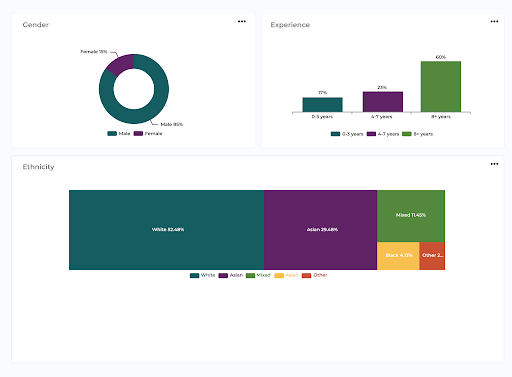
Analyze Current Workforce Composition and Trends: Build a complete picture of what you've currently got. What's the distribution of skills across your organization? Where are attrition rates highest? Use descriptive analytics to understand patterns. Horsefly's Diversity, Equity, and Inclusion analytics let you benchmark your workforce composition against the actual talent pool.

Identify Gaps Between Current and Future States: Compare your future needs against current composition. Where are the gaps? Horsefly's Difficulty of Hire Score provides a simple 1-10 rating showing which roles will be nightmares to fill, considering supply, demand, and diversity factors.
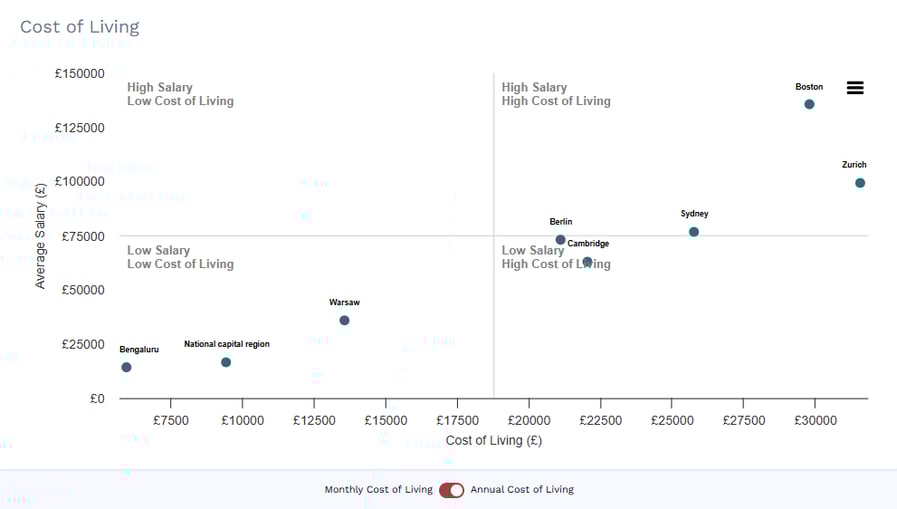
Develop and Implement Strategies to Address Gaps: Build targeted strategies around recruiting (Horsefly's Supply & Demand analytics show exactly where talent lives), development (Roles Impact Analysis reveals which skills you'll need tomorrow), retention (data reveals whether issues stem from compensation, management, or development), and location decisions (Cost of Living data helps you make smart workforce management shifts).
Monitor and Evaluate Outcomes: Set clear metrics aligned with your objectives. Track whether strategies are working and adjust when they're not. Compare actuals against forecasts.
Continuously Refine the Process: Use what you learn to improve your next strategic planning cycle. Organizations that excel treat this as a living discipline, not a static plan. Horsefly data is refreshed and validated daily, giving you current market intelligence rather than quarterly snapshots.
Types of Workforce Analytics
Descriptive Analytics analyzes historical data to understand what happened: your attrition rate, which roles took longest to fill, current skills distribution. You're establishing baselines and identifying patterns.
Diagnostic Analytics digs deeper into the "why" behind patterns. If attrition increased by 15%, diagnostic analytics investigates root causes by combining multiple data sources.
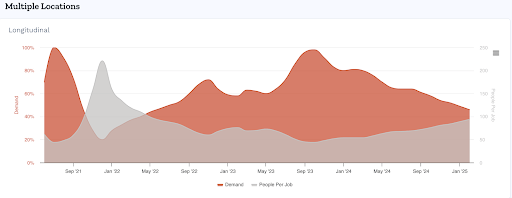
Predictive Analytics uses historical patterns and current trends to forecast what's likely to happen next. Horsefly's Longitudinal Perspectives plots talent supply and demand on the same graph so you can spot trends early and determine optimal timing for recruiting.
Prescriptive Analytics recommends specific actions. Horsefly's Summary Tab provides context-specific insights tailored to your search rather than generic dashboards, with clear recommendations you can act on immediately.
Many examples or analytics software also incorporate Elastic Hypercube Technology, enabling multi-dimensional analysis across numerous variables simultaneously, examining how skills, locations, experience levels, and other factors interact.

Ethical Considerations in Workforce Planning Analytics
Bias Mitigation: Algorithms can perpetuate existing biases if you're not careful. Address this through diverse data sources, regular bias audits, and human oversight. Use Horsefly to compare your workforce needs against actual talent pool demographics, revealing where gaps exist.
Data Privacy and Security: Implement robust security measures. Limit access based on legitimate business needs. Anonymize and aggregate data wherever possible. Comply with relevant regulations like GDPR and CCPA.
Transparency and Accountability: People deserve to understand how data-driven systems affect career decisions. Best practices state that it’s important to communicate clearly about how analytics inform strategic decisions. Establish accountability to develop trust and reduce any employee turnover. Algorithms inform decisions; they shouldn't make them autonomously.
Legal Compliance: Work with legal counsel to ensure analytical practices meet regulatory requirements across jurisdictions. Document methodologies and maintain audit trails.
Real-World Examples and Case Studies
The UK’s largest gas distribution network, Cadent Gas, enlisted Horsefly Analytics to provide them with location-specific talent insights and salary distribution analysis from across these hotspots. They also gained gender and ethnicity demographic insights to help forward their strategic workforce planning strategy.
British multinational telecommunications company, BT Group, was able to build a data-driven talent acquisition strategy that has delivered a huge business impact by enabling BT recruiters to make fully-informed recommendations while taking part in live hiring manager conversations. BT Group also utilized the DE&I data to enable strategic targeting by employing location and market data advances, thereby enabling accurate insights to inform decisions, rather than guesswork.
Next Steps: Implementing Workforce Planning Analytics
Define clear business objectives that workforce planning needs to support. Connect workforce planning directly to business strategy and revenue goals.
Audit your current data sources and identify gaps. What external market intelligence would inform better decisions?
Start with a focused use case, perhaps reducing time-to-fill for critical technical roles or improving retention in high-attrition segments, and demonstrate value before expanding scope.
Invest in proper analytical tools that provide the data quality and analytical sophistication you need. Purpose-built workforce analytics platforms like Horsefly provide the data infrastructure, analytical capabilities, and real-time market intelligence that make sophisticated workforce planning practical, showing why organizations use workforce planning software.
Build organizational capability around workforce analytics. Train relevant stakeholders on interpreting workforce data and using insights effectively.
The organizations winning the talent management game aren't the ones with the biggest recruiting budgets; they're the ones making smarter decisions based on better data. Workforce planning analytics gives you that advantage.
Ready to transform your workforce planning from reactive scrambling to strategic advantage? Download our workforce planning template to get started, or contact us to request a demo to see how real-time talent intelligence can power your workforce strategy.
Sources: Horsefly Analytics, Monday, Onestream, Psico Smart, IBM
Ready To Take The First Step?