.png?width=2000&name=Horsefly-Logo-NewTag_White%20(3).png)
Implementing talent intelligence doesn't just make HR more efficient. It makes the entire organization smarter about one of its most significant assets: its people.
Improved hiring quality. When you understand where the right talent actually exists, what skills they have, and what they expect to be paid, you stop hiring on hope and start hiring on evidence. That means fewer mis-hires and faster time-to-productivity.
Reduced hiring costs. Data-driven sourcing strategies reduce wasted spend on channels that aren't working. Organizations that know where talent concentrations are highest can focus their resources accordingly, cutting the cost-per-hire without cutting corners.
Enhanced retention rates. Talent intelligence isn't just about bringing people in. Understanding compensation benchmarks, EVP trends, and skills demand helps you build environments that keep good people from leaving. If you can see what competitors are offering before your employees do, you can stay ahead of it.
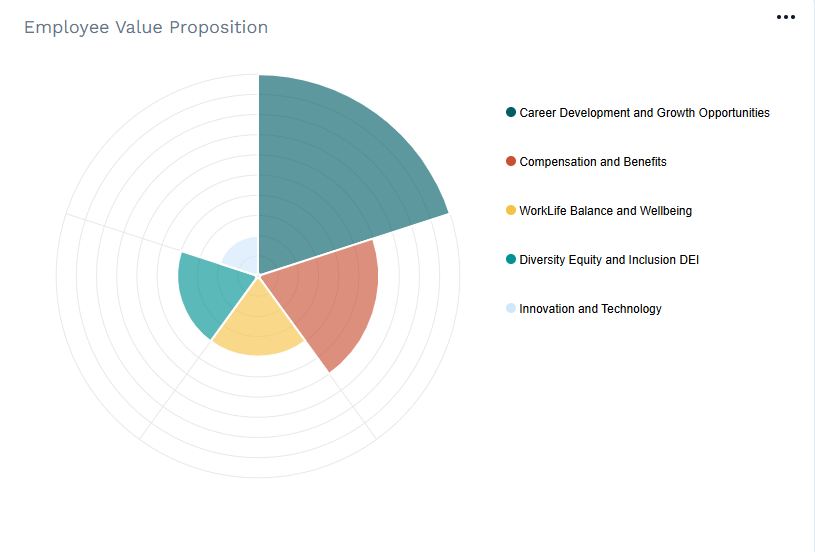
Image shows EVP data form the Horsefly platform
Strategic competitive advantage. Organizations using talent intelligence can see labor market shifts before they hit. A competitor ramping up hiring in a particular skills area, a regional talent pool shrinking, or a new skill set gaining momentum are all signals that show up in the data long before they appear in the news.
Better workforce planning. With accurate labor market data informing decisions about headcount, location, and skills investment, workforce planning becomes less of an annual guessing exercise and more of an ongoing, evidence-based process.
Talent intelligence at scale is only possible because of the technology underpinning it. The volume, variety, and velocity of relevant data, from job postings and salary surveys to social profiles and skills trends, makes manual analysis impractical. Modern platforms handle this through a combination of AI, machine learning, and advanced data analytics.
Artificial intelligence (AI) enables platforms to process enormous volumes of unstructured data (job postings, skills descriptions, company information) and extract meaningful signals from the noise. AI can identify patterns in hiring activity, flag emerging skills before they become mainstream requirements, and surface recommendations tailored to specific searches.
Machine learning allows systems to improve over time. The more data they process, the better they get at identifying relevant patterns, predicting labor market movements, and refining the accuracy of the insights they surface.
Predictive analytics or talent metrics is where this gets genuinely powerful for strategic planning. By modeling historical labor market trends against current signals, platforms can forecast where supply and demand are heading, giving HR and business leaders the visibility they need to plan ahead rather than react.
Data analytics ties it all together, turning raw inputs into usable insights through dashboards, visualizations, and summary intelligence that makes complex market data accessible to non-technical users.
Horsefly Analytics draws on over 1 trillion data points from thousands of online sources, covering 170,000 towns and cities across 65 countries and a unique taxonomy of 815,000 job titles and skills in 39 languages. Its Signal Skills feature detects skills gaining momentum before they become standard requirements, while its Longitudinal Intelligence module lets users model forward scenarios based on real historical supply and demand data. The platform is built to give users immediate, actionable insight without requiring data science expertise. Get in touch today to benefit from our own expert guidance.

Recruitment is one of the most immediate beneficiaries of talent intelligence, and the improvements it enables go well beyond knowing where to post a job.
Skills gap analysis. Understanding which skills are in short supply relative to demand is foundational to hire the right people. If you're recruiting for a role where the skills market is tight, you need to know that upfront so you can adjust your timelines, compensation offer, or sourcing strategy. Horsefly's Difficulty of Hire Insights feature gives teams exactly this visibility, flagging which roles will need more time and effort to fill before recruiting even begins.
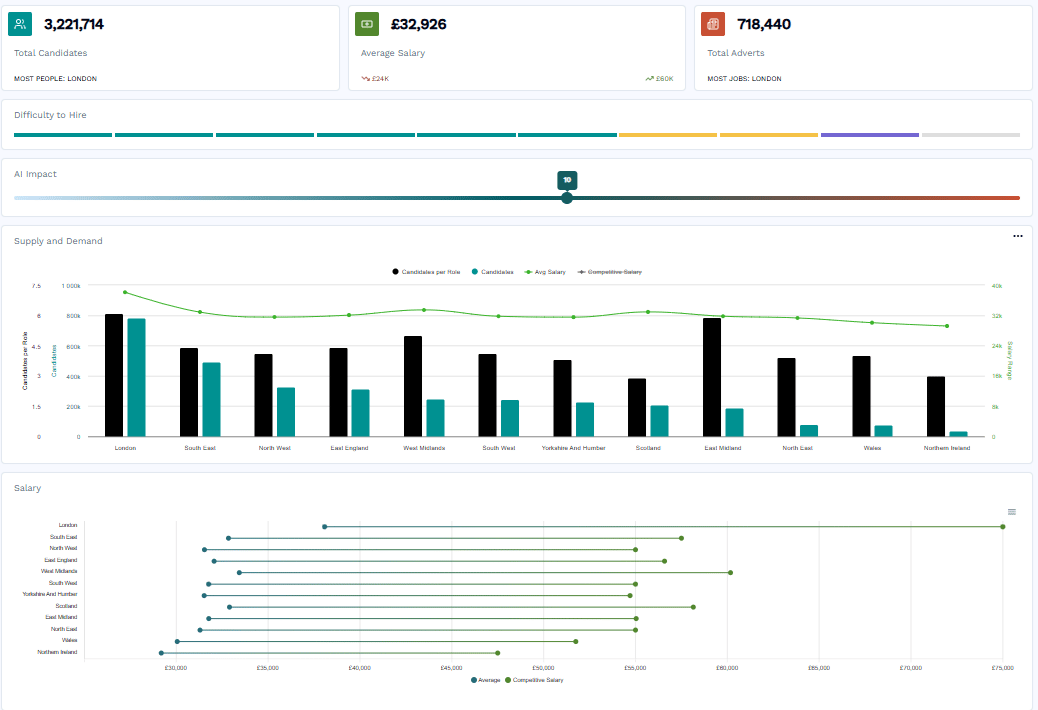
Image shows the Difficulty of Hire metrics within the Horsefly platform
Talent sourcing. Talent intelligence tells you not just that talent exists, but where it exists and in what concentration. Global Heat Maps, for example, let users build visual heat maps in seconds to identify where any skill lives, including niche skills that might not be obvious from a standard geography search.
Hiring process optimization. With tools like Horsefly's X-Ray Search Intelligence, recruiters can build accurate Boolean search strings in seconds, validate them against real profiles before committing, and launch searches directly from the platform without switching between tools. What used to take hours can be reduced to seconds.
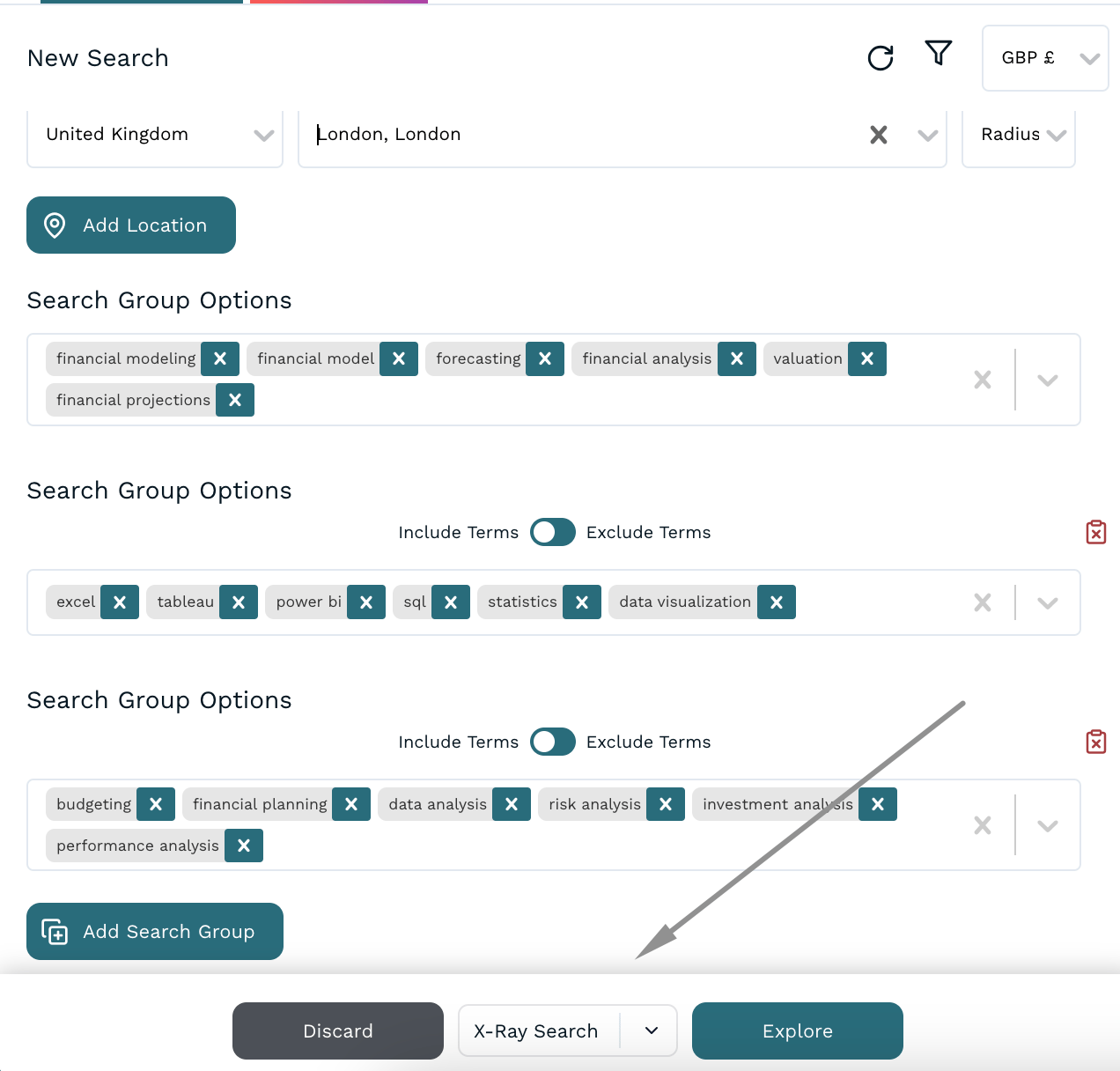
Image shows the X-Ray Search capabilities within the Horsefly platform
Talent experience. A well-informed recruiter who understands the market context, the realistic talent pool, and the competitive landscape is better equipped to have meaningful conversations with the people they're trying to hire, thereby improving the whole candidate experience.
Strategic workforce planning has always been aspirational for most organizations. The data was either too incomplete, too outdated, or too difficult to access for planning to feel genuinely evidence-based. Talent intelligence changes that.
Predictive talent metrics. Platforms like Horsefly allow planners to track supply and demand trends over time, overlay them on a single view, and model forward scenarios grounded in real historical data. Rather than relying on static headcount forecasts, organizations can see where pressure is building in specific roles or skills areas and plan accordingly.
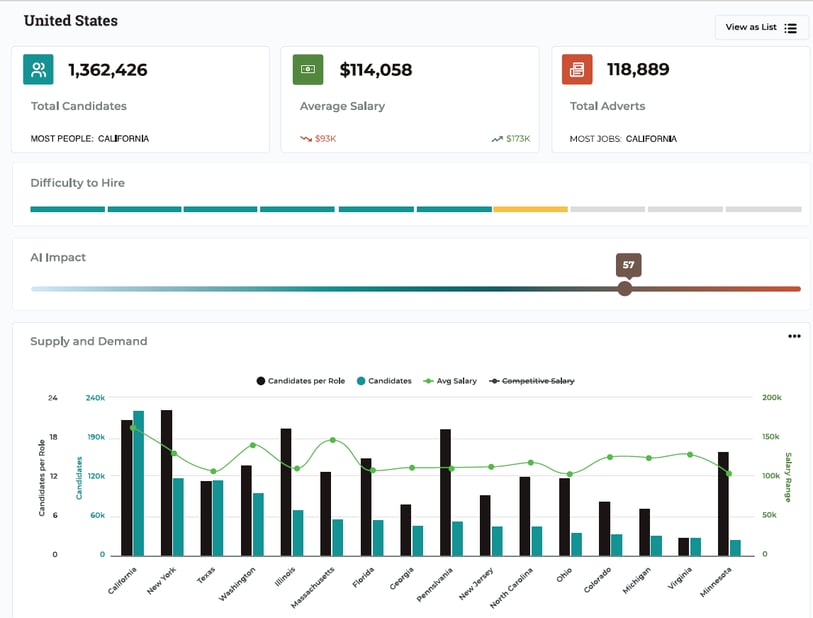
Image shows the Supply and Demand data from the Horsefly platform
Strategic workforce planning. Talent intelligence supports the full planning cycle, from identifying future talent needs and assessing build vs. buy decisions to evaluating location strategies based on real talent availability and cost of living data. Supply and Demand Insights, for instance, allow organizations to understand talent availability and scarcity across different regions, industries, and roles in real time.
Identifying future talent needs. The shift toward skills-based hiring makes this particularly important. As job roles evolve, knowing which skills are gaining momentum (and which are becoming obsolete) is critical for making smart decisions about hiring, upskilling, and workforce transformation. Horsefly's AI Impact Analysis feature helps organizations understand how AI is likely to affect their workforce, giving them data-driven answers instead of speculation.
Talent intelligence is only as good as the data behind it. The most important data sources fall into a few key categories.
Labor market data covers external signals like job posting volumes, skills demand trends, salary benchmarks, and talent pool size by geography. Platforms aggregate this from thousands of online sources, refreshed and validated daily.
Internal data includes everything organizations already know about their workforce: headcount, skills profiles, attrition rates, time-to-fill, and performance data. Integrating internal and external data is where talent intelligence becomes especially powerful.
Skills data tracks what skills exist in the market, how in-demand they are, and how they're evolving. Horsefly's Skills Insights feature allows organizations to compare their workforce's skill sets against industry standards and anticipate future skill requirements. If you’d like to find out more about skills data, contact us to discover workforce trends in your industry.

Benchmarking puts all of this in context. Whether it's compensation benchmarks, DEI benchmarks, or Difficulty of Hire scores across locations, benchmarking allows organizations to understand where they stand relative to the market and make adjustments accordingly.
Talent intelligence is an investment, and like any investment, it needs to justify itself. The good news is that the ROI is measurable, and the metrics are ones HR leaders are already tracking.
Key metrics to monitor include cost-per-hire, time-to-fill, quality-of-hire (measured through performance ratings and retention at 12 months), offer acceptance rates, and attrition rates. Improvements in any of these, compared to pre-implementation baselines, provide concrete evidence of return.
For workforce planning, additional KPIs (Key Performance Indicators) include the accuracy of headcount forecasts, reduction in emergency or reactive hiring, and the proportion of roles filled from identified talent pools rather than cold sourcing.
To calculate ROI, compare the cost of a talent intelligence platform against measurable efficiency gains (recruiter time saved, agency fee reductions, faster time-to-fill) and quality improvements (lower attrition, higher performance in new hires). Even modest improvements across a large hiring volume can deliver returns that more than justify the investment.
When presenting the business case to stakeholders, frame talent intelligence not as an HR tool but as a strategic resource that reduces risk, improves decision quality, and gives the organization a competitive advantage in the labor market. Get in touch to discuss your specific needs to start gaining that edge.

Talent intelligence doesn't operate in isolation. When connected to other HR functions, it amplifies the impact across the entire people strategy and candidate experience.
Compensation and benefits. Compensation Insights feature allows organizations to benchmark their packages against industry standards globally, identify pay disparities, and make data-driven adjustments that support both equity and competitiveness. Its Cost of Living Insights module adds another layer, helping organizations craft compelling compensation strategies tailored to local market conditions.
Performance management. Understanding how skills demand is shifting externally helps organizations align performance frameworks with where the market is heading, not just where it's been.
Learning and development. Skills gap data from talent intelligence platforms directly informs L&D investment decisions. Rather than building training programs based on anecdotal need, organizations can see exactly which skills their workforce needs to develop and prioritize accordingly. Horsefly's Skills Insights feature makes this link explicit, aligning training and development spend with real market demand.
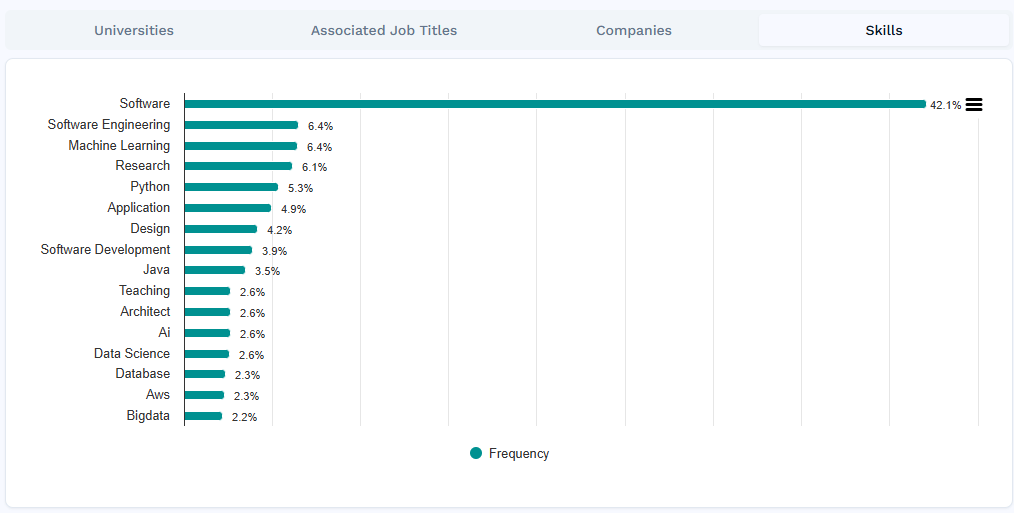
Image shows data on skills within the Horsefly platform
DEI. DEI Insights feature allows organizations to set diversity benchmarks, track progress over time, and leverage comprehensive data to identify and support diverse talent pools. Integrating this with broader workforce planning ensures DEI goals are embedded in strategy rather than treated as a separate workstream.