.png?width=2000&name=Horsefly-Logo-NewTag_White%20(3).png)
The analytics platform market is crowded, confusing, and full of buzzwords that don't actually tell you what you need to know. If you're tasked with choosing a data analytics platform for your business, you've probably noticed that every vendor uses words like "comprehensive," "scalable," and "AI-powered." And they may be, but what do those terms actually mean for your specific needs?
This guide cuts through the noise. We're going to look at what makes an advanced data analytics platform actually useful, compare different types based on real-world use cases, and give you a framework for making a decision that won't come back to bite you later.
A data analytics platform is a collection of tools and technologies that help organizations process and analyze data to make better decisions. Think of it as the infrastructure that turns raw data into actionable insights. This is why it’s so important to have a modern data platform, as you need your data as current and usable as it possibly can be.
The keyword here is "platform." We're not talking about a single tool that does one thing. A proper data analytics platform brings together multiple components or features that work as a cohesive system:
Data integration pulls information from various sources - databases, APIs, files, streaming data - and consolidates it in one place. This is the foundational layer that determines what data you can actually work with when it’s put into a data platform, which is where you can actually start to work with the data and findings.
Data warehousing provides a centralized repository where all that integrated data lives. Modern options include cloud data warehouses, data lakes, and data lakehouses, each with different trade-offs.
Business intelligence tools transform raw data into visualizations, dashboards, and reports that humans can actually understand and act on. This is where data becomes insights.
Data governance establishes the rules, policies, and processes that ensure your data remains secure, compliant, and trustworthy. Without this, you're building on shaky ground.
Data observability monitors the health of your data pipelines, catching issues before they cascade into major problems.
Machine learning capabilities enable predictive analytics and advanced modeling. Not every business needs this immediately, but having the option to grow into it matters.
The benefits are straightforward. You get a single source of truth instead of scattered spreadsheets. You can answer complex questions that span multiple data sources. You reduce the time between asking a question and getting an answer from weeks to minutes, plus, you can scale your analytics capabilities as your business grows without rebuilding everything from scratch.
Comparing Types of Data Analytics Platforms: A Use Case Approach
To be practical, rather than listing features, we'll look at different types of platforms through the lens of what they're actually good for.
General-Purpose Business Intelligence Platforms
These platforms focus on making data accessible to non-technical users. Their strength is visualization and exploration.
Best for: Companies where the primary analytics need is reporting and visualization. Marketing teams tracking campaign performance, sales teams monitoring pipeline metrics, and executives wanting company-wide KPI dashboards can benefit from data visualization techniques.
Strengths: Low barrier to entry, intuitive interfaces, strong visualization capabilities, broad connectivity to common data sources.
Weaknesses: Limited on data transformation and preparation, not ideal for complex data modeling, can become expensive at scale, performance issues with very large datasets.
Real-world scenario: A mid-sized retail company wants to track sales performance across regions, understand inventory turnover, and monitor customer acquisition costs. They already have clean data in their ERP and CRM systems. A business intelligence platform lets them build dashboards quickly without hiring a data engineering team.
Cloud Data Platform Solutions
These platforms are built for handling massive amounts of data with modern cloud architecture. They separate storage from compute, which means you can scale each independently.
Best for: Organizations with large data volumes, complex analytics needs, or requirements for both historical and real-time analysis. Companies building data products or serving analytics to customers.
Strengths: Handles petabyte-scale data, excellent performance, flexible pricing models, strong support for diverse data types, built-in security and governance.
Weaknesses: Requires more technical expertise to set up and maintain, costs can spiral if not managed carefully, the learning curve for optimization is steep.
Real-world scenario: A financial services company processes millions of transactions daily and needs to detect fraud patterns, generate regulatory reports, and provide analytics to relationship managers. They need something that handles high data volumes while maintaining query performance and meeting strict compliance requirements.
Specialized Workforce and Talent Analytics Platforms
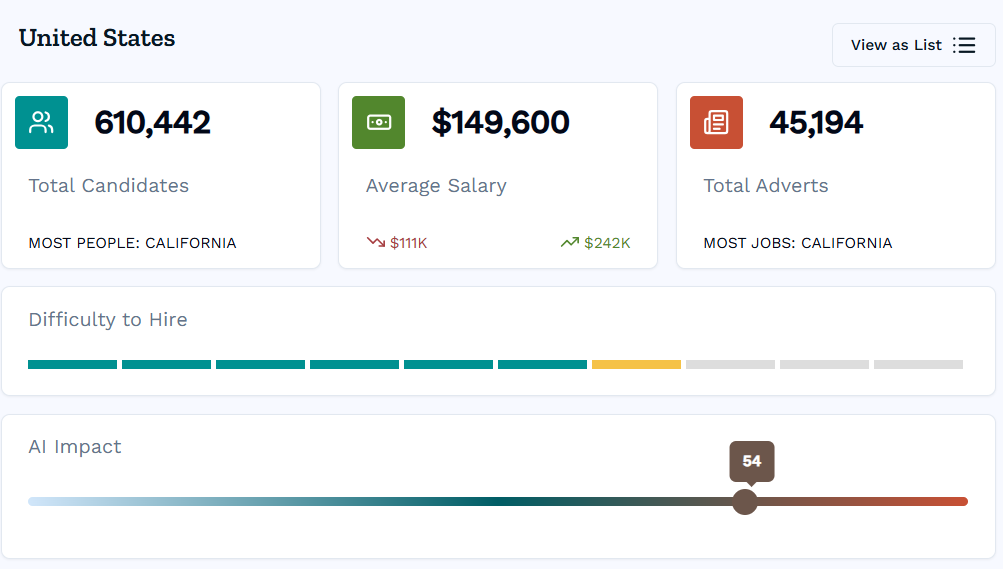
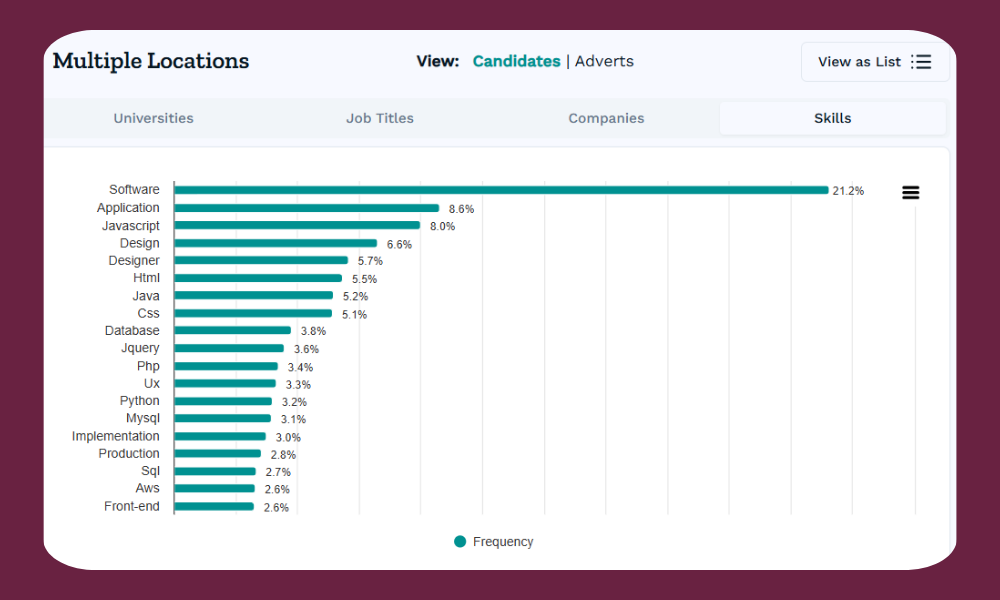
Platforms like Horsefly Analytics focus on a specific domain - in this case, labor market and talent intelligence. Rather than being general-purpose, they're purpose-built with specialized data sources and analytics capabilities for workforce planning.
Best for: Organizations making strategic talent decisions - where to hire, what skills to develop, how to compete for talent, and where to locate offices or operations based on talent availability.
Strengths: Deep domain expertise, pre-built analytics for common use cases, proprietary data sources you can't access elsewhere, context-specific insights rather than raw data.
Weaknesses: Integration would be beneficial to gain as much as possible out of these platforms and to link up with your other HR systems. This often requires technical resource, which can be difficult to secure due to competing projects. Horsefly has recognized this potential barrier and has developed additional options (as simple as an Excel download) as a workaround until a full API integration can be built. To find out more about this, get in touch for more expert guidance.
Real-world scenario: A global technology company is planning expansion into Southeast Asia and needs to understand where software engineering talent is concentrated, what competitive salary ranges look like across different cities, and how gender diversity varies by location and skill set. A talent analytics platform provides this specific intelligence faster and more accurately than trying to piece it together from general data sources.
Integrated Enterprise Data Analytics Software
Enterprise data analytics platforms offer comprehensive suites that span the entire analytics stack - from data ingestion to machine learning. They're tightly integrated with their respective cloud ecosystems.
Best for: Large enterprises already committed to a particular cloud provider, organizations building complex data ecosystems with multiple analytics use cases.
Strengths: Deep integration within their ecosystem, economies of scale if you're already using other services from the same provider, comprehensive feature sets, enterprise-grade security and compliance.
Weaknesses: Can create vendor lock-in, complexity increases with the breadth of offerings, may include capabilities you'll never use.
Real-world scenario: A healthcare organization runs their entire infrastructure on AWS. They're building a patient outcomes analytics system that combines clinical data, claims data, and population health metrics. Using AWS's data and analytics platform means everything speaks the same language and shares the same security model.
Building a Data Analytics Platform: Key Considerations
Whether you're starting from scratch or expanding existing capabilities, certain foundational decisions will shape everything that follows.
Data Integration Strategies
You'll encounter two main approaches: ETL (Extract, Transform, Load) and ELT (Extract, Load, Transform).
Traditional ETL transforms data before loading it into your warehouse. This made sense when storage was expensive and computational power was cheap.
Modern ELT flips this around - load first, transform later. This works better with cloud data warehouses where storage is cheap and computational power is flexible. You keep raw data intact and transform it as needed for specific use cases.
The practical implication: ELT gives you more flexibility because you're not locked into transformation decisions made during ingestion. ETL is more efficient if you're absolutely certain about your data model upfront.
Data Warehousing Options
Cloud data warehouses are optimized for structured data and SQL-based analytics. They're fast, scalable, and integrate well with BI (Business Intelligence) tools.
Data lakes store raw data in its native format - structured, semi-structured, or unstructured. They're more flexible but require more work to make data queryable and useful.
Data lakehouses attempt to combine the flexibility of lakes with the performance and structure of warehouses. They're gaining traction but represent newer technology.
The right choice depends on your data types, query patterns, and team skills. If you're primarily working with structured business data and SQL-savvy analysts, a cloud data warehouse is the straightforward path. If you're dealing with unstructured data or machine learning workloads, a lakehouse architecture might make more sense.
Business Intelligence Tools and Dashboards
Once your data infrastructure is in place, you need ways for people to actually use the data.
The key consideration is your audience. Are you building dashboards for executives who want high-level KPIs? Data analysts who need to slice and dice data in ad-hoc ways? Operational teams who need real-time monitoring?
Don't make the mistake of choosing based on demos alone. Run a pilot with real data and real users from your organization.
Data Governance and Security Best Practices
Data governance covers who can access what data, how data quality is maintained, how data lineage is tracked, and how changes are managed. Without governance, you end up with contradictory reports, compliance violations, and security breaches.
Start with clear data ownership. Every dataset should have an owner responsible for its quality and appropriate use. Establish data classification policies - not all data needs the same level of security controls.
Implement access controls based on the principle of least privilege. Use role-based access control rather than managing permissions individually.
Document data lineage so you can trace where data comes from, how it's transformed, and where it's used.
Cost Optimization Strategies for Data Analytics Platforms
Data management and analytics platforms can get expensive fast if you're not paying attention. The beauty and curse of cloud pricing is that it scales automatically - including the bill.
Infrastructure Costs
Storage costs are relatively cheap, but they add up when you're storing petabytes. Computational costs are where things get interesting. Most cloud platforms charge based on compute usage - queries, transformations, ML training runs.
The key to managing compute costs is understanding your usage patterns. Optimize your queries and table structures. Implement auto-scaling and shut down resources when not in use.
Storage costs can be optimized by implementing data lifecycle policies. Hot data that's accessed frequently lives in fast, expensive storage. Warm data moves to cheaper storage tiers. Cold data moves to archival storage at a fraction of the cost.
Licensing Costs
Platform licensing varies wildly. Some charge per user, others per query, others per data volume processed. Understand the pricing model before you commit.
Watch out for hidden costs. That BI tool might have attractive base pricing, but what about embedded analytics features? Advanced security controls? API access?
Strategies for Reducing Costs
Right-size your infrastructure. Most organizations over-provision initially, then forget to dial it back. Regularly review usage and adjust accordingly.
Implement query optimization. Bad queries can consume orders of magnitude more resources than good ones.
Use workload management. Separate interactive queries from batch processing with appropriate performance characteristics and costs.
Negotiate committed use discounts. Cloud providers offer significant discounts for commitment contracts.
Monitor and alert on cost anomalies. Set up alerts for unusual spending patterns so you catch problems before the monthly bill arrives.
Ethical Considerations and Data Security
Data analytics platforms give you enormous power to analyze people, behaviors, and outcomes. With that power comes responsibility.
Data Privacy and Bias
Just because you can analyze something doesn't mean you should. Consider the privacy implications of what you're doing.
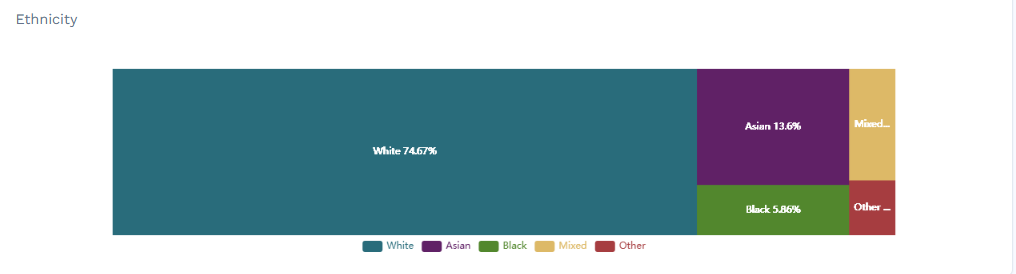
Bias in data analytics isn't always obvious. It can creep in through data collection, feature selection, or model design. Address bias proactively. Audit your data sources for representativeness. Test your analytics across different demographic groups.
Compliance Standards
Depending on your industry and geography, you're subject to various compliance requirements. GDPR governs personal data of EU residents. HIPAA applies to healthcare information. CCPA covers California consumers.
Build compliance requirements into your platform selection criteria. Some platforms have built-in compliance features and certifications. Others require significant additional configuration.
Data Security Best Practices
Security operates in layers. Encryption at rest protects data stored in databases. Encryption in transit protects data moving between systems. Both are table stakes.
Network security controls what systems can communicate with your analytics data platform. Authentication and authorization ensure only legitimate users can access the platform. Implement multi-factor authentication.
Monitoring and logging provide visibility into who's accessing what data and when. Data masking and anonymization allow you to use production data for testing without exposing sensitive information.
The Role of Data Governance in Ethical Data Analysis
Strong data governance isn't just about compliance - it's the foundation for ethical data use. Create a data ethics review process for new analytics use cases, especially those involving sensitive data or consequential decisions.
Document decisions and rationale. When questions come up later, you want to be able to demonstrate thoughtful consideration in your data exploration process.
Choosing the Right Data Platform for Analytics: A Step-by-Step Guide
Now that we've covered the landscape, let's walk through actually making a decision.
Assessing Business Needs
Start by understanding what problems you're trying to solve. Specific problems like "sales managers can't see pipeline health in real-time" or "we're making location decisions without understanding local talent markets."
Talk to the people who will actually use the platform. What questions are they trying to answer? What decisions are they trying to make? For example, if you are after a way to understand and reach your customers more, perhaps a CDP (Customer Data Platform) would be better for you as this would focus on allowing you to gain more engagement with your ideal customer profiles, rather than a data platform that manages all organizational data.
Understand your data landscape. What systems contain relevant data? How clean is it? What integration challenges will you face? To unlock more insights on this, get in touch.
Defining Requirements
Turn business needs into concrete requirements and separate must-haves from nice-to-haves.
Consider both functional and non-functional requirements. Functional requirements cover what the platform needs to do. Non-functional requirements cover how it needs to work - performance expectations, scalability needs, security requirements, budget limitations.
Don't forget organizational requirements. What skill sets do you have on your team? How much complexity can your organization realistically handle?
Evaluating Platforms
Create a shortlist based on your requirements. Request demos focused on your specific use cases. Run proof-of-concept projects with your own data. This is where you discover the gaps between marketing claims and reality.
Talk to existing customers in similar industries. What were their implementation challenges? What hidden costs did they encounter?
Testing and Piloting
Before committing to a full rollout, run a limited pilot. Choose a specific business problem with clear success metrics using advanced analytics. Get a cross-functional team involved.
Set a fixed timeline for the pilot. Can the platform handle your data? Can your team learn to use it? Does it actually solve the business problem?
Implementation and Training
Plan your rollout in phases. Start with a core use case and expand from there.
Invest in training. The platform's capabilities won’t matter if your team can't use them effectively. Training needs vary by role - technical training for engineers, analytical training for analysts, dashboard usage for business users.
Establish support processes. Create mechanisms for users to request new capabilities and report issues.
Which is the Right Data Analytics Platform? Making the Decision for your Business
Choosing a data analytics platform is consequential, but it's not permanent. Technology evolves, business needs change, and what works today might not work in three years.
The key is making a thoughtful decision based on your current needs while building in flexibility for the future. Avoid over-engineering for hypothetical future requirements, but don't paint yourself into a corner either.
Focus on platforms that align with your organizational capabilities. The most powerful platform in the world won't help if your team can't use it effectively.
Pay attention to total cost of ownership, not just licensing fees. Consider implementation costs, training costs, operational costs, and the opportunity cost of time spent managing rather than analyzing.
And remember: the platform is a means to an end. The goal isn't to have the best analytics platform - it's to make better decisions faster. Keep that in mind throughout the selection process.
Ready to see how a purpose-built talent analytics platform can transform your workforce planning?
Request a custom consultation to explore Horsefly's comprehensive labor market intelligence capabilities.
Sources - Horsefly Analytics, GDPR, HIPAA, CCPA