.png?width=2000&name=Horsefly-Logo-NewTag_White%20(3).png)

The overall average salary for a data scientist in the UK sits at around £55,000 to £60,000 per year, though that headline figure can be misleading on its own. Where you are in your career, what city you work in, and which industry you work in all have a significant impact on what you can expect to earn.
Salary Progression by Experience Level
|
Experience Level |
Years of Experience |
Typical Salary Range (UK) |
|
Junior Data Scientist |
0-2 years |
£28,000 - £42,000 |
|
Mid-Level Data Scientist |
2-5 years |
£42,000 - £60,000 |
|
Senior Data Scientist |
5-8 years |
£60,000 - £85,000 |
|
Principal Data Scientist |
8+ years |
£85,000 - £120,000+ |
Junior data scientists (0-2 years) are usually focused on developing foundational skills, including data cleaning, exploratory analysis, and building basic models. The jump from junior to mid-level typically happens once someone can own a project end-to-end rather than just contributing to one. Senior data scientists are typically leading technical direction and mentoring others, while principal data scientists are often setting strategy across entire data functions or specializing deeply in areas like MLOps or advanced machine learning.
These ranges are estimates informed by multiple UK salary aggregators, including Glassdoor, Indeed, and Robert Walters.
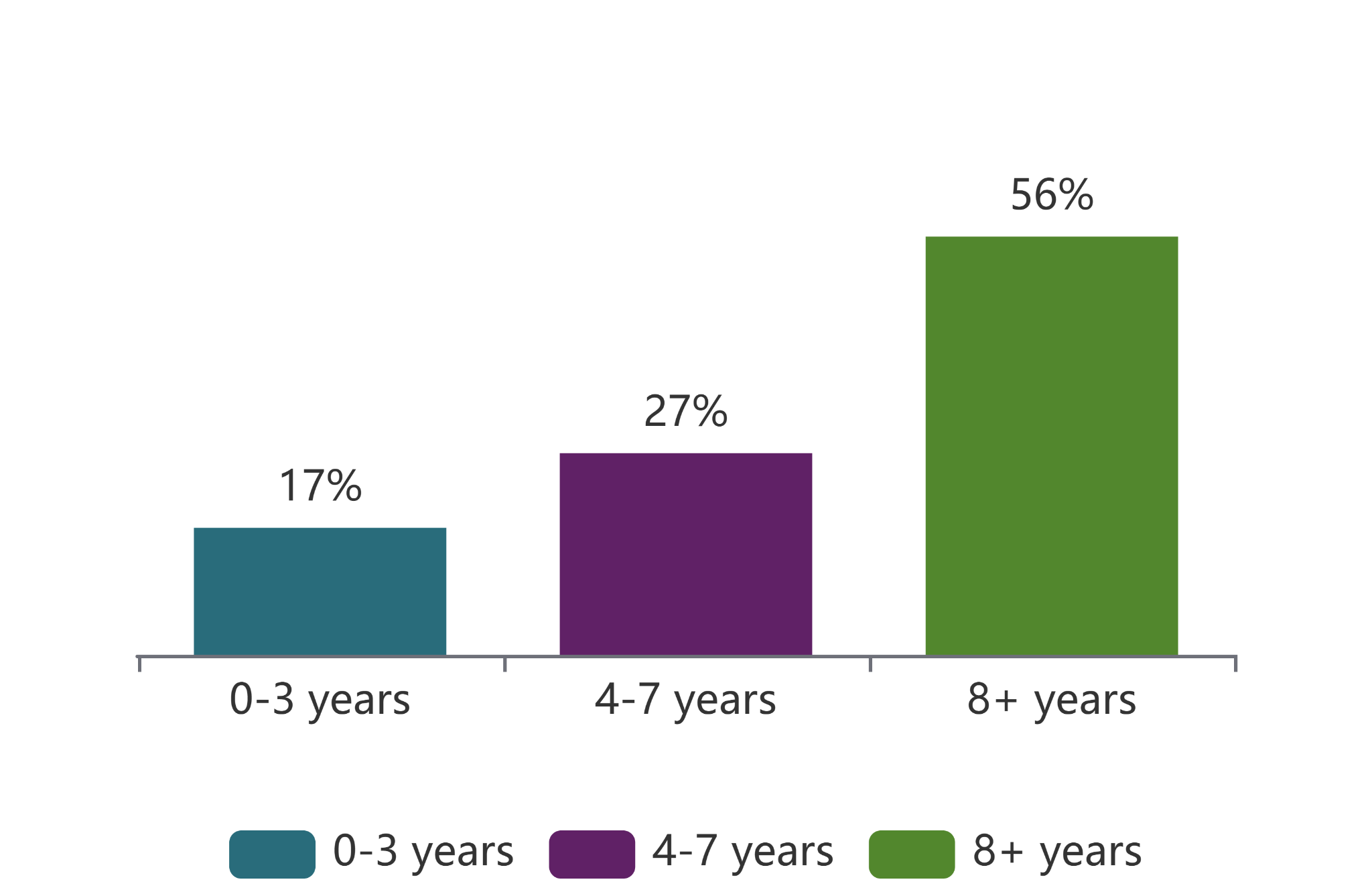
The following shows an experience chart created from Horsefly data, which depicts the number of data scientists within each experience level. As you can see, there are more within the 8+ years experience, meaning, as demand grows, the industry will need more data scientists to work their way through the ranks, up to the higher salary levels, to keep up with demand.
Location: UK Cities and Regions
Location remains one of the strongest predictors of data scientist pay in the UK. London leads the pack by a notable margin, with salaries typically running 20-30% higher than the national average. A mid-level data scientist earning £55,000 elsewhere might reasonably expect £65,000-£70,000 for an equivalent role in London, though this needs to be weighed against the higher cost of living.
Manchester and Edinburgh are the next strongest markets, driven by growing tech scenes and a lower cost of living relative to London. Birmingham, Bristol, and Leeds are also attracting investment from large technology employers and consulting firms, pushing salaries upward in those cities. Outside major urban centers, salaries tend to be lower, though remote and hybrid working has narrowed this gap considerably in recent years.
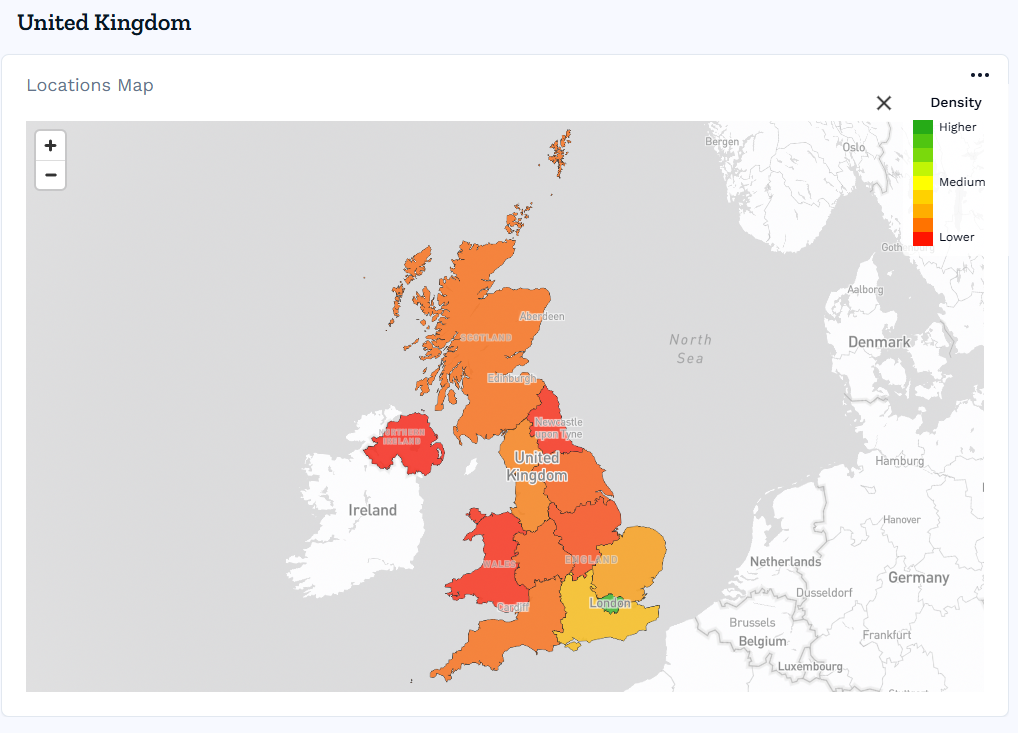
Image shows location insights from the Horsefly platform
Education and Qualifications
A bachelor's degree in a quantitative subject such as computer science, mathematics, statistics, or operational research is the standard entry requirements for most data science roles. However, a postgraduate degree, particularly a master's in data science, machine learning, or a related field, tends to translate to a higher starting salary and faster progression.
Postgraduate master's conversion courses are also worth noting. These have become a credible pathway for graduates from non-quantitative backgrounds who want to move into data science. Employers increasingly recognize them, particularly when paired with a strong portfolio.
Professional certificates from platforms like Coursera, IBM, or Microsoft can supplement formal education and signal to employers that a candidate is keeping pace with a fast-moving field. Certifications in cloud platforms (AWS, Azure, GCP) and machine learning frameworks carry particularly strong salary signals at mid-to-senior level.
Experience and Career Path
Experience is the most straightforward driver of salary growth in data science. Moving from junior to mid-level typically requires demonstrating that you can work independently on data problems, communicate findings clearly, and start to influence the technical direction of projects. From mid-level to senior, it is about depth of technical expertise and leadership, not just tenure.
Career path choices also matter. Data scientists who specialize in machine learning engineering, MLOps, or AI research tend to earn at the higher end of the scale. Those who move into management or head of data roles can exceed the salary ranges shown above. Freelance and contract data scientists can also command high day rates, particularly in financial services and consulting.
If you’re interested in seeing where data scientists have come from, you can use the Horsefly metadata to discover more:
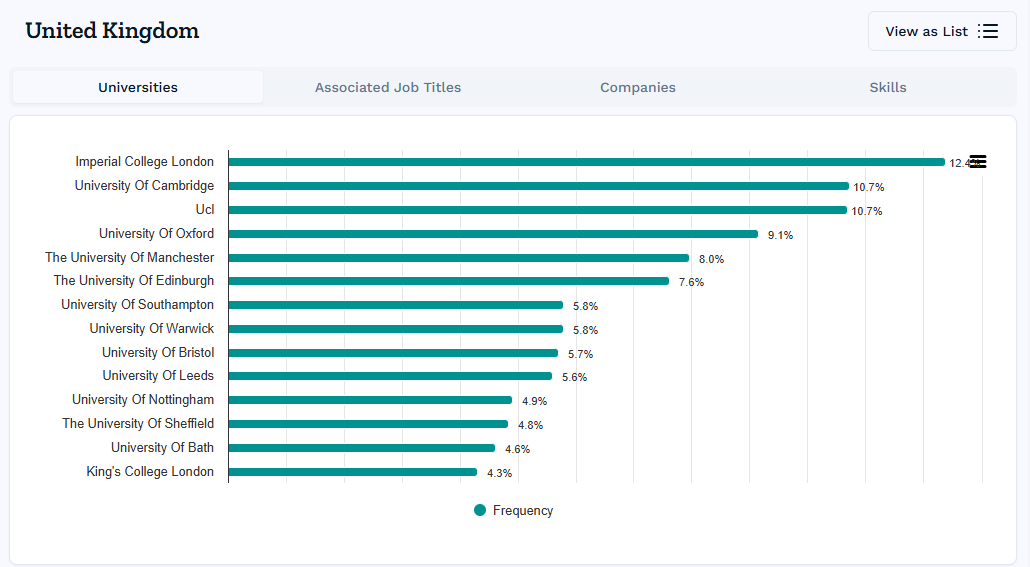
If you’d like to look into this further, or discover what skills you should be looking for (data analytics and a job’s salary go hand-in-hand), you can contact us to unlock more insights.
Company Size and Industry
Company size has a real impact on total compensation, though not always in the way people expect. Large enterprises typically offer higher base salaries and more structured benefits, but startup and scale-up roles sometimes close the gap with equity and performance bonuses. FinTech firms and large technology companies consistently pay at the top of the range. Government and public sector roles are generally lower on base salary but often offer strong pension contributions, job security, and work-life balance.
|
Industry |
Typical Salary Range |
|---|---|
|
FinTech / Financial Services |
£55,000 - £110,000 |
|
Technology / Software |
£50,000 - £100,000 |
|
Healthcare / Life Sciences |
£45,000 - £80,000 |
|
Government / Public Sector |
£38,000 - £70,000 |
|
Retail / eCommerce |
£40,000 - £75,000 |
|
Academia / Research |
£35,000 - £65,000 |
Skills and Expertise
The technical skills you hold directly influence what you can earn. Python is the dominant language in data science in the United Kingdom, and strong proficiency is considered a baseline requirement. R remains valued for statistical work and academic research. SQL is essential for data manipulation. Beyond these, expertise in machine learning frameworks, cloud tools, big data platforms, and software engineering practices significantly boosts earning potential.
Soft skills are undervalued in salary conversations but genuinely matter. Analytical thinking, the ability to communicate data insights to non-technical audiences, and domain knowledge in a specific industry (finance, healthcare, retail) all contribute to how senior a role you can step into and how quickly you progress.
There are numerous ways to become a data scientist in the United Kingdom. Below are just a few career tips and pathways you could consider:
Educational Pathways
The most direct route into data science is a relevant undergraduate degree in computer science, mathematics, statistics, physics, or a related quantitative discipline. From there, many people complete a postgraduate master's degree to deepen their technical knowledge and specialize in machine learning or data engineering.
For those coming from a different background, postgraduate master's conversion courses in AI and data science are now offered at numerous universities in the United Kingdom, often with support from the Office for Students. These typically run for one year full-time and are designed to build core technical competencies from the ground up.

No two days look exactly the same, but a typical data scientist's work involves gathering and cleaning data, building and testing predictive models, running analyses to identify patterns and surface insights, and presenting findings to business stakeholders. Setting up automated data systems (systems data scientists set up to transform business processes), maintaining data quality, and ensuring data security are also regular responsibilities.
Working environments vary widely. Many UK data science roles are now hybrid or fully remote. Team structures range from embedded data scientists within business units to centralized data functions serving the whole organization.
It is also worth noting the growing potential for data scientists in sustainability-focused roles. Climate modeling, energy efficiency optimization, and environmental data analysis are areas where data science skills are increasingly in demand, making it a field with genuine green job potential for those interested in applying their skills to sustainability challenges.

The UK job market for data scientists remains strong. Demand is being driven by continued investment in AI (Artificial Intelligence, used in data science, apprenticeships, and green jobs) and machine learning (a key skill for data scientists, used in career specialisation and green job applications) across financial services, healthcare, retail, and the public sector. According to the World Economic Forum, data-related roles consistently feature among the fastest-growing jobs globally.
Typical career progression moves from junior through to senior and then into lead or principal roles. From there, paths diverge into people management (Head of Data Science, Chief Data Officer), deep technical specialization (ML Research Engineer, AI Architect), or independent consulting. Yes, data science is a high-paying job, and it remains one of the most future-proof careers in the UK technology sector.
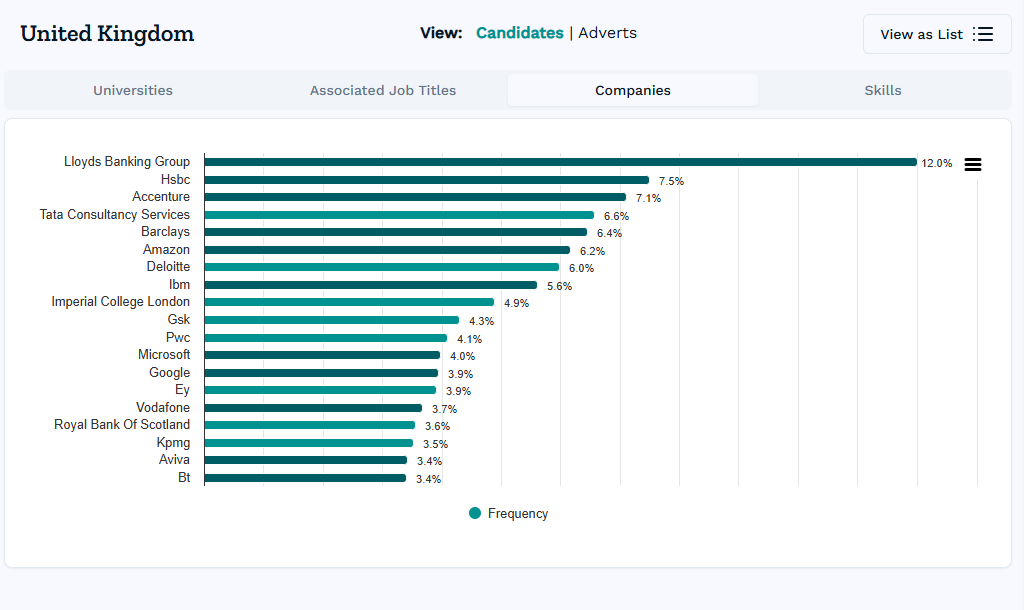
Image shows the types of companies data scientists work