.png?width=2000&name=Horsefly-Logo-NewTag_White%20(3).png)

Definition of HR Analytics Software
HR analytics software transforms raw workforce data into actionable insights that drive business decisions. Unlike basic reporting tools that simply track headcount or turnover rates, proper analytics platforms dig into the why behind the numbers - identifying patterns, predicting future trends, and helping you make smarter calls about hiring, retention, and workforce planning.
Basic HR systems show you where you've been. Analytics software shows you where you're heading and helps you navigate accordingly.
Scope of HR Analytics in Enterprises
For enterprise organizations, HR analytics needs to work at scale. We're talking about:
-
Global workforce visibility: Tracking talent across multiple countries, business units, and employment types
-
Strategic workforce planning: Forecasting future talent needs based on business growth, market conditions, and skills evolution
-
Market intelligence: Understanding external talent pools, not just internal metrics
-
Predictive modeling: Using historical data and market trends to anticipate hiring challenges, retention risks, and skills gaps
The best platforms don't just analyze your existing workforce - they connect your internal data to real-time labor market intelligence. That means you can see how your compensation stacks up against others in your industry in specific locations, identify where talent shortages will hit before they bite you, and make location decisions based on actual talent availability rather than gut feeling.
Key Benefits of Using HR Analytics Software
When enterprise HR analytics software actually works, it delivers:
-
Smarter hiring decisions: Identify which roles will be nightmares to fill and plan accordingly
-
Better workforce planning: Forecast talent needs based on real market conditions, not wishful thinking
-
Competitive advantage: Understand talent availability and compensation trends before others do
-
Reduced costs: Stop wasting budget on locations or roles where the talent simply isn't available
-
Improved diversity outcomes: See gender representation gaps in real talent pools, not just your own organization
-
Risk mitigation: Spot potential skills shortages and workforce challenges before they become crises
The difference between good analytics and great analytics? Great analytics connects your internal people data to external market reality. You need both lenses to make genuinely informed decisions.
Key Features to Look for in Enterprise HR Analytics Software
Not all HR analytics platforms are created equal. Here's what actually matters when you're evaluating enterprise solutions:
Workforce Planning
Proper workforce planning tools help you answer the fundamental question: do we have the right people with the right skills, in the right places?
Look for platforms that offer:
-
Skills mapping and gap analysis: Identifying which capabilities you need versus what you actually have
-
Scenario modeling: Testing different growth scenarios to understand future talent requirements
-
Succession planning: Tracking internal talent pipelines for critical roles
-
External market context: Seeing where talent shortages exist in the real world, not just in your organization
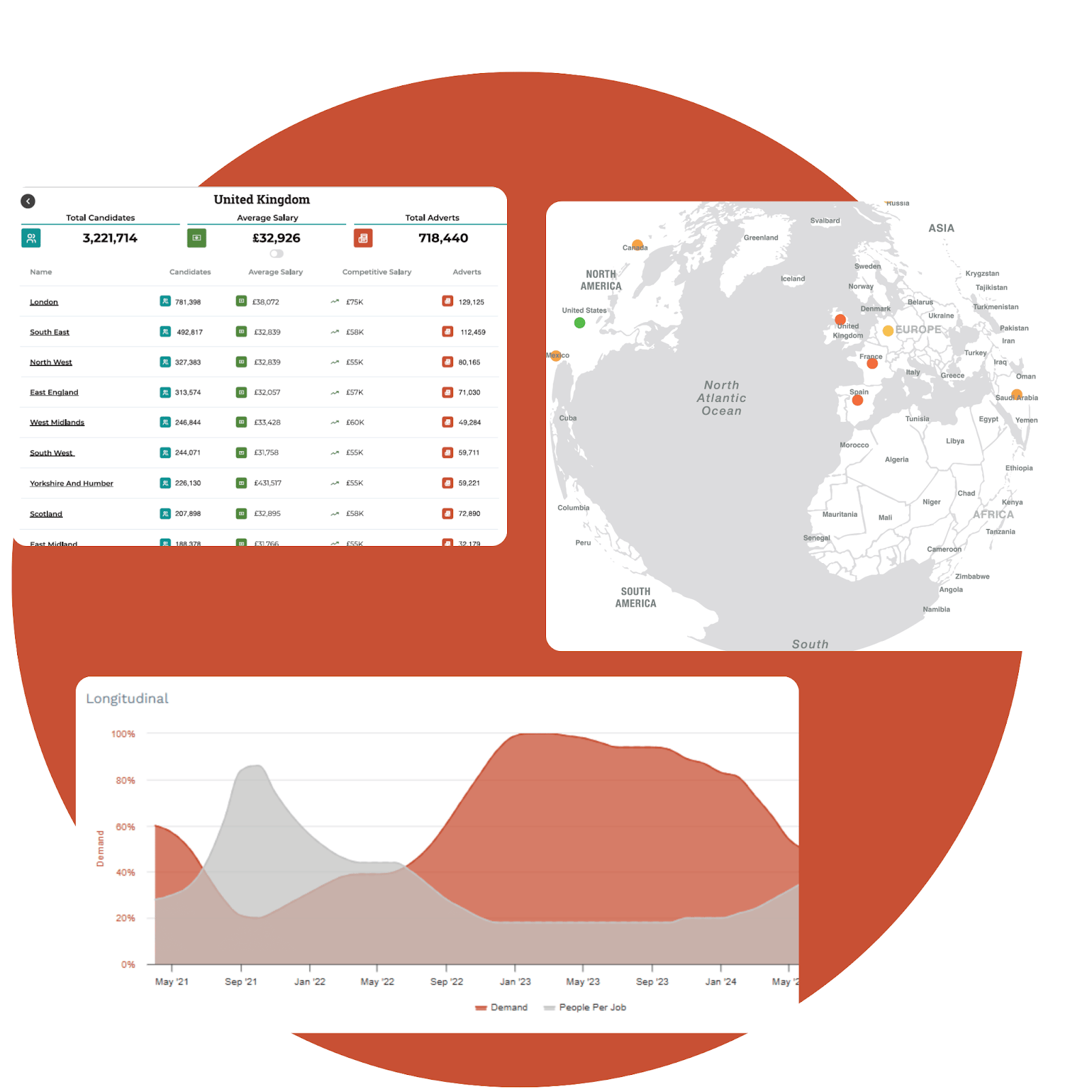
The best platforms integrate internal workforce data with external labor market intelligence. That means you're not planning in a vacuum - you're factoring in actual talent availability, competitive pressure, and market dynamics.
Performance Management
Performance management features should connect individual contribution to broader business outcomes. Useful capabilities include:
-
Goal alignment: Tracking how individual and team objectives ladder up to organizational priorities
-
Continuous feedback loops: Moving beyond annual reviews to ongoing performance conversations
-
Performance trend analysis: Identifying patterns in high and low performance across teams, locations, or demographics
-
Calibration tools: Ensuring consistent performance standards across the organization
Employee Engagement
Engagement analytics help you understand what drives satisfaction, productivity, and retention and with employee disengagement costing $8.8 trillion in global GDP (HR Future), it’s important to keep track of the data. Key features include:
-
Pulse surveys and sentiment analysis: Regular check-ins to gauge employee mood and identify concerns early
-
Turnover prediction models: Using historical patterns to flag retention risks before people head for the door
-
Engagement drivers analysis: Understanding which factors actually move the needle on satisfaction in your organization
-
Demographic breakdowns: Spotting engagement differences across teams, locations, or employee groups
Data Visualization and Reporting
If your analytics platform requires a data science degree to interpret, it's not doing its job. Look for:
-
Intuitive dashboards: Visual representations that make patterns immediately obvious
-
Custom reports building: Flexibility to slice and analyze data the way you need to
-
Export capabilities: Downloading data as PDFs or CSVs to plug into your own presentations
-
Heat maps and geographic visualizations: Seeing where talent concentrations exist globally
The best workforce analytics platforms present insights in context - tailored to your specific search or question rather than generic dashboards you need to decipher.
Predictive Analytics and AI
This is where things get interesting. Predictive analytics and AI should help you answer forward-looking questions:
-
Which roles will be hardest to fill next year?
-
Where are skills shortages emerging?
-
What impact will AI have on our workforce composition?
-
Which employees are flight risks?
Look for platforms that offer:
-
Difficulty of hire scoring: Simple metrics that flag which positions will require extra time, budget, or creative sourcing
-
Skills impact analysis: Understanding how technology changes (especially AI) will reshape role requirements
-
Talent supply and demand forecasting: Plotting market trends to see when hiring will get easier or harder
-
Longitudinal perspectives: Tracking how labor markets evolve over time, not just point-in-time snapshots. Longitudinal data gives you a real insight into more in-depth workforce planning
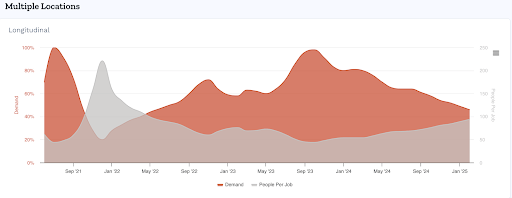
Proper predictive analytics should be based on massive, regularly updated datasets - not just your internal historical data. Find out more by getting in touch to unlock more insights, today.
Data Security and Compliance
When you're dealing with workforce data, security and compliance aren't optional extras. Essential requirements include:
-
GDPR and regional compliance: Meeting data protection regulations, such as GDPR, across all your operating locations
-
Role-based access controls: Ensuring only authorized users can access sensitive information
-
Data encryption: Protecting information both in transit and at rest
-
Audit trails: Tracking who accessed what data and when
-
Vendor security certifications: Look for SOC 2, ISO 27001, and other recognized standards
Integrations with Other HR Systems
Your analytics platform shouldn't be an island. It needs to play nicely with:
-
HRIS/HCM systems: Workday, SAP SuccessFactors, Oracle HCM, and similar platforms
-
Applicant tracking systems: Pulling in recruitment data to understand hiring patterns
-
Performance management tools: Connecting talent quality to business outcomes
-
Learning management systems: Understanding skills development and training effectiveness
-
Compensation management platforms: Benchmarking pay against market rates
The more seamlessly your analytics platform integrates with existing systems, the less manual data wrangling you'll face.
Comparing Enterprise HR Analytics Software Solutions
There are many vendors in the industry, so let’s talk about the different types of solutions and how to evaluate them.
Broad-Spectrum HR Platforms
These are the big, all-in-one HR suites from enterprise software giants. Think major HRIS/HCM providers that have added analytics modules to their core platforms.
Standout Features:
-
Deeply integrated with other HR functions (recruiting, payroll, benefits)
-
Single system of record for all people data
-
Enterprise-grade security and compliance
-
Established vendor relationships and support infrastructure
Pros:
-
Convenience of a single platform for multiple HR functions
-
Strong internal data integration
-
Often part of existing enterprise agreements
-
Robust security and compliance frameworks
Cons:
-
Analytics capabilities can feel like an afterthought bolted onto core HRIS functionality
-
Limited external market intelligence - these platforms analyze your data, not the broader labor market
-
Can be slow to innovate compared to specialized analytics vendors
-
Often overkill if you just need workforce intelligence without replacing your entire HR tech stack
Best For: Organizations already committed to a particular HRIS ecosystem who want "good enough" analytics without adding another vendor.
Specialized People Analytics Platforms
These vendors focus specifically on HR analytics and workforce intelligence, offering deeper analytical capabilities than broad HR platforms.
Standout Features:
-
Advanced predictive modeling and statistical analysis
-
More sophisticated visualization and reporting
-
Purpose-built for analytics rather than transactional HR processes
-
Often incorporate organizational network analysis and behavioral insights
Pros:
-
More powerful analytical engines than general HR platforms
-
Better data visualization and storytelling capabilities
-
Can integrate with multiple HR systems rather than locking you into one vendor
-
Usually more innovative with AI and machine learning applications
Cons:
-
Still primarily focused on internal data analysis
-
Limited external labor market context
-
May require data science expertise to extract full value
-
Another vendor relationship to manage
Best For: Organizations with mature HR analytics practices that want sophisticated internal workforce modeling.
Talent Intelligence and Labor Market Platforms
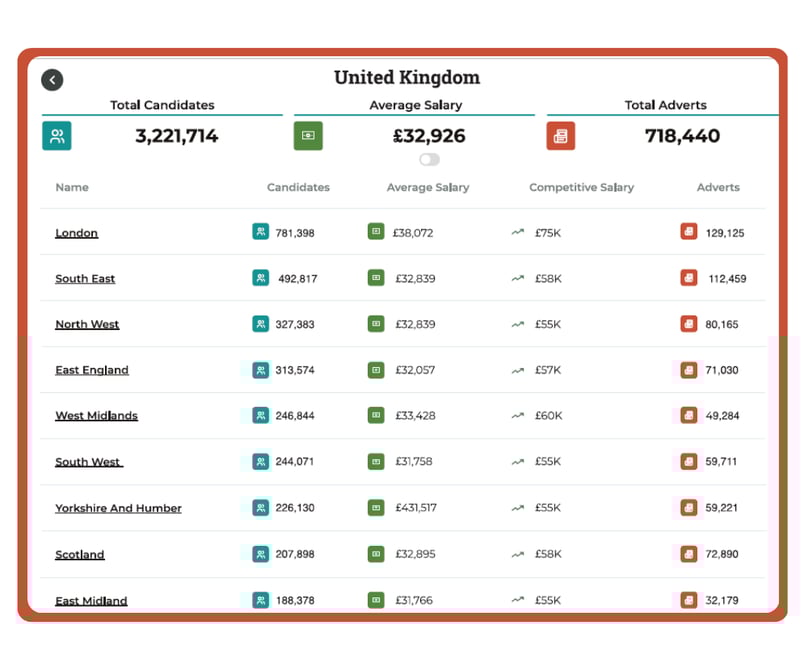
This is where Horsefly Analytics sits. These platforms focus on external labor market intelligence - understanding talent availability, skills trends, compensation benchmarks, and competitive dynamics outside your organization. To gain more of an insight into this and to see it in action for yourself, contact us for a custom consultation..
Standout Features:
-
Real-time labor market data covering millions of talent profiles globally
-
Skills taxonomy tracking hundreds of thousands of job titles (specifically across 39 languages, for Horsefly)
-
Talent supply and demand analysis for specific roles and locations
-
Competitive intelligence on where talent concentrations exist
-
Compensation benchmarking based on actual market data
Pros:
-
Addresses the fundamental question most HR analytics miss: "Is the talent we need actually available?"
-
Helps with strategic decisions like location planning and market entry
-
Provides competitive context for compensation and EVP development
-
Enables proactive workforce planning based on market realities
-
Particularly valuable for organizations hiring at scale or in multiple geographies
Cons:
-
May not replace internal HR analytics - best used in combination with platforms that analyze your existing workforce
-
Requires integration with your existing systems for a complete picture
Best For: Organizations making strategic hiring decisions across multiple locations, planning expansion, or needing to understand external talent markets.
Pricing Considerations
It’s important to always ask about:
-
Implementation and onboarding costs (can be substantial)
-
Training requirements and costs
-
Annual support and maintenance fees
-
Costs for additional modules or geographic expansion
Ethical Considerations and Biases in HR Analytics
Let's address the elephant in the room: HR analytics platforms can perpetuate biases if you're not careful.
The Importance of Ethical Considerations
Analytics tools are only as unbiased as the data they're trained on and the questions they're designed to answer. When algorithms learn from historical hiring patterns, they can embed existing biases into future decisions. For example:
-
If your organization has historically hired from a narrow set of universities, predictive models might recommend similar profiles - limiting diversity
-
If promotion patterns have favored certain demographic groups, algorithms might perpetuate those disparities
-
If performance ratings have been subjectively biased, any analytics built on that data will carry those biases forward
The stakes are high. Biased analytics don't just create legal and reputational risks - they actively undermine your ability to build diverse, high-performing global teams.
Identifying Potential Biases in AI Algorithms
Common sources of bias in HR analytics include:
-
Training data bias: Algorithms trained on historical data that reflects past discrimination
-
Proxy discrimination: Using seemingly neutral factors (like zip codes or university names) that correlate with protected characteristics
-
Feedback loops: Systems that recommend similar profiles to past hires, creating self-reinforcing homogeneity
-
Representation gaps: Insufficient data on underrepresented groups leading to inaccurate predictions
-
Outcome measurement bias: Defining "success" in ways that disadvantage certain groups
Strategies for Mitigating Biases and Ensuring Fairness
Responsible HR analytics requires active bias mitigation:
-
Audit your data sources: Understand what historical patterns exist in your data and whether they reflect biases you want to eliminate, not perpetuate
-
Use external benchmarks: Compare your workforce composition to actual talent pool availability by gender, ethnicity, and other dimensions
-
Test for disparate impact: Regularly analyze whether your analytics-driven decisions disproportionately affect any demographic groups
-
Build diverse datasets: Ensure your predictive models are trained on representative samples, not homogeneous populations
-
Human oversight: Never let algorithms make final decisions - use them to inform human judgment, not replace it
-
Transparency: Be clear about what data you're collecting, how it's used, and how decisions are made
The best talent intelligence platforms help you understand diversity gaps in external talent pools - not just your own organization. That context helps you set realistic goals and identify opportunities to improve representation. It’s also important to remember, whilst data is objective, the insights can be interpreted in different ways, so this needs to be acknowledged, as a first step towards making stronger and better decisions (LinkedIn).
Implementation Challenges and Change Management
Even the best HR analytics platform will fail if you can't get your organization to actually use it. Here's what you're up against:
Common Implementation Challenges
-
Data quality issues: If your underlying HR data is incomplete, inconsistent, or outdated, your analytics will be too
-
Integration complexity: Getting your new analytics platform to play nicely with existing HR systems can be technically challenging
-
Skills gaps: Your HR team might not have the data literacy or analytical skills to interpret and act on insights
-
Resistance to data-driven decision-making: Some managers prefer to trust their gut over what the numbers say
-
Competing priorities: Analytics initiatives can get deprioritized when day-to-day operational demands pile up
Change Management Strategies for Successful Adoption
Getting ROI from your analytics investment requires deliberate change management:
-
Start with a clear use case: Don't try to boil the ocean. Pick one specific business problem your analytics platform will solve and demonstrate value there first
-
Build a coalition of champions: Identify early adopters across the business who can advocate for data-driven approaches
-
Provide hands-on training: Generic product demos aren't enough. People need to practice using the platform to answer real questions relevant to their roles
-
Celebrate quick wins: Share success stories where analytics-driven insights led to better decisions or cost savings
-
Make it easy: If using the analytics platform requires jumping through technical hoops, adoption will suffer. Push for intuitive interfaces and simple workflows
The Need for Training and Support
Successful implementation isn't a one-time event. Plan for:
-
Initial onboarding: Comprehensive training for core users on platform functionality
-
Ongoing skill development: Regular sessions covering advanced features and new capabilities
-
Just-in-time support: Easy access to help when users get stuck or have questions
-
Data literacy programs: Building broader analytical skills across the HR team, not just teaching the specific platform
-
Executive education: Helping senior leaders understand what questions analytics can answer and how to interpret results
The platforms with the most user-friendly interfaces and best support infrastructure have the highest adoption rates. Don't underestimate this factor when evaluating vendors.
Choosing the Right Enterprise HR Analytics Software for Your Organization
You've made it this far, which means you're serious about improving your HR analytics capabilities. Here's how to actually make the decision:
Assess Your Organization's Needs and Requirements
Before you talk to any vendors, get clear on:
-
What questions do you need to answer? Are you focused on internal workforce optimization, external talent market intelligence, or both?
-
What's your geographic scope? Do you need global coverage or just specific regions?
-
What's your level of analytical maturity? Are you starting from scratch or do you have existing analytics capabilities to build on?
-
What people analytics software integrations are essential for your business? Which HR systems must your analytics platform connect with?
-
What's your internal skills profile? Do you have data scientists on staff or do you need a more user-friendly solution?
Be honest about where you are, not where you wish you were.
Evaluate Different Software Solutions Based on Your Needs
Once you've defined requirements:
-
Request demos focused on your use cases: Don't accept generic product tours. Ask vendors to show you how their platform answers your specific questions
-
Test with real data: If possible, run a pilot or proof of concept with actual scenarios from your organization
-
Talk to reference customers: Ask vendors for contacts at similar organizations who can share honest feedback
-
Evaluate the support model: How much help will you get with implementation, onboarding, and ongoing usage?
-
Assess the data quality and coverage: For talent intelligence platforms, ask about data sources, refresh frequency, and geographic/role coverage
Pay special attention to platforms that combine internal and external perspectives. The best workforce decisions require both lenses.
Consider Long-Term Costs and ROI
Look beyond initial license fees:
-
Implementation costs: What will it take to get the platform up and running?
-
Ongoing support and maintenance: What are the annual costs beyond the initial purchase?
-
Resource requirements: How much internal staff time will be needed to administer and use the platform?
-
Opportunity cost: What are you spending time and money on today that could be eliminated with better analytics?
Calculate ROI based on specific improvements you expect:
-
Reduced time-to-fill for critical roles
-
Better hiring decisions (fewer mis-hires)
-
More competitive compensation strategies
-
Improved retention through better workforce planning
-
More strategic location decisions
If you can't articulate how the platform will improve specific business outcomes, you're not ready to buy.
Plan for Successful Implementation and Change Management
Finally, line up your implementation approach before you sign the contract:
-
Identify executive sponsors: Who will champion this initiative at the senior level?
-
Build your core team: Who will be responsible for day-to-day platform management?
-
Create a rollout plan: How will you phase implementation across the organization?
-
Define success metrics: How will you measure whether the platform is delivering value?
-
Plan communication: How will you build awareness and drive adoption?
The vendors with the strongest customer success programs will help you think through these questions. If a vendor just wants to sell you a license and walk away, that's a red flag.
What Should HR Analytics Software Be Capable Of Doing?
Enterprise HR analytics software should do two things: help you make smarter decisions about your workforce to assist decisions for the future and give you genuine competitive advantage in the talent market.
Most platforms deliver the first part - at least to some degree. They'll analyze your internal data, show you turnover patterns, and help you forecast headcount needs based on historical trends.
Far fewer deliver the second part. Because real competitive advantage comes from understanding what's happening outside your organization, not just inside it. Where is talent actually available? What skills are emerging or becoming obsolete? How does your compensation stack up against the real market? Which locations offer the best combination of talent availability and cost?
That's where platforms like Horsefly Analytics come in. With real-time data covering millions of talent profiles across hundreds of thousands of towns and cities across the globe. Horsefly connects your workforce planning to actual labor market reality. You can see talent supply and demand, benchmark compensation accurately, assess hiring difficulty before you commit resources, and make location decisions based on where skills actually exist.
Whether you choose Horsefly or another solution, make sure your enterprise HR analytics platform gives you both internal and external perspectives. Anything less is just rearranging deck chairs while your competitors steal the talent you need.
Ready to see how Horsefly's talent intelligence platform can transform your workforce decisions? Request a strategy session and discover what happens when you combine your people data with real market intelligence.
Book a demo
Get a quote
Sources: Horsefly Analytics, HR Future, LinkedIn, GDPR.EU