.png?width=2000&name=Horsefly-Logo-NewTag_White%20(3).png)
The Core of Enterprise RPO: Definition and Scope
What Is Enterprise RPO?
Enterprise RPO (Recruitment Process Outsourcing) is the full, company-wide outsourcing of your recruitment function to an external partner. That means everything: sourcing, screening, interviewing coordination, offer management, and onboarding, all managed end-to-end across all divisions and geographies.
Unlike ad hoc staffing support, Enterprise RPO is a long-term strategic partnership, typically embedded within your organization and aligned to your business goals.
Beyond Basic Outsourcing: A Strategic Partnership
A genuine Enterprise RPO partner integrates with your internal HR and talent acquisition teams, adopts your employer brand, and takes accountability for outcomes, not just activity. They bring the infrastructure, technology, and market intelligence your team may not have the bandwidth to build in-house. The result is a scalable, fully integrated recruitment function that moves with your business.

Key Benefits of Implementing Enterprise Recruitment Process Outsourcing
Scalability and Flexibility
Hiring volumes fluctuate. Markets shift. Enterprise RPO lets you scale recruitment up or down without the friction of adjusting internal headcount every time the business changes direction.
Cost Efficiency and ROI
By consolidating your recruitment function and standardizing processes, Enterprise RPO can consistently reduce costs and cost-per-hire. The RPOA has reported time-to-hire reductions of up to 55% for organizations that implement RPO well. That's real time and money returned to the business.
Quality of Hire and Talent Experience
Enterprise RPO providers bring structured assessment frameworks and deep talent market knowledge that improve quality of hire. Talent also benefits: a professionally managed process with clear communication reflects well on your employer brand and improves acceptance rates and all-around candidate experience.
Time-to-Fill and Compliance
Proactive talent pipelining (a pool of qualified candidates cultivated for future hiring needs, even before specific job requisitions arise) and dedicated sourcing capacity reduce time-to-fill for critical and specific roles. RPO partners also bring expertise in navigating employment regulations across jurisdictions, which matters for any organization hiring across multiple markets.
Technology and Market Intelligence
Top-tier RPO providers use applicant tracking systems (ATS), candidate relationship management (CRM) tools, and labor market intellignce platforms to run smarter, faster recruitmeent. Platforms like Horsefly Analytics give RPOs access to real-time supply and demand data, compensation benchmarks, skills insights, and difficulty-of-hire intelligence across 170,000 locations in 65 countries. That's the difference between guessing and knowing - contact us to discuss your needs.
Employer Brand
Your RPO partner is often the first impression prospective talent gets of your company. The best Enterprise RPO providers integrate your employer value proposition (EVP) into every touchpoint, ensuring a consistent, compelling experience that supports both attraction and retention.
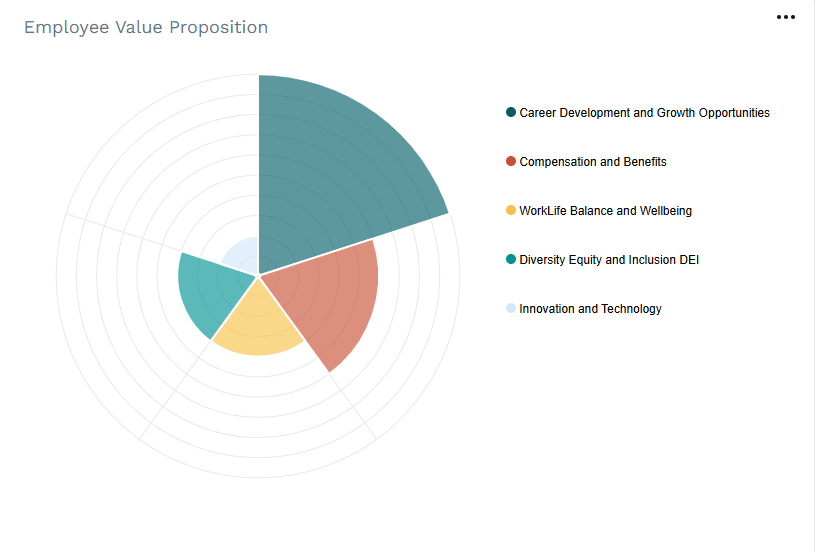
Images shows an example of the EVP capability from the Horsefly platform
Is Enterprise RPO Right for Your Organization?
Enterprise RPO isn't exclusively for Fortune 500 companies. It's for any organization whose talent acquisition challenges have outgrown its current infrastructure.
That typically includes large enterprises and multinationals managing complex, high-volume hiring across multiple markets. But it also applies to high-growth mid-sized businesses scaling fast, organizations in specialized industries like technology, financial services, engineering, or healthcare, and companies navigating expansion, high turnover, or strategic transformation.
If your internal team is stretched, your time-to-fill is climbing, or you're making hiring decisions based on gut feel rather than data, Enterprise RPO deserves a serious look.
Enterprise RPO Solution vs. Other Recruitment Models
There are many RPO solutions to look into and finding the right RPO services for you and your organization can be a difficult decision. Here are a few options to consider:
Enterprise RPO vs. Project RPO: Project RPO is scoped, time-limited support for a specific hiring initiative. Enterprise RPO is the full-service recruitment function, long-term and company-wide.
Enterprise RPO vs. On-Demand RPO / Recruiter On Demand (ROD): ROD provides temporary recruiter resource for immediate needs. It's tactical. Enterprise RPO is strategic, embedded, and built to scale.
Enterprise RPO vs. Staffing Agencies: Agencies fill roles. Enterprise RPO manages your entire recruitment process, with accountability tied to KPIs like quality of hire, time-to-fill, and hiring manager satisfaction, not just placement fees.
Enterprise RPO vs. Talent BPO (Selective RPO): Talent BPO outsources specific parts of the recruitment process. Enterprise RPO is end-to-end, full cycle, and company-wide.
Implementation, Governance, and Measuring Impact
A Roadmap for Successful Implementation
A well-run Enterprise RPO implementation starts with a discovery and design phase: your RPO partner works with your team to understand current-state processes, define objectives, and establish SLAs (Service Level Agreements - formal agreements between client and RPO provider outlining critical metrics, performance expectations, and responsibilities). Then comes deployment and change management, where technology is configured, teams are onboarded, and stakeholders are brought along with clear communication.
Change management is often underestimated. Internal teams need to see the structure clearly and understand that control isn't being lost, just redistributed more efficiently.
Key Performance Indicators
The right RPO relationship is built on accountability. Core KPIs include time-to-fill, cost-per-hire, quality of hire, offer acceptance rates, hiring manager satisfaction, talent experience scores, and diversity of hire. These should be agreed upfront and reviewed regularly.
Governance
Expect steering committee meetings, quarterly business reviews (QBRs), and shared reporting that gives your team real-time visibility into performance. You should never have to wonder how recruitment is performing.

How to Choose the Right Enterprise RPO Partner
Key Selection Criteria
Cultural alignment matters, but it's not enough. Evaluate potential RPO partners on industry expertise, technology stack, global reach, and their track record at your scale. Ask for evidence: case studies, data, measurable outcomes.
Pay particular attention to their access to labor market intelligence. An RPO that can tell you where to hire, which skills are scarce, and what compensation will actually attract talent in a given market is meaningfully more valuable than one that can only execute on a job brief.
Will You Lose Control?
No. A well-structured Enterprise RPO engagement gives you more visibility into your recruitment function, not less. You set the strategy. You own the hiring decisions. Your RPO partner executes. SLAs and governance frameworks ensure accountability runs both ways.
Pricing Models
Enterprise RPO pricing varies. Common structures include a management fee plus variable component tied to volume, cost-per-hire pricing, and percentage-of-salary models for senior roles. Gain-sharing models, where savings are split between client and provider, appear in mature partnerships. Always benchmark the full cost model against your current cost-per-hire. The ROI case for Enterprise RPO is usually compelling when the complete picture is visible.
Common Pitfalls
The most frequent implementation challenges are internal resistance, scope creep, and technology integration gaps. Address them early: engage stakeholders before launch, define SLAs with real teeth, and work through system integration requirements in the discovery phase, not after go-live.
Frequently Asked Questions
Do "End-to-End RPO," "Full Cycle RPO," and "Enterprise RPO" mean the same thing? Largely, yes. All describe comprehensive, company-wide recruitment outsourcing. "Enterprise RPO" signals scale, long-term commitment, and strategic intent.
How long does an Enterprise RPO engagement typically last? Most run three to five years. The model is designed for long-term partnership, not short-term fixes.
What reporting will we receive? Expect real-time dashboards, regular performance reports, and QBRs covering all agreed KPIs (measurable metrics used to evaluate the performance of recruitment activities, such as quality of hire, time-to-fill, and cost-per-hire).
Is Enterprise RPO only for huge global companies? No. High-growth businesses and organizations with complex or specialized hiring needs are strong candidates regardless of size.
Partnering for Strategic Talent Acquisition Success
Enterprise RPO is an investment in a recruitment function built to perform at the scale your business actually operates at. The right partner brings technology, market intelligence, and specialist expertise that transforms hiring from a reactive scramble into a strategic advantage.
Ready to stop guessing and start hiring smarter? Get in touch for a strategic consultation and discover how we can help you.
Sources: Horsefly Analytics, RPOA, Acara