.png?width=2000&name=Horsefly-Logo-NewTag_White%20(3).png)
For CHROs and workforce planning leaders, the goal is simply to make faster, more informed decisions about where to find talent, what to pay, and how to build the workforce the business needs.
This guide compares the leading enterprise talent intelligence platforms, evaluating the capabilities that matter most, including AI, data quality, global market coverage, integrations, and total cost of ownership.

Evaluation Criteria That Global Enterprises Must Demand
Before examining specific platforms, it's worth being explicit about what "enterprise-grade" actually requires. Too many evaluation processes get distracted by polished demos and end up with a tool that solves the wrong problem.
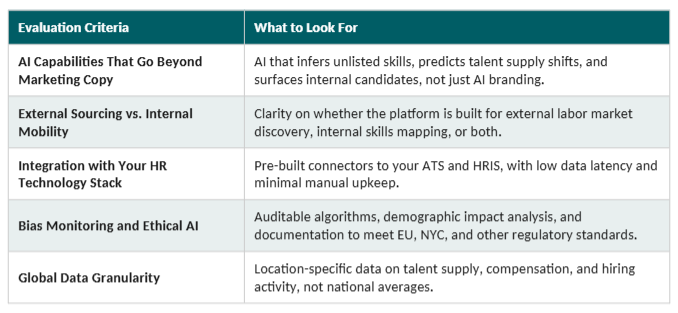
Now let’s take a look at these capabilities in more detail:
AI Capabilities That Go Beyond Marketing Copy
Every vendor claims AI, but the question is what their AI actually does. Can it infer skills from job histories that don't explicitly list them? Can it predict talent supply shifts six to twelve months out? Can it identify internal candidates for roles they haven't applied for? The difference between useful AI and decorative AI is whether it generates insights you couldn't get from a spreadsheet.
External Sourcing vs. Internal Mobility
Some platforms excel at finding external candidates, while others focus on mapping the skills inside your organization. Very few do both well. Your evaluation should start with clarity about your primary use case. If your biggest challenge is understanding external labor markets for expansion planning, a platform built around internal talent marketplaces won't solve it, no matter how sophisticated its skills ontology.
Integration with Your HR Technology Stack
A talent intelligence platform that doesn't connect to your ATS, HRIS, and workforce planning tools creates another data silo. Look for pre-built connectors to systems and ask hard questions about data latency, such as how often information syncs, and how much manual work is required to maintain the integration.
Bias Monitoring and Ethical AI
Any platform using AI to influence hiring decisions needs transparent bias monitoring. That means auditable algorithms, demographic impact analysis, and clear documentation of how recommendations are generated. Regulatory pressure is building in the EU, New York City, and other jurisdictions, so a platform without these capabilities is a compliance risk waiting to materialize.
Global Data Granularity
This is where most platforms fall short. Many offer strong coverage in the US and Western Europe but become unreliable once you need data for emerging markets, secondary cities, or specialized roles. If you're planning workforce expansion in Hyderabad, Kraków, or São Paulo, you need location-specific data on talent supply, compensation benchmarks, and competitive hiring activity, not national averages extrapolated from insufficient samples.
Types of Talent Intelligence Platforms in the Market Today
Unified Talent Graph Platforms
At the ambitious end of the category are platforms built around a unified "talent graph," a connected data model that draws on hundreds of millions, or even billions, of professional profiles. These platforms aim to link every stage of the talent lifecycle, from sourcing and hiring to retention, internal mobility, succession planning, and workforce transformation.
Their AI engines often infer skills that people possess but haven't explicitly listed, drawing on patterns across similar career trajectories. This skills inference capability is genuinely useful for identifying internal talent who could transition into hard-to-fill roles, and it typically powers an internal talent marketplace where employees can discover project opportunities and career paths based on adjacencies the system identifies.
For large enterprises managing tens of thousands of employees across multiple business units, this breadth is appealing. A single platform can connect talent acquisition, talent management, and workforce planning teams who traditionally operate in separate systems with separate data.
The tradeoff is that this scope creates implementation complexity. Deployments at global enterprises typically require significant configuration, change management, and integration work. Organizations looking for a quick win in one specific area, such as external labor market analytics for site selection, may find that this type of platform requires a broader commitment than they're ready to make. External labor market intelligence is rarely the primary differentiator for these tools; their greatest strength is connecting internal talent data with AI-driven recommendations. Enterprises whose primary need is granular, location-specific external labor market data across a huge range of countries may still find gaps here.
Outbound Sourcing Platforms
A different category of platform focuses specifically on outbound sourcing, and that focus is its advantage. These tools aggregate profiles from public sources, including code repositories, patent filings, research publications, and professional profiles, creating a searchable database that's particularly strong for technical and engineering talent. Search filters allow recruiters to find talent with specific combinations of skills, experience, and credentials that would otherwise take hours to identify manually.
Many of these platforms have also invested in diversity sourcing features, enabling talent acquisition teams to identify underrepresented talent and build more diverse pipelines. For organizations with specific DE&I hiring targets, this is a practical capability rather than a checkbox feature.
Where this focus becomes a limitation is beyond sourcing. Workforce planning and internal mobility capabilities tend to be less developed in this category. These are primarily talent acquisition tools, not strategic workforce intelligence platforms, though they typically integrate well with major ATS systems and work as a layer on top of existing recruiting workflows rather than replacing them. For TA leaders whose primary pain point is finding qualified talent faster, especially in technical domains, this type of platform delivers measurable value. For CHROs building an enterprise-wide talent intelligence strategy, it's one piece of a larger puzzle.
Talent CRM and Relationship Management Platforms
Another category specializes in talent CRM and relationship management, helping organizations build and nurture pipelines of prospective talent over time and turning talent acquisition from a reactive process into a proactive one. Skills-based architecture in these tools often supports workforce planning use cases, and integration with major HRIS platforms makes them viable as part of a broader enterprise tech stack.
This type of platform works well for organizations that have identified relationship-building as their primary bottleneck. If the challenge is that strong talent engages once and then disappears because no one maintains the relationship, this category addresses that directly. Labor market analytics capabilities here are often growing but not yet as deep as platforms purpose-built for that function.
Recruiting Automation and Engagement Platforms
A related category has evolved from recruiting automation into broader talent engagement, providing strong pipeline analytics, automated outreach sequences, and sourcing capabilities that sit on top of an ATS. Reporting features typically give TA leaders visibility into recruiter productivity, pipeline conversion rates, and sourcing channel effectiveness.
These platforms tend to be a strong fit for mid-to-large organizations that need to operationalize their recruiting process and want data on what's working. They're generally less suited for strategic workforce planning, location analysis, or long-horizon talent supply forecasting.
Niche and Vertical Solutions
The market also includes specialized tools focused on specific verticals or use cases, such as compensation benchmarking platforms, skills assessment tools, and internal mobility solutions. Many of these tools are good, but the key question is whether layering four or five niche solutions creates the integrated intelligence view an enterprise needs, or just a more expensive version of the fragmented data problem it started with.

Calculating the True TCO and ROI Beyond the License
Here's where most vendor comparison articles stop being useful. They compare feature lists but rarely examine the factors that have the biggest impact on long-term value. For any senior leader building a business case, the license fee is only one part of the decision.
Breaking Down Total Cost of Ownership
Enterprise talent intelligence implementations carry costs that extend well beyond the annual subscription
Implementation and Configuration
Most platforms require 3 to 12 months of setup for a global enterprise. This includes data mapping, workflow configuration, security reviews, and testing. Some vendors include basic implementation in the contract; others charge separately, and fees can range from tens of thousands to several hundred thousand dollars depending on complexity.
Integration Costs
Connecting the platform to your ATS, HRIS, and other systems requires technical resources, either from the vendor's professional services team, your internal IT staff, or a systems integrator. Each integration point adds cost and timeline.
Training and Change Management
A platform that only three people in your organization know how to use is an expensive shelf decoration. Budget for training across TA, HR, and workforce planning teams, and for ongoing enablement as features evolve.
Data quality and Maintenance
Some platforms require you to upload and maintain internal data, and others pull exclusively from external sources. The distinction affects your ongoing operational burden.
Opportunity Cost
A 9-month implementation means 9 months of decisions made without better data. Platforms that deliver value quickly, particularly those focused on external market intelligence that doesn't require internal data integration, can start informing decisions within weeks rather than quarters.
Measuring ROI
The metrics that matter for calculating return include reduced time-to-fill (measured in days, translated to revenue impact for critical roles), improved quality of hire (measured through performance data 12+ months post-hire), avoided costs from better location decisions (choosing a city where talent supply meets demand at a lower cost), and reduced reliance on expensive contingency recruiting.
A common mistake is comparing only the license cost of one platform to another without accounting for differences in implementation time, internal resource requirements, and time-to-value. A less expensive platform that takes twice as long to deploy and requires a dedicated internal team to maintain may cost more over three years than a higher-priced solution that's operational in weeks.
Future-Proofing Your Enterprise Talent Strategy
The talent intelligence category will continue to evolve quickly, and several trends are worth tracking as you make platform decisions for the next three to five years.
Skills-First Hiring is Becoming Operational Reality
The shift from job titles and degrees to verified skills as the primary currency of talent decisions is accelerating. Platforms that maintain sophisticated, continuously updated skills taxonomies and can map skill adjacencies will have an advantage over those relying on static job classifications.
Ethical AI Requirements are Tightening
The EU AI Act, New York City's Local Law 144, and similar regulations are establishing concrete requirements for transparency and bias auditing in AI-driven employment tools. Any platform you adopt should have a clear, documented approach to algorithmic fairness, not as a future roadmap item, but as a current capability. Ask vendors for their bias audit results, and if they can't produce them, that tells you something.
Candidate Engagement Will Become More Personalized
Hyper-personalization in candidate engagement will separate the organizations that attract top talent from those that don't. Generic outreach at scale is already losing effectiveness. The platforms that win will connect market intelligence (what candidates in this market care about, what competitors are offering) with personalized engagement strategies.
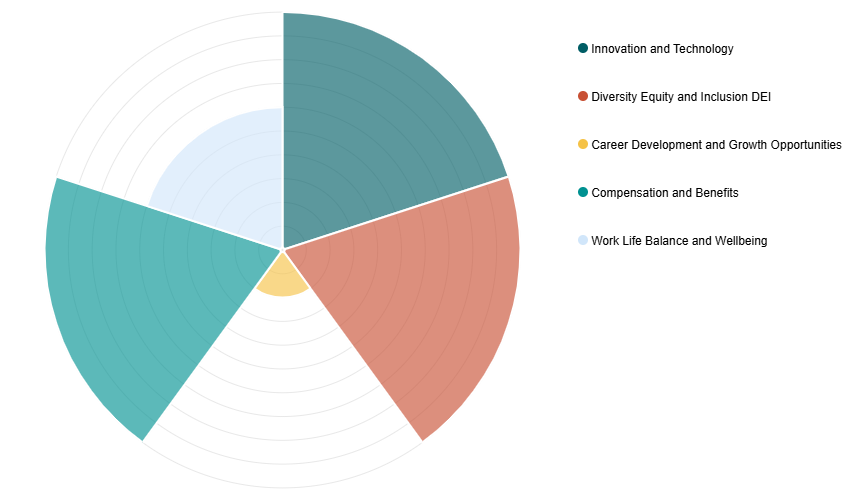
Horsefly Analytics’ EVP functionality to understand more about what’s important for different roles
Real-Time Data Will Replace Periodic Reports
Quarterly salary surveys and annual workforce plans are too slow for the pace of market change. The expectation is shifting toward continuous intelligence that updates as market conditions shift, enabling dynamic rather than static workforce strategies.
When evaluating platforms, resist the temptation to choose solely based on today's most urgent problem. The tool you select should have the data infrastructure, the API flexibility, and the vendor roadmap to grow with your strategy. Ask vendors where their data comes from, how often it refreshes, and what their coverage looks like in the specific markets where you operate or plan to expand. The answers will tell you more than any feature matrix.
The enterprises that will compete most effectively for talent in 2026 and beyond are those making workforce decisions grounded in accurate, timely, granular market data rather than instinct and outdated benchmarks. Choosing the right talent intelligence infrastructure is how you get there.
The Horsefly Advantage: Unmatched Global Data for Strategic Decisions
At Horsefly Analytics, we built our platform to answer a question that most talent intelligence tools struggle with: What does the talent market actually look like in a specific location, for a specific role, right now?
Our data covers more than 170,000 locations worldwide, with city- and regional-level intelligence on labor supply and demand, compensation, skills availability, diversity metrics, and competitive hiring activity. Whether you're comparing locations for a new engineering hub or evaluating expansion into a new region, Horsefly provides the level of granularity needed to make confident, evidence-based decisions.
Fill the External Data Gap
Most enterprises already have internal workforce data in their HRIS and recruiting data in their ATS. What's often missing is a reliable, continuously updated view of the external labor market.
Horsefly helps answer critical questions such as:
-
How many qualified professionals are available in a target market?
-
What is the competitive compensation for a specific role?
-
How has talent supply changed over the past year?
-
Which competitors are actively hiring in the same location?
-
How difficult is it likely to be to fill a role?
These are the insights that shape hiring, workforce planning, and location strategy.
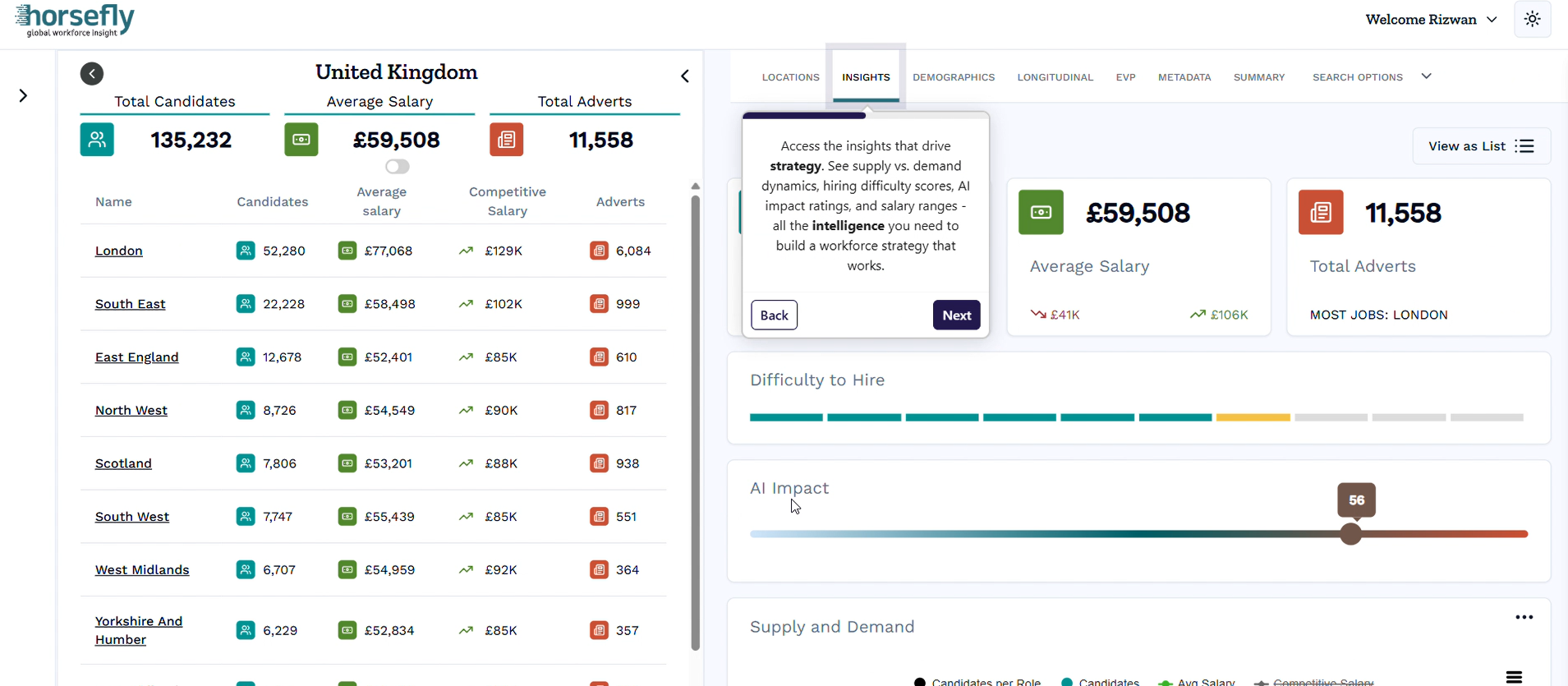
A view of a Horsefly dashboard
Built to Complement Your Existing HR Technology
Horsefly is designed to work alongside your existing HR technology stack rather than replace it. Our AI analyzes billions of data points to deliver actionable labor market intelligence while integrating with the HRIS and ATS platforms you already use.
The result is a richer picture of the talent landscape that supports workforce planning, talent acquisition, and long-term business strategy.
Faster Insights, Better Decisions
One of the biggest advantages our clients report is speed.
Instead of waiting weeks for external consulting projects or relying on outdated market reports, workforce planning teams can access the data they need in minutes. Faster access to reliable intelligence enables organizations to evaluate more opportunities, respond to changing market conditions, and make better-informed strategic decisions.
Data That Supports Smarter DE&I Planning
Horsefly also helps organizations build more realistic and measurable DE&I strategies by providing visibility into the composition of talent pools across specific markets. Rather than relying on assumptions or broad national averages, organizations can benchmark hiring goals against the talent that is actually available in each location.
Make Workforce Decisions with Greater Confidence
The right talent intelligence platform should do more than support recruiting. It should help your organization answer strategic workforce questions with confidence, whether you're expanding into new markets, planning future hiring, or evaluating long-term talent availability.
Horsefly Analytics provides the external labor market intelligence global enterprises need to make those decisions faster and with greater certainty.
Request a strategic consultation to see how our platform can help you identify talent opportunities, compare global markets, and build a workforce strategy backed by real-world data.
Frequently Asked Questions
Why do enterprises need strategic talent intelligence software in 2026?
Enterprises need strategic talent intelligence software to quantify workforce gaps, make data-backed decisions, and adapt quickly to intensifying talent competition and evolving labor costs. These platforms transform instincts into actionable strategies for hiring, upskilling, and expansion planning.
How do I evaluate enterprise-grade talent intelligence platforms effectively?
To evaluate enterprise talent intelligence platforms effectively, prioritize useful AI capabilities over marketing claims, clarify primary use cases like external sourcing or internal mobility, and ensure seamless integration with your existing HR technology stack. Also, scrutinize global data granularity and ethical AI practices.
What AI features should I look for in talent intelligence software?
Essential AI features in talent intelligence software include the ability to infer skills from job histories, predict future talent supply shifts, and identify internal candidates for new roles. Useful AI generates unique insights that go beyond what static data analysis can provide.
What are the full costs beyond the license fee for talent intelligence software?
Beyond the license fee, expect significant costs for implementation and configuration, integration with existing HR systems, and comprehensive training for teams. Additionally, consider ongoing data quality maintenance and the opportunity cost of slow deployments, which delay strategic insights.
How does talent intelligence software support diversity, equity, and inclusion (DE&I) initiatives?
Talent intelligence software supports DE&I by enabling organizations to identify underrepresented candidates and build more diverse pipelines. It also provides diversity data on talent pool composition in specific markets, helping set realistic and achievable hiring targets based on market availability.
What is the difference between platforms focused on external sourcing versus internal mobility?
Platforms focused on external sourcing excel at finding candidates from public sources and labor markets, ideal for expansion planning. Internal mobility platforms, conversely, map skills within your organization to identify existing employees for new roles or development opportunities. Few platforms master both equally well.
How can real-time talent intelligence data improve workforce planning?
Real-time talent intelligence data improves workforce planning by providing continuously updated insights on market conditions, talent supply, and compensation expectations. This enables dynamic rather than static workforce strategies, allowing organizations to react quickly to market shifts and make timely, informed decisions.
Sources: Horsefly Analytics, EU AI Act, European Parliament, New York City's Local Law 144, Deloitte