.png?width=2000&name=Horsefly-Logo-NewTag_White%20(3).png)
The talent intelligence software market has emerged in response to these challenges, providing organizations with tools that aggregate, analyze, and apply labor market data, skills taxonomies, compensation benchmarks, and talent supply-and-demand signals to inform workforce decisions.
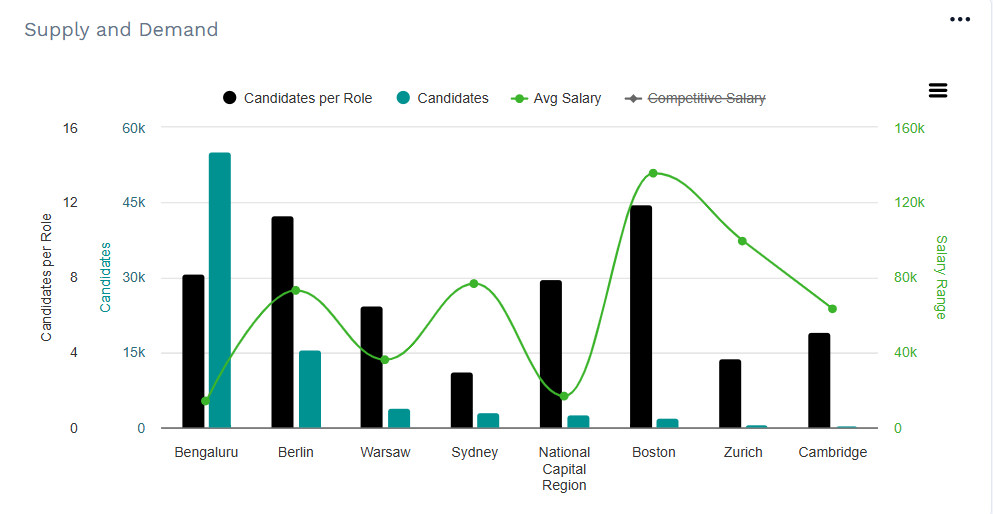
Image shows a global view of the Supply and Demand capability in the Horsefly platform
While traditional HR tech automates processes such as posting jobs, tracking applicants, and managing payroll, talent intelligence addresses entirely different questions, such as:
-
Where in the world can we find 200 machine learning engineers at a competitive cost?
-
Which of our current employees have adjacent skills that could fill emerging roles?
-
What will attrition look like in our Singapore office 18 months from now?
These are the questions CHROs and VPs of Talent Acquisition need to answer. And they cannot be addressed with internal HRIS data alone. You need external labor market intelligence layered on top of internal workforce data to see the full picture.
The global talent market is more competitive and more complex than it has ever been. As such, organizations are increasingly turning to talent intelligence software to replace fragmented, reactive decision-making with a more strategic, data-driven approach.
This article will explore the growth of the talent intelligence software market, the key trends shaping its evolution, and the leading players helping organizations build smarter, more agile workforce strategies.
Talent Intelligence Market Size, Growth, and Key Drivers
The trend lines confirm what practitioners are already experiencing on the ground. Multiple industry analysts tracking this category consistently project double-digit annual growth for talent intelligence software through the early 2030s, even as their specific market-size estimates vary widely depending on how narrowly or broadly the category is defined.
What's consistent across every estimate is the direction: this is one of the fastest-growing segments of HR technology, driven by enterprise demand for more intelligent, data-driven workforce decisions rather than reactive, spreadsheet-based hiring.
Four primary drivers are fueling this growth.
Automation of Repetitive HR Tasks
Sourcing, screening, and shortlisting candidates continue to consume significant time and resources for recruiters. Organizations are adopting talent intelligence platforms to automate high-volume, repetitive activities while enabling recruiters to focus on higher-value work, such as candidate engagement, relationship-building, and strategic workforce planning. The business case is clear: reduced time-to-hire, lower recruitment costs, and more efficient talent acquisition processes.
The Growing Importance of DEI and Workforce Transparency
Diversity, equity, and inclusion initiatives have evolved from aspirational goals into measurable business priorities. Organizations increasingly need accurate workforce data to understand representation across talent pools, identify potential pay equity gaps, and evaluate whether sourcing strategies are reaching a broader range of candidates. Talent intelligence platforms provide the visibility required to measure progress and support more informed workforce decisions.
AI and Machine Learning Maturity
Advances in artificial intelligence and machine learning have significantly expanded the capabilities of talent intelligence platforms. Modern systems can analyze vast datasets across job postings, professional profiles, compensation benchmarks, skills frameworks, and labor market signals to identify patterns that would be difficult to uncover manually. What once required dedicated analytics teams can now be delivered through accessible, enterprise-ready platforms that provide real-time insights into talent availability, skills trends, and workforce risks.
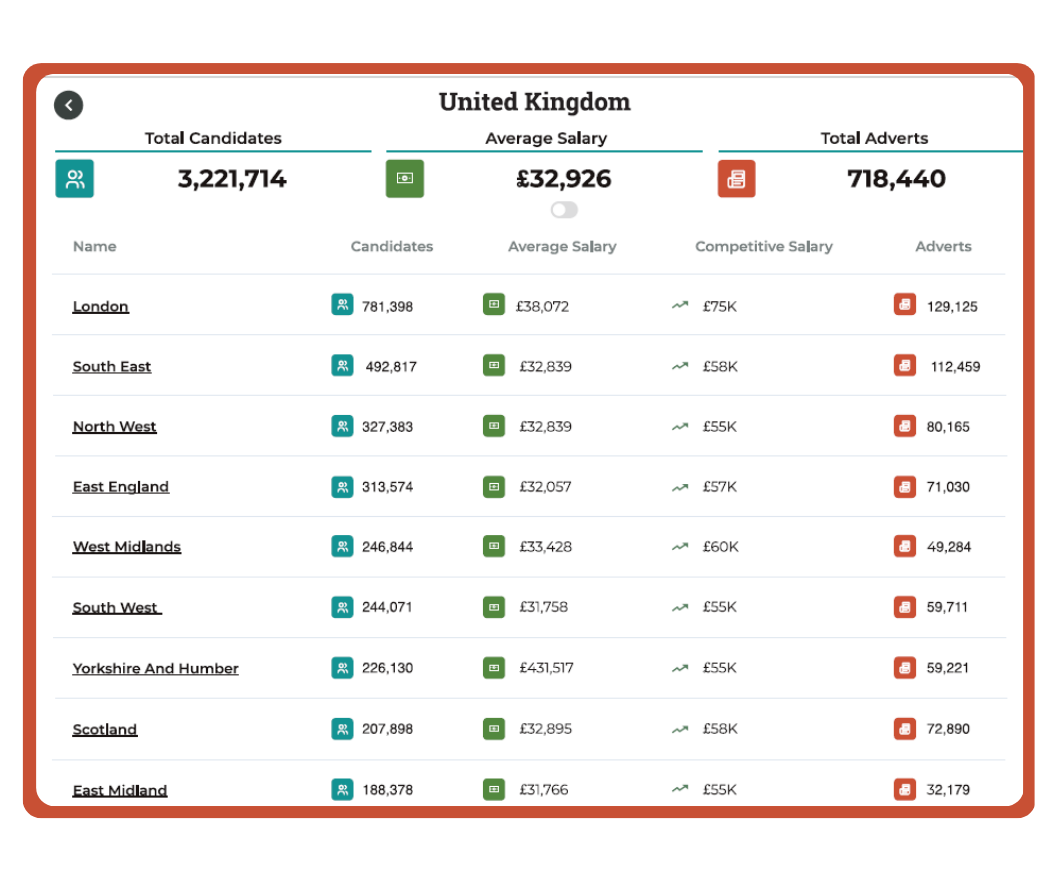
Image shows the Compensation capability from Horsefly
The Rise of Remote and Distributed Work
The shift toward remote and distributed work has fundamentally expanded the potential talent pool for many organizations. Roles that were previously limited by geography can now be sourced globally, creating new opportunities while also introducing greater complexity around talent availability, compensation expectations, employment regulations, and regional competition. Understanding these factors across multiple markets requires data depth and analysis that most internal HR teams cannot build independently.
Together, these drivers represent a broader transformation in how enterprises approach workforce strategy. Rather than relying solely on historical HR data and reactive hiring processes, organizations are increasingly investing in talent intelligence to anticipate skills needs, make faster decisions, and build more resilient workforces.
Core Capabilities: From External Sourcing to Internal Planning
Talent intelligence platforms generally support two complementary but distinct areas of workforce strategy: understanding the external talent market and optimizing the talent an organization already has. This distinction is important when evaluating vendors, as many platforms are designed with a stronger focus on either external talent intelligence or internal workforce planning.
External Candidate Intelligence
External talent intelligence helps recruiters and talent acquisition teams understand, navigate, and compete within the global labor market. Core capabilities include mapping the availability of specific skills across locations, benchmarking compensation against market rates, analyzing competitor hiring activity, and identifying passive candidates who may not be actively searching but have the right experience for critical roles.
Platforms focused on external intelligence help organizations answer strategic questions such as: Where should we hire? Which markets offer the strongest talent supply? How competitive is our compensation? And where can we find overlooked talent pools?
For example, a financial services organization deciding whether to establish a technology hub in Krakow or Bangalore should be able to compare factors such as available skills, compensation levels, competitor presence, and talent supply, rather than relying solely on assumptions or historical hiring patterns.
The value of external intelligence becomes particularly clear when market data challenges internal assumptions. A hiring manager may believe a role can only be filled in a traditional hub such as San Francisco, while labor market data reveals alternative locations with deeper talent pools, lower compensation pressures, or stronger long-term hiring potential. These insights help organizations make more informed workforce decisions.
Internal Workforce Planning
Internal workforce planning focuses on understanding and optimizing the talent an organization already has. These platforms analyze employee skills, experience, career history, and workforce trends to identify internal mobility opportunities, support succession planning, highlight potential skill gaps, and inform reskilling strategies.
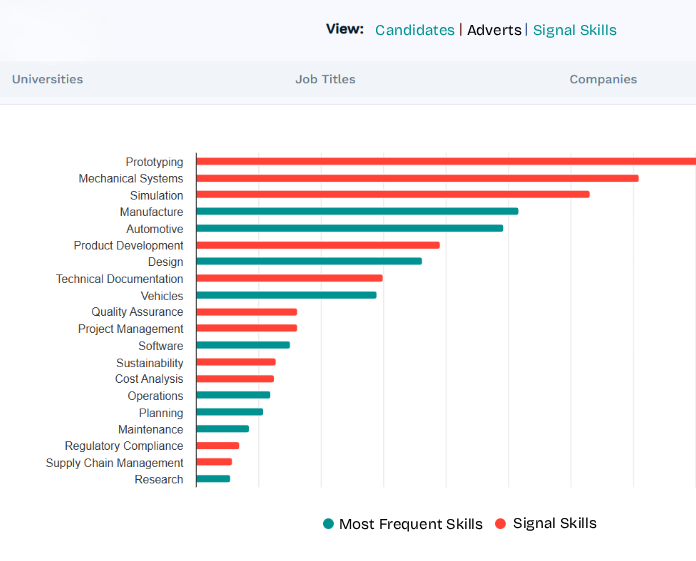
Image shows the Signal Skills capability from Horsefly, which helps to identify trending skills
At the center of this capability is skills intelligence. Rather than relying solely on job titles, which can vary significantly between organizations, talent intelligence platforms analyze underlying skills and competencies to create a more accurate view of workforce capability. This allows companies to identify employees who may already possess the skills needed for emerging roles or who could transition into new positions with targeted development.
The most effective talent intelligence strategies combine both external and internal perspectives. External intelligence reveals what is happening across the broader labor market, while internal intelligence shows the capabilities already available within the organization. Together, these insights help companies build more accurate hiring strategies, targeted reskilling programs, and long-term workforce plans.
The Competitive Field: Key Players and Platforms
The talent intelligence market includes a diverse range of vendors, each with different strengths, data sources, and areas of specialization. Understanding these differences is critical for buyers, as selecting the right platform depends heavily on whether the primary goal is external talent intelligence, internal mobility, workforce planning, or broader HR transformation.
There are leading providers of AI-powered talent intelligence, some with a strong focus on skills-based hiring, talent matching, and internal mobility. These platforms can use AI to identify relationships between skills, roles, and career pathways, helping organizations connect employees with relevant opportunities.
Others focus heavily on internal talent marketplaces, enabling organizations to support employee mobility through projects, mentorship opportunities, career pathways, and internal job matching.
Some specialize in skills intelligence, labor market analytics, and workforce planning, with capabilities centered more on understanding changing skills requirements and identifying pathways for workforce transformation and reskilling.
Some organizations prefer to opt for platforms with a broader approach by combining talent acquisition, candidate experience, employee experience, and talent management capabilities within a unified platform.
Other platforms focus on workforce analytics, offering organizations tools for workforce planning, benchmarking, and people insights that integrate with existing HR systems.
Horsefly Analytics provides a differentiated approach. Rather than replacing existing HR systems, applicant tracking platforms, or internal talent marketplaces, Horsefly provides the global labor market intelligence layer that helps organizations make more informed decisions around location strategy, talent availability, compensation benchmarking, and workforce planning. By combining global data coverage with granular market insights, Horsefly enables enterprises to understand the realities of the talent market before making critical workforce decisions.

The market is not homogeneous. Some vendors focus primarily on internal talent intelligence, while others specialize in external labor market intelligence. Organizations need to understand not only the skills they have internally, but also where those skills exist externally, how competitive the market is, and how hiring conditions vary across locations.
Transforming Strategic HR with Talent Intelligence
The practical applications span nearly every HR function, but a few stand out for their direct business impact.
Recruitment
One of the most significant shifts in talent acquisition is the move from keyword-based resume screening toward skills-based candidate identification. Talent intelligence platforms analyze a candidate’s demonstrated capabilities, experience, and potential rather than relying solely on job titles or traditional career paths.
This approach expands the addressable talent pool by identifying candidates whose skills align with a role, even if their previous titles do not. For example, a software engineer with five years of experience at a fast-growing startup may possess deeper cloud architecture expertise than someone with “Senior Cloud Architect” in their title at a large enterprise. Skills-based matching helps organizations uncover these overlooked candidates.
Retention
Employee turnover is costly, making early identification of retention risks a strategic priority. Talent intelligence platforms combine internal workforce data, such as engagement indicators, tenure, career progression, and compensation positioning, with external market signals, including competitor hiring activity and demand for specific skills.
By identifying employees who may be at higher risk of leaving, organizations can take proactive steps to improve retention, whether through career development opportunities, targeted compensation reviews, internal mobility options, or more meaningful conversations around career progression.
Workforce Planning
Traditional workforce planning is often conducted as an annual budgeting exercise. However, by the time plans are finalized, market conditions, skills requirements, and talent availability may have already changed.
Talent intelligence enables a more dynamic approach by providing ongoing visibility into skills availability, compensation trends, geographic talent pools, and competitive hiring activity. Organizations can model different scenarios, such as relocating operations, entering new markets, or preparing for potential skills shortages, and make adjustments based on current market conditions rather than outdated assumptions.
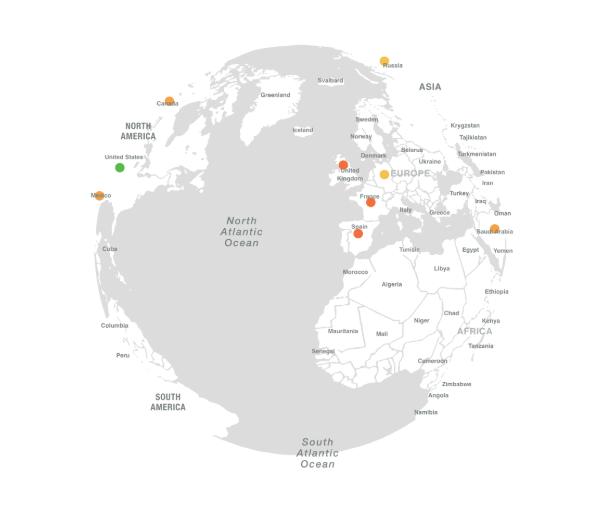
The image shows a global heat map from Horsefly Analytics that helps organizations choose the best places to source talent or even their next office hub
DEI
Talent intelligence platforms help organizations better understand the diversity of available talent pools across specific locations, skills areas, and roles. This creates a more realistic foundation for diversity, equity, and inclusion strategies by connecting goals with actual labor market conditions.
For example, understanding the representation of different demographic groups within a specific talent market can help organizations determine whether challenges are related to sourcing strategy, pipeline development, or broader availability of qualified candidates. Data-driven insights allow companies to move beyond assumptions and focus efforts where they can have the greatest impact.
Compensation
Compensation benchmarking is one of the most immediate applications of talent intelligence. Organizations need accurate visibility into salary expectations, regional differences, and changing market rates to remain competitive while managing costs.
Talent intelligence platforms help identify where compensation bands may have fallen out of alignment with market conditions. For example, a company may discover that it is consistently paying above-market rates for certain roles because salary benchmarks have not been updated in several years, while simultaneously struggling to attract talent in other areas where compensation has not kept pace. Companies can also use EVP data to see the type of compensation potential employees in certain roles find more important. Regular market intelligence enables more accurate, responsive compensation decisions.
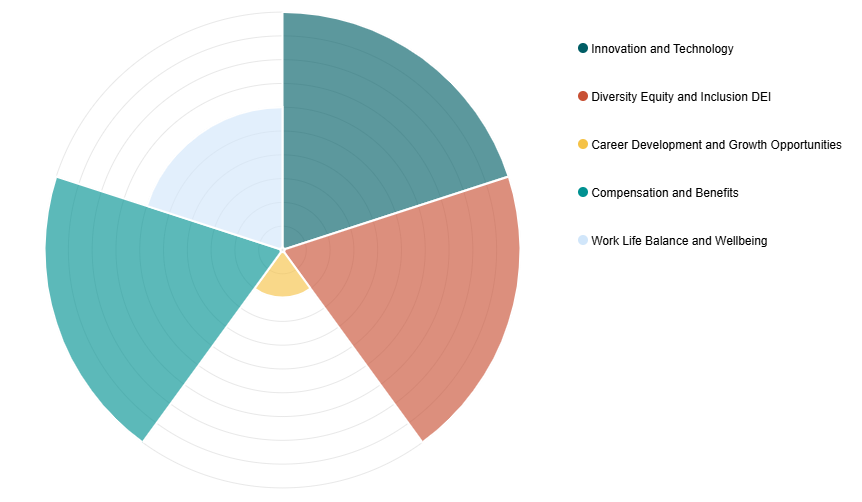
An example of an EVP chart in the Horsefly platform to help see where compensation ideals lie
The Technology Behind Talent Intelligence: AI, ML, and Data Integrity
Artificial intelligence and machine learning are central to modern talent intelligence platforms, enabling organizations to analyze vast datasets, identify patterns, predict trends, and generate workforce insights at a scale that would be impossible through manual analysis alone.
AI capabilities support a range of applications, from forecasting future talent needs based on business growth projections and workforce trends to using natural language processing (NLP) to extract and standardize skills from unstructured sources such as job descriptions, professional profiles, and market data.
However, the effectiveness of any AI-driven talent intelligence platform depends on the quality of the data behind it. The sophistication of the algorithm is only one part of the equation. Accurate workforce insights require comprehensive, current, and reliable data that reflects the complexity of global labor markets.
Building this foundation is a significant challenge. It requires continuously collecting, cleaning, normalizing, and validating data from thousands of sources across different regions, languages, and industries. Platforms must resolve duplicate records, standardize inconsistent job titles and skills, and ensure that market insights remain accurate as conditions change.
This is where data quality becomes a key differentiator in the talent intelligence market. A compensation benchmark that does not reflect recent market movement can lead to inaccurate hiring decisions. A talent supply analysis that relies on limited sources may overlook significant portions of available talent, particularly in emerging markets where professional data is distributed across a wider range of platforms and channels.
The technology stack matters, but data integrity matters more. Talent markets change continuously, influenced by economic shifts, business decisions, policy changes, and industry trends. The most valuable talent intelligence platforms are those that provide insights based on current market conditions, helping organizations make decisions with confidence rather than relying on outdated assumptions.
A Global View: Regional Market Dynamics
Talent intelligence adoption varies significantly by region, reflecting differences in technology maturity, labor market complexity, data availability, and enterprise demand.
North America
North America remains the largest market for talent intelligence adoption, supported by mature technology infrastructure, intense competition for skilled professionals, and significant enterprise investment in HR technology. The concentration of major technology companies, financial institutions, and global enterprises creates strong demand for workforce insights that can improve hiring efficiency, compensation decisions, and strategic workforce planning.
Asia-Pacific
Asia-Pacific is one of the fastest-growing regions for talent intelligence adoption. Rapid digital transformation, expanding multinational operations, and the growth of major talent markets such as India, Vietnam, the Philippines, and Indonesia are increasing demand for more sophisticated workforce intelligence.
However, the region also highlights one of the biggest challenges in global talent data: coverage quality. Many traditional data sources have stronger representation in Western markets and English-speaking professional networks, which can create gaps when assessing talent availability in countries where those sources have lower adoption.
Addressing these gaps requires broader data coverage and a deeper understanding of local labor markets. At Horsefly Analytics, our approach focuses on combining global reach with regional insight, incorporating data across more than 190 countries to help organizations understand talent supply, skills availability, and market conditions across diverse geographies.

Europe
Europe represents a mature but steadily growing market for talent intelligence. Adoption is influenced by the complexity of operating across multiple countries, each with different labor regulations, compensation structures, and workforce dynamics.
For organizations expanding within Europe, accurate country-level intelligence is essential. Factors such as GDPR requirements, works council structures, local employment regulations, and regional salary differences all impact workforce decisions and require a more localized approach to talent data.
Latin America and Africa
Latin America and Africa represent significant emerging opportunities for talent intelligence. Both regions offer growing technology ecosystems, expanding skilled workforces, and attractive options for organizations exploring global hiring, nearshoring, and international workforce strategies.
However, reliable market data remains a key consideration. Organizations entering these markets need confidence that talent supply, compensation benchmarks, and skills insights accurately reflect local realities rather than relying on limited or incomplete datasets.
The key takeaway is that global talent intelligence requires more than simply having international coverage. A platform that provides deep, accurate insights across diverse markets will deliver far greater value than one with broad geographic labels but limited local understanding. True global intelligence means understanding talent markets at the level where hiring and workforce decisions actually happen.
Handling Ethical AI and Data Privacy in HR Tech
Ethical AI and data privacy are among the most important considerations in the adoption of talent intelligence technology, yet they are often overlooked in broader market discussions. As organizations increasingly rely on AI-driven insights to inform workforce decisions, ensuring transparency, fairness, and responsible data practices has become essential.
AI models trained on historical hiring data will reproduce historical biases unless actively corrected. If an organization has historically hired from a narrow set of universities or demographics, an AI trained on that data will continue to favor those same profiles.
Mitigating these risks requires a combination of:
- Strong governance
- Regular auditing
- Diverse and representative datasets
- Transparency around how recommendations are generated
- Appropriate human oversight
Talent intelligence platforms should support decision-making by surfacing insights and recommendations, while final decisions around hiring, promotion, and workforce changes should remain with qualified human stakeholders.
Regulatory compliance adds another layer of complexity. Frameworks such as GDPR in Europe, CCPA in California, and emerging AI regulations globally are increasing requirements around how personal data is collected, processed, stored, and managed. The EU AI Act, which includes specific requirements for AI systems used in employment contexts, further highlights the need for transparency, risk management, and accountability.
When evaluating talent intelligence vendors, organizations should ask important questions: How is AI performance monitored for potential bias? What data sources are being used, and how are they governed? How does the platform ensure compliance with regional privacy requirements? Vendors that can provide clear answers demonstrate a stronger foundation for responsible enterprise adoption.
As talent intelligence becomes increasingly embedded in workforce strategy, ethical AI and data governance will not simply be compliance requirements; they will become key differentiators in determining which platforms organizations can trust.
The Future of Work: Why Global Talent Intelligence Is Non-Negotiable
The trajectory is clear. The talent intelligence market is expected to continue expanding because the challenges it addresses are becoming increasingly complex.
Skills are evolving faster than traditional workforce planning models can adapt. Geographic talent markets are shifting as remote work, economic conditions, and changing workforce expectations reshape where people live and work. Compensation benchmarks continue to move, while competition for specialized skills remains intense across industries.
In this environment, workforce decisions based on outdated assumptions, limited data, or historical trends alone create measurable business risk. Paying above-market rates across hundreds of roles can significantly impact costs. Overlooking emerging talent markets can extend hiring timelines by months. Building workforce plans around outdated skills and attrition assumptions can leave organizations unprepared for changing business needs.
Horsefly Analytics was built to help organizations overcome these challenges by providing the global labor market intelligence needed to make faster, more informed workforce decisions. Our platform combines comprehensive talent data, real-time market insights, and granular analysis across more than 190 countries, enabling CHROs, talent acquisition leaders, and workforce planning teams to understand where talent exists, how markets are changing, and what actions to take next.
The organizations that treat talent intelligence as a strategic capability, not simply another HR technology investment, will be best positioned to compete in the future of work. They will be able to identify talent opportunities earlier, optimize workforce costs, build stronger hiring strategies, and adapt more quickly as market conditions change.
The technology has reached a level of maturity where enterprise adoption is accelerating. The need is clear. The question is no longer whether organizations need better talent intelligence; it is how quickly they can put it into action.
Discover how Horsefly Analytics can help your organization make workforce decisions with confidence. Request a strategic consultation for more insights.
Frequently Asked Questions
How is talent intelligence software different from talent management software?
Talent management software (like an HRIS or performance-review platform) is built to administer and track an organization's existing employees, reviews, goal-setting, and succession records. Talent intelligence software adds an external layer: labor market data, compensation benchmarking, and skills-supply analysis that helps organizations make decisions before someone is hired or promoted, not just manage them afterward.
Does talent intelligence software replace our ATS or HRIS?
No. it typically sits alongside them. Applicant tracking systems and HRIS platforms manage the hiring and employment process; talent intelligence platforms feed market context and analytics into those systems so recruiters and workforce planners have better data to act on. Most enterprise buyers evaluate talent intelligence tools specifically for how well they integrate with the ATS/HRIS stack they already run.
Is talent intelligence software only useful for large, global enterprises?
Large multinationals get the most obvious value because they're navigating multiple labor markets at once, but the underlying use cases (compensation benchmarking, skills-based sourcing, retention-risk signals) apply to any organization competing for specialized talent, including mid-size companies hiring in a handful of competitive markets.
How long does it typically take to see value from a talent intelligence platform?
This varies by vendor and use case, but compensation benchmarking and location/skills-availability analysis tend to deliver usable insights fastest, since they largely draw on external market data. Internal workforce-planning use cases (skills mapping, succession, internal mobility) generally take longer, because they depend on how complete and well-structured an organization's internal employee data already is.
What should we ask vendors before choosing a talent intelligence platform?
Beyond price, the most consequential questions are usually about data: How many countries and languages does the platform actually cover with depth (not just presence)? How often is data refreshed? How is the platform tested for bias, and can it explain how a given recommendation was generated? Vendors that answer these clearly and specifically are usually more trustworthy than those that lean on general claims of "AI-powered" insight.
Can talent intelligence software help with return-to-office or hybrid workforce planning, not just remote hiring?
Yes. The same location and labor-market data used to evaluate where to hire remotely can also inform decisions about which physical offices to staff, expand, or consolidate, based on where talent actually is versus where a company has historically had real estate.
How can companies ensure ethical AI and data privacy when using talent intelligence tools?
Companies ensure ethical AI and data privacy by regularly auditing models for bias and using diverse training data. Transparency in algorithmic recommendations and the maintenance of human oversight for final decisions are vital. Additionally, focusing on aggregated, anonymized labor market data minimizes privacy risks, while strictly adhering to global data protection regulations such as the GDPR is crucial.
Sources: Horsefly Analytics, GDPR, CCPA, EU AI Act