.png?width=2000&name=Horsefly-Logo-NewTag_White%20(3).png)
Driving Data-Driven Decisions for HR Insights
EWA is the process of collecting, analyzing, and reporting on workforce data to inform HR and business strategy. At enterprise scale, collecting these HR analytics means gathering data across your entire organization so that decisions about talent, compensation, and workforce structure are grounded in evidence rather than assumption.
Optimizing Workforce Planning and Talent Management Analytics
Strategic workforce planning is nearly impossible without accurate data. EWA helps HR leaders forecast future talent needs, identify skill gaps before they become critical, and build succession pipelines based on real capability data. Platforms like Horsefly Analytics give organizations access to over 1 trillion data points from thousands of online sources across 170,000 towns and cities in 65 countries. When you're planning headcount globally, that coverage matters.

Enhancing Employee Productivity and Engagement
Understanding what drives performance and satisfaction at scale requires more than annual surveys. EWA and employee performance analytics surface the patterns in your workforce data that correlate with retention, productivity, and disengagement, before they become expensive problems.
Demonstrating HR's Strategic Value
When you can quantify the cost of a mis-hire, the ROI (Return on Investment) of a reskilling program, or the business impact of reducing time-to-fill by two weeks, HR earns its seat at the table. People analytics changes the conversation from activity metrics to business outcomes.
Understanding the Landscape: Types of Workforce Analytics
Most organizations operate across all four levels of workforce analytics, though many are still weighted toward the first two. Understanding where you are helps you prioritize where to go next.
Descriptive Analytics: What Happened?
This is the foundation: turnover rates, headcount trends, time-to-hire, absenteeism. It tells you what the situation looks like right now and how it has changed. Essential, but not enough.
Diagnostic Analytics: Why Did It Happen?
Diagnostic analytics goes a layer deeper, examining root causes. Why did attrition spike in Q3? Why is a particular region consistently underperforming on time-to-fill? This turns data into understanding.
Predictive Analytics: What Will Happen?
This is where analytics starts earning real business value. Predictive analytics uses historical data to forecast likely outcomes: which talent segments are at flight risk, where hiring demand will increase in the next six months, or which roles will be difficult to fill in a given market, meaning predictive analytics in HR is key. Horsefly's longitudinal intelligence uses real historical data to model forward scenarios, giving workforce planners a head start on problems that haven't surfaced yet.
Prescriptive Analytics: What Should We Do?
The most advanced tier. Prescriptive analytics recommends what to do, not just what's likely to happen. Horsefly's AI Impact Analysis module applies this approach, giving organizations data-driven guidance on how AI is likely to reshape roles and where to focus skills development.
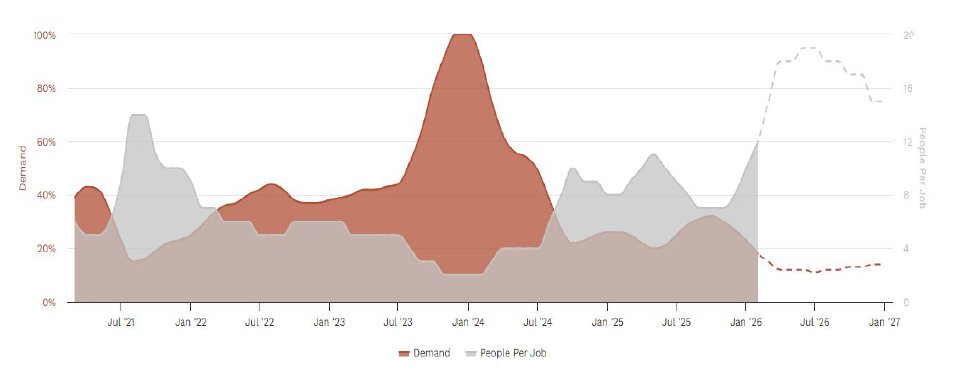
An example of longitudinal data from the Horsefly platform

An example of AI Impact data from the Horsefly platform
Key Capabilities: What to Look for in Enterprise Workforce Analytics Platforms
Robust Data Integration and Harmonization
Enterprise HR environments are rarely clean. You're typically working with data across HRIS (Human Resources Information System), ERP (Enterprise Resource Planning), ATS, payroll, and engagement platforms that don't naturally connect. An enterprise-grade EWA solution needs to integrate and harmonize these sources without requiring your HR team to become data engineers.
Advanced Reporting and Customizable Dashboards
Different stakeholders need different views. A CHRO needs strategic trend lines. A hiring manager needs role-level market data. A CFO needs cost modeling. Look for solutions that offer flexible dashboards rather than one-size-fits-all reporting. An enterprise workforce analytics dashboard should work for all of them without requiring separate analytics software or tools.
Predictive Modeling and AI Capabilities
AI capabilities are what separate a reporting tool from a genuine strategic asset. Horsefly's Signal Skills Intelligence detects skills rising in demand before they become mainstream requirements, so workforce planners can act ahead of the market rather than react to it.
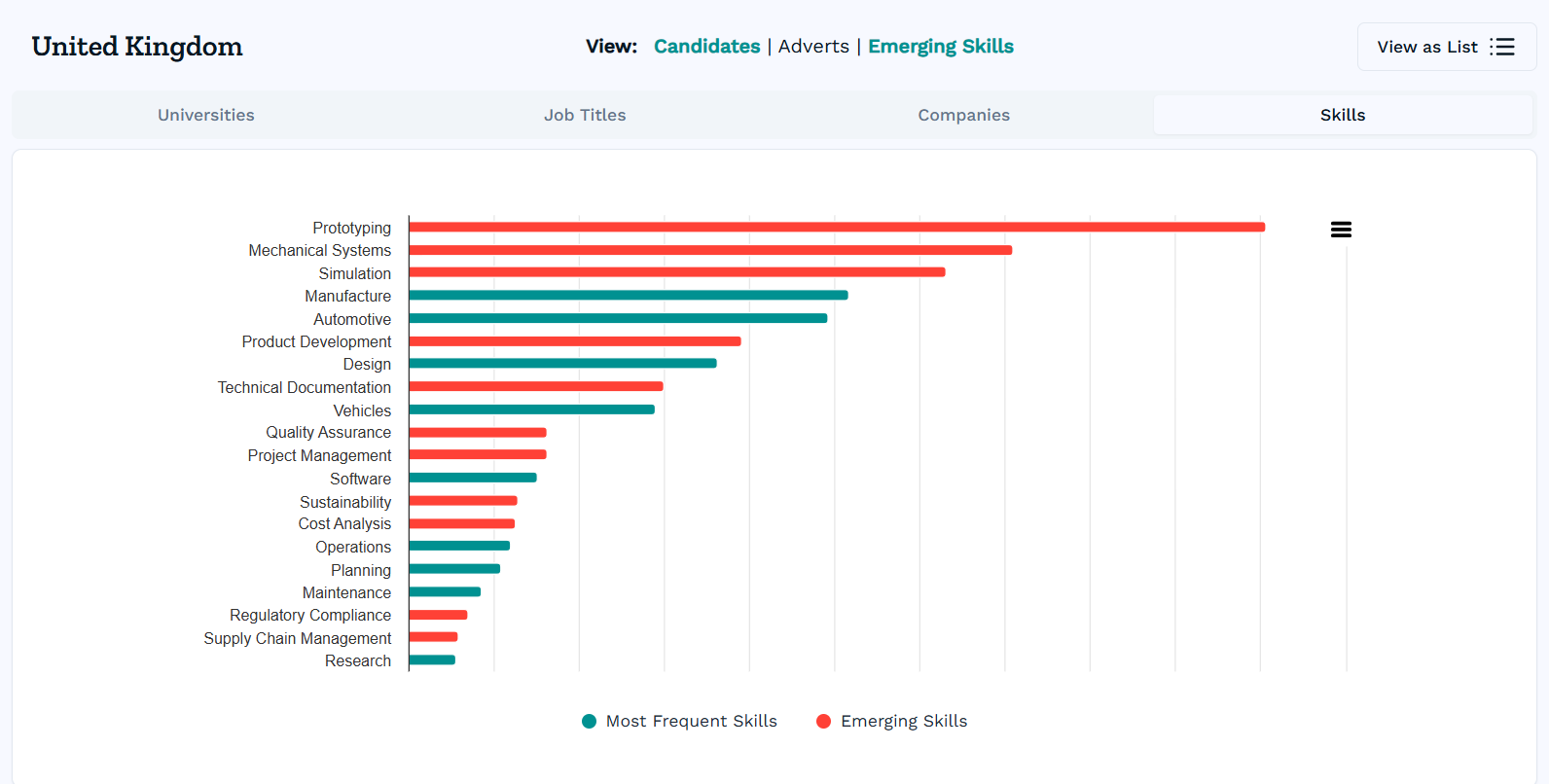
The Signal Skills capability from Horsefly
Scalability, Security, and Compliance
At enterprise scale, data governance isn't optional. You need a platform that handles volume and complexity, maintains security standards, and supports compliance with GDPR, CCPA, and other applicable regional frameworks.
User Experience and Accessibility
The best analytics platform is worthless if your HR business partners won't use it. Prioritize solutions with intuitive interfaces built for non-technical users. Horsefly is designed on this principle: powerful insights, no data science expertise required. To find out more, get in touch to arrange a strategy session.
Benchmarking and External Data Integration
Internal data tells you what's happening inside your organization. External labor market data tells you what's happening in the world your business competes in. The most valuable enterprise workforce analytics tools combine both. Compensation insights allow organizations to benchmark compensation packages against industry standards globally, ensuring positioning is competitive in the markets that matter.
Practical Applications: Enterprise Workforce Analytics Use Cases
Talent Acquisition and Retention
With accurate supply and demand data, recruiting teams can identify where talent is concentrated, predict where hiring will be difficult before they start, and allocate sourcing resources accordingly. Insights into the difficulty of hiring for certain roles give resource planners visibility into which roles and locations will need more time and budget before they commit.
Compensation and Benefits Optimization
Pay equity and competitive compensation are board-level issues. EWA enables HR teams to conduct workforce optimization, helping to identify pay disparities, benchmark against the external market, and model the cost and impact of compensation changes with confidence.
Diversity, Equity, and Inclusion (DEI) Insights
Measuring DEI progress requires accurate data across the full talent lifecycle. DEI Insights capabilities give organizations the data to set benchmarks, track progress, and identify where diversity targets are at risk, so strategy is driven by evidence.
Workforce Planning and Forecasting
Scenario planning at enterprise scale requires more than spreadsheets. Global heat maps allow organizations to visualize where specific skills are concentrated worldwide, so location and sourcing decisions are based on where the talent actually is, not where you assume it to be.
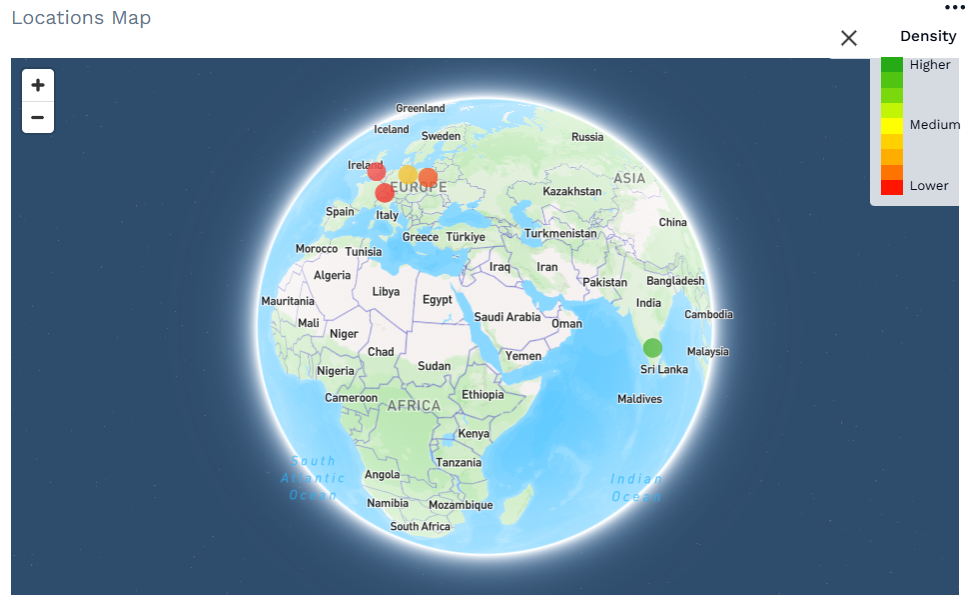
An example of the Horsefly global heat map functionality
Navigating the Journey: Implementing Enterprise Workforce Analytics
Phase 1: Needs Assessment and Strategy Definition
Before evaluating a single vendor, get clear on what you're solving. Identify the specific business goals that EWA needs to support and the decisions being made today without sufficient data. Starting with outcomes rather than features makes every subsequent decision easier.
Phase 2: Data Readiness and Integration
Most organizations underestimate this phase. Before you can analyze workforce data effectively, you need to understand what data you have, where it lives, and how accurate it is. Data quality and governance frameworks should be established before deployment, not after.
Phase 3: Solution Selection and Deployment
Evaluate vendors against your specific requirements. Proof of concept programs in a defined business unit allow you to test real-world usability before full rollout. Factor in integration complexity, vendor support quality, and roadmap alignment, not just current features.
Phase 4: Adoption, Training, and Continuous Improvement
Technology deployment is the beginning. Building a data-driven HR culture requires ongoing investment in training to change the way workforce management is done. Define the metrics you'll use to measure impact, review them regularly, and iterate as your analytical maturity grows.

Overcoming Challenges and Best Practices in EWA Adoption
Data Quality and Governance
No analytics platform compensates for poor underlying data quality. Clear governance policies, ownership, and quality standards are the most important technical prerequisite for successful EWA adoption.
Change Management and Adoption
Resistance to data-driven decision-making is real, particularly among experienced leaders who trust their instincts. Successful adoption requires executive sponsorship and early wins that demonstrate concrete value.
Ethical Considerations and Data Privacy
At enterprise scale, the ethical use of employee data carries significant legal and reputational risk. GDPR and CCPA compliance is mandatory. Beyond compliance, transparency with employees about what data is collected, how it is used, and who has access builds the organizational trust that makes analytics sustainable.
Measuring ROI and Demonstrating Value
Define your success metrics before you go live. Reduction in time-to-fill, improved offer acceptance rates, increased internal mobility, and cost savings from reduced attrition are all quantifiable outcomes that justify continued investment.
Choosing the Right Enterprise Workforce Analytics Solution
When evaluating the best enterprise workforce analytics tools for 2026, look beyond the feature checklist. Vendor stability, implementation track record, customer support quality, and product roadmap matter as much as current capabilities.
Factor in total cost of ownership, not just license fees. Integration costs, training investment, and the internal resource required to manage the platform all add up. And prioritize platforms with clear innovation roadmaps. AI capabilities, skills-based analytics, and organizational network analysis (ONA) are actively reshaping what EWA can do. The right platform for today should be positioned to stay ahead of where the market is heading tomorrow.
The Future of Enterprise Workforce Analytics
AI-powered insights, prescriptive recommendations, and skills-based analytics are already changing what EWA looks like in practice. As AI continues to reshape roles and skills requirements, the ability to understand and respond to workforce change quickly will be a genuine competitive differentiator. The organizations investing in this capability now are building an institutional advantage that compounds over time.
Enterprise workforce analytics gives HR leaders the evidence to make better decisions, faster, and with more confidence. The data is available. The platforms are mature. The competitive advantage goes to the organizations that put both to work.
Ready to see what accurate labor market intelligence looks like in practice? Contact us for a strategic consultation.
Sources: Horsefly Analytics, GDPR, CCPA