.png?width=2000&name=Horsefly-Logo-NewTag_White%20(3).png)
Workforce analytics is the practice of using data to understand, measure, and optimize how your people work. Think of it as your organization's talent intelligence system. It takes all those messy data points scattered across your HR systems, productivity tools, and business platforms and transforms them into actionable insights you can actually use.
Here's where it gets interesting: workforce analytics goes beyond traditional HR analytics. While HR analytics typically focuses on:
-
Headcount
-
Turnover rates
-
Basic demographic data
Workforce analytics digs deeper and examines productivity patterns, skills gaps, hiring trends, and even predicts future workforce needs. It's the difference between knowing you have 500 employees and understanding exactly which skills you'll need six months from now to hit your growth targets.
Modern workforce analytics software combines several key components: data collection from multiple sources, advanced analytics engines (often powered by AI), visualization dashboards that can be easily understood and interpreted, and predictive modeling that helps you spot trends before they become problems. The best platforms make complex workforce data feel accessible, turning HR professionals and business leaders into strategic decision-makers armed with real evidence.
Key Features to Look for in the Best Workforce Analytics Software
Not all workforce analytics platforms are created equal. Some are glorified spreadsheets with a dashboard slapped on top. Others are genuinely transformative, but it’s worth remembering that different tools are created to do different things and to provide essential support for a company’s overall workforce planning and analytical strategy. It’s important to look at what you need to help enhance your business strategy plans. Here's some of the features on offer across different tools:
Employee Productivity Monitoring
This isn’t about over-the-shoulder surveillance - modern productivity monitoring tracks meaningful metrics like active versus idle time, application usage patterns, and project completion rates. This data helps identify bottlenecks, optimize workflows, and support remote teams effectively. The key is finding tools that provide employee performance insights without crossing into micromanagement territory.
Performance Management and Reporting
Your analytics platform should transform performance reviews from annual, dreaded exercises into continuous, data-driven conversations. Look for real-time performance dashboards, customizable KPI tracking, and reporting tools that let you slice and dice data by team, department, or location. The best systems integrate qualitative feedback with quantitative metrics, giving you the full picture of employee performance.
Talent Management and Hiring Trends
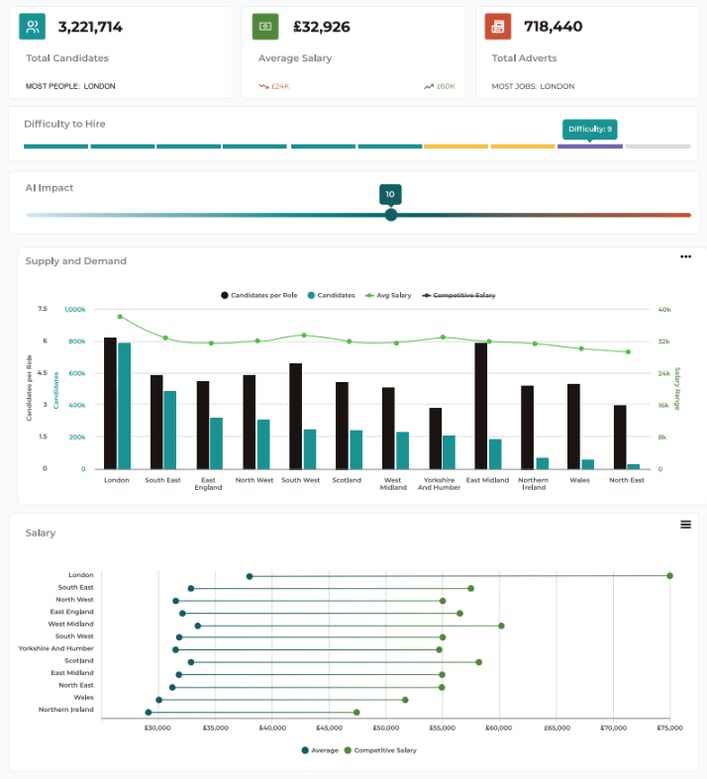
Understanding your current workforce is only half the battle. Smart workforce analytics platforms help you identify hiring trends, spot skills gaps before they become critical, and optimize your talent acquisition strategy. This means analyzing data, such as cost-per-hire, and even external labor market intelligence. Some advanced platforms provide global talent market insights that help you understand competitor hiring patterns and skills availability in real-time. Horsefly Analytics is one such platform and you can find out how your organization could benefit from these insights by booking a custom consultation with us.

Workforce Planning and Resource Allocation
Strategic workforce planning requires forecasting future needs based on business goals, growth projections, and market conditions. Your software should help you model different scenarios, identify resource constraints, and make data-driven decisions about hiring and retention, training, and restructuring. This is where predictive analytics really shines, helping you move from reactive to proactive workforce management software analysis.
Security and Compliance Features
With great data comes great responsibility. Your workforce analytics platform needs robust security protocols, role-based access controls, and compliance features that align with regulations like GDPR and CCPA. This isn't negotiable, especially if you're handling sensitive employee data across multiple jurisdictions.
Comparing the Various Types of Top Workforce Analytics Tools
The market is crowded, but here are a few key examples of the types of workforce and talent analytics software available on the market:
-
Some workforce analytics companies focus heavily on productivity management and employee engagement. Their strength will therefore lie in user-friendly dashboards and straightforward implementation. They can be helpful for small to mid-sized businesses prioritizing productivity monitoring, though it lacks the strategic workforce planning capabilities larger enterprises need.
-
Some solutions will be positioned more as comprehensive workforce analytics tools. These platforms excel at detailed activity monitoring and compliance features, making them popular in highly regulated industries. Software like this may have a steeper learning curve, which may overwhelm smaller teams, so make sure you bear this in mind.
-
You may also look at software that emphasizes remote team management with time tracking, screenshot monitoring, and productivity analytics. However, some employees find the monitoring features invasive, and they can be lighter when it comes to the strategic workforce planning side of things.
-
Then there is the enterprise-grade end of the spectrum. These tools offer robust workforce analytics integrated with comprehensive HR management systems. They handle complex organizational structures and global workforces with ease. The downside is that implementation can take months, and smaller organizations might find them overkill.
-
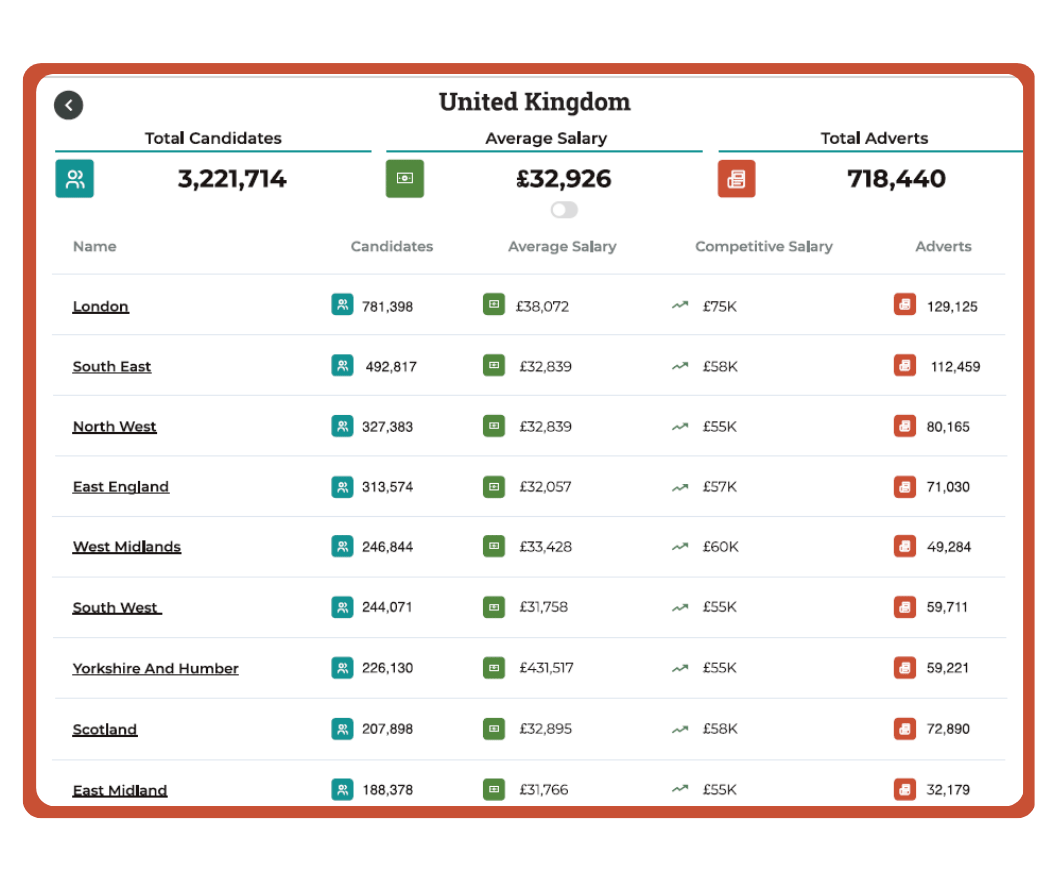
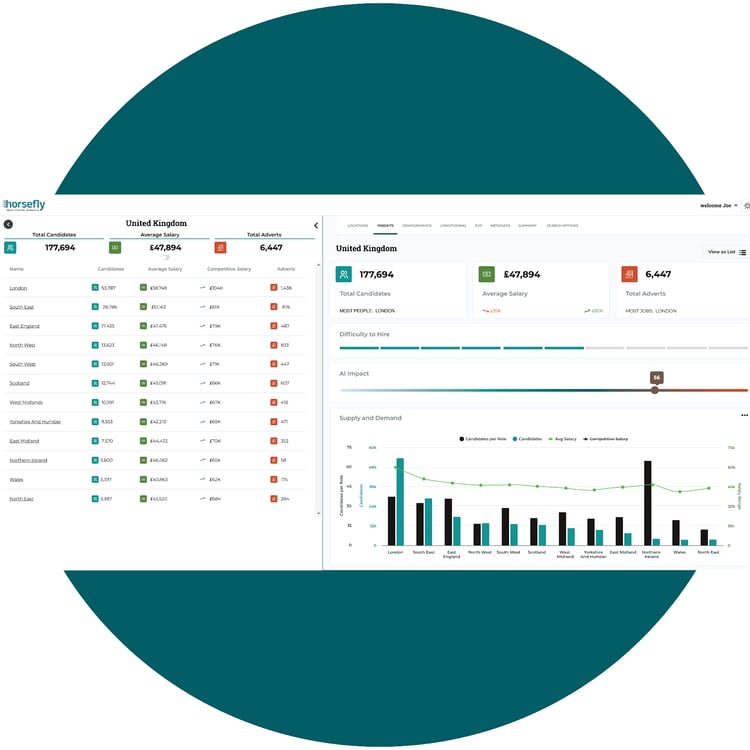
Horsefly Analytics takes a different approach entirely. Rather than focusing on internal productivity monitoring, Horsefly specializes in talent intelligence and labor market analytics. The platform provides deep insights into global hiring trends, competitor talent movements, skills availability, and workforce planning. It's particularly powerful for organizations focused on strategic talent acquisition and workforce optimization at scale. Horsefly's AI-powered analytics help you understand not just what's happening inside your organization, but what's happening in the broader talent market, which is invaluable for competitive positioning. For a deeper understanding on how Horsefly can help your company thrive, contact us to discuss your own needs in more detail.
Industry Use Cases and Measurable ROI
Workforce analytics isn't theoretical. Organizations across industries are achieving concrete results:
Recruitment and Staffing
Serocor, a leading staffing firm, partnered with Horsefly Analytics to transform their market research and bidding processes. Previously wasting valuable time on manual research with limited access to comprehensive data, they implemented Horsefly's live talent intelligence platform. The impact was dramatic: their win ratios jumped from 60% to over 80%. Beyond improved bid success, they enhanced client meetings with data-driven insights, established thought leadership through quarterly market reports, and even supported a client's office relocation with diversity insights. The platform helped them stand out in a crowded competitive landscape while building credibility with internal stakeholders.
Energy Sector
Ørsted, a global renewable energy leader targeting 50GW installed capacity by 2030, leveraged Horsefly Analytics to revolutionize their workforce planning function. Facing high recruitment demands across multiple regions without efficient decision-making tools, they needed quick, reliable data for scenario planning. Horsefly's real-time analytics platform delivered immediate results: $40 million in cost savings through strategic workforce planning. They identified locations with 60-70% salary cost reduction potential for 200-300 annual hires, enhanced early career recruitment through university talent mapping, and enabled real-time collaboration between HR and line managers. The platform's intuitive interface meant hiring decisions could be made collaboratively during actual calls, transforming conversations from debates about data accuracy into genuine partnerships.
Technology Sector
Mimecast, a global IT business with 2,000+ employees across 13 countries, used Horsefly Analytics to establish a new center of excellence and build tech teams outside traditional high-cost locations. Facing rising costs in primary locations, they needed to maintain quality while expanding geographically by leveraging their remote and hybrid workforce. Horsefly delivered comprehensive labor market analytics for location strategy, data-driven insights on talent availability and costs, and diversity-focused talent targeting across multiple industries. The results were impressive: they built a center of excellence from scratch in just three months, saved over $700,000 through in-house recruitment, achieved 30% female hires and 70% ethnic diversity, and successfully identified talent from alternative sectors while optimizing location selection for both customer and staff convenience.
Organizations treating workforce analytics as strategic talent intelligence rather than just internal monitoring see transformational returns. Contact Horsefly for more workforce trends in your industry.

Ethical Considerations and Privacy Concerns
Here's where things get uncomfortable: employee monitoring exists in a moral gray area. Just because you can track every keystroke doesn't mean you should.
The best workforce analytics strategies balance organizational needs with employee privacy and dignity. Transparency is non-negotiable. Employees should know what's being monitored, why, and how the data will be used. Secret surveillance destroys trust and tanks morale faster than you can say "productivity metrics."
-
Implement clear policies around data collection and use:
-
Limit monitoring to work-relevant metrics during work hours
-
Avoid tracking personal communications or off-hours activity
-
Focus on team and organizational patterns rather than individual surveillance.
The goal is improving workflows and identifying systemic issues, not creating a culture of fear.
Compliance matters too. GDPR in Europe requires explicit consent for employee monitoring and strict data handling protocols. CCPA in California gives employees rights to access and delete their data. Violating these regulations brings hefty fines and reputational damage.
Work with legal counsel to ensure your workforce analytics program respects both regulatory requirements and human dignity. The most effective programs position analytics as a tool for employee empowerment and organizational improvement, not top-down control.
Integration with HRIS and Other Business Systems
Workforce analytics software platforms living in isolation are basically useless. The real power comes from connecting it to your existing HR Tech ecosystem.
Modern platforms integrate seamlessly with HRIS systems, automatically pulling employee data, organizational hierarchies, and performance records. Payroll integration with systems adds compensation data, helping you analyze productivity in relation to labor costs.
The best HR analytics software integrations are bidirectional. Your analytics platform doesn't just pull data; it pushes insights back into your operational systems. Performance data flows into your HRIS for review cycles. Workforce planning insights inform your recruitment ATS. Skills gap analysis triggers learning management system recommendations.
API availability matters if you're using specialized tools. Look for platforms offering pre-built connectors for popular business systems. Some vendors charge extra for premium integrations, so factor that into your total cost of ownership.
The integration sweet spot would be for all of your workforce data to be unified in one place, automatically updated, with insights flowing back into the systems where decisions get made. No manual exports, no version control nightmares, no data living in spreadsheet purgatory.
Choosing the Right Workforce Analytics Software Products for Your Business
Decision time. It’s important to remember that you may have a need for multiple tools if you’re looking for solutions to a few different challenges. It’s worth bearing in mind that there may not be a one-size-fits-all solution.
To get you started, here's your practical checklist:
Start with your use case. Are you primarily focused on productivity monitoring, strategic workforce planning, talent acquisition intelligence, or comprehensive HR analytics? Your primary need should drive your search. Don't pay for enterprise features if you're a 50-person startup.
Evaluate scalability honestly. Today's perfect solution might crumble under tomorrow's growth. Can the platform handle your projected headcount in three years? Does pricing scale linearly or jump dramatically at certain thresholds? Can it support multiple locations or international expansion?
Test before committing. Demand a real demo with your actual data, not a sanitized vendor presentation. Involve end users, from HR analysts to managers who'll consume the insights. If the platform requires weeks of training for basic tasks, keep looking.
Calculate total cost of ownership. Beyond subscription fees, factor in implementation costs, integration expenses, training time, and ongoing support. That cheap-looking solution might cost more once you add necessary customizations.
Assess vendor stability and support. Workforce or people analytics software is a long-term investment. Is the vendor financially stable? Do they have a track record of innovation? What does their customer support look like? Be sure to ask to speak to active customers of the platform you’re looking into, to help give you a clearer picture of whether it’s right for you and your particular needs.
Prioritize customization and flexibility. Your workforce is unique. Cookie-cutter analytics rarely tell your whole story. Look for platforms allowing custom metrics, flexible reporting, and configurable dashboards that reflect your organizational reality.
Successful implementation requires executive buy-in, clear communication about benefits and limitations, and patience during the adoption curve. Start with pilot programs in willing departments before rolling out company-wide. Celebrate early wins to build momentum.
How Workforce Analytics Software Can Help Transform Organizations
Workforce analytics software systems transform how organizations understand and optimize their most important resource. The right platform delivers measurable ROI through better hiring decisions, improved productivity, reduced costs, and smarter workforce planning.
But technology is just the enabler. Success requires combining powerful software with thoughtful strategy, ethical implementation, and a genuine commitment to using data for employee empowerment, not just organizational control.
The workforce analytics market will continue evolving. AI capabilities will deepen, predictive models will improve, and integration ecosystems will expand. Organizations starting their workforce analytics journey today are positioning themselves for competitive advantage tomorrow.
If you’re ready to move from intuition to intelligence, start by clearly defining what you want to achieve, then find the platform(s) that aligns with your goals, values, and budget.
Want to see how strategic workforce analytics can transform your talent acquisition and workforce planning using real-time data? Get in touch with Horsefly Analytics for expert guidance and to explore global talent intelligence, AI-powered insights, and labor market analytics that give you a competitive edge.
Sources: Horsefly Analytics, GDPR, CCPA, SAP