.png?width=2000&name=Horsefly-Logo-NewTag_White%20(3).png)
What Is HR Analytics ROI?
ROI, or return on investment, measures the financial return generated by a specific investment relative to its cost. In HR, that means quantifying the value delivered by HR initiatives, programs, and the analytics platforms that support them.
HR analytics ROI and human capital ROI are related but distinct. Human capital ROI is a broader metric: it measures the revenue generated per dollar spent on workforce-related costs overall. HR analytics ROI is more targeted. It asks: did this specific program, tool, or intervention deliver measurable value?
Why does this distinction matter? Because HR teams are increasingly being asked to justify budget at the initiative level, not just the department level. A recruitment technology investment, a management training rollout, or a new workforce planning approach all need their own ROI story.
Measuring HR ROI matters for helping to maximize the ROI of HR and there are three core reasons for this. First, it builds credibility. When HR can articulate value in financial terms, it earns a seat at the strategic table rather than being brought in after decisions are already made. Second, it drives smarter resource allocation. When you know what works, you stop funding what does not. Third, it creates a feedback loop for continuous improvement. Organizations that measure tend to get better outcomes over time, because they are learning from real data rather than assumptions.

The Core Formula: How to Calculate HR Analytics ROI
The universal ROI formula is straightforward:
ROI (%) = [(Net Benefit / Total Cost) x 100]
Where Net Benefit = Total Benefits minus Total Costs.
Applied to return on investment HR, this breaks down into three components.
Benefits are the financial gains attributable to the initiative. These can be direct (reduced cost-per-hire, lower turnover costs) or indirect (productivity gains, improved manager effectiveness). Quantifying indirect benefits is harder but not impossible.
Costs include everything invested in the initiative: technology, implementation, staff time, training, and ongoing maintenance or licensing fees.
Baseline is where there may be stumbles with an HR department and ROI. You cannot measure the impact of a change without knowing where you started. Before launching any initiative, document current performance across relevant HR metrics for ROI. That baseline becomes the control point for calculating net benefit.
A practical example: if you spent $50,000 on a new onboarding program and reduced 90-day turnover by 15 employees (each costing roughly $10,000 to replace), your net benefit is $150,000 minus $50,000, giving you a net gain of $100,000 and an ROI of 200%.
The math is the easy part. The discipline is in setting baselines and being honest about what you can and cannot directly attribute to the initiative.
Step-by-Step: Calculating ROI for Specific HR Initiatives
Recruitment ROI
Recruitment is one of the most measurable areas in HR because the cost side is well understood. So, when dealing with HR initiatives and ROI, let’s take a look at both how to measure HR ROI and how to calculate HR ROI as well.
Key metrics to track are cost-per-hire, time-to-fill, offer acceptance rate, and quality of hire. Quality of hire, typically measured by 90-day performance ratings or first-year retention, is the most valuable but the most often skipped.
Calculation approach: Establish your average cost-per-hire and time-to-fill before implementing a change. Measure both after. Quantify the saving on cost and the value of faster fills (days of lost productivity or contract coverage costs). Factor in quality improvements using retention rates.
For example, cutting time-to-fill by 10 days across 50 hires, where each day of vacancy costs $500 in lost productivity, generates $250,000 in avoided costs. That is a concrete figure you can put in front of a leadership team.
Labor market intelligence tools like Horsefly can sharpen this calculation further. Capabilities such as Difficulty of Hire Insights flag which roles will take longer to fill before you start recruiting, so you can resource those searches accurately and avoid costly surprises. Supply and Demand Insights show where talent availability is highest, helping teams make smarter location decisions that reduce both time-to-fill and cost-per-hire from the outset.
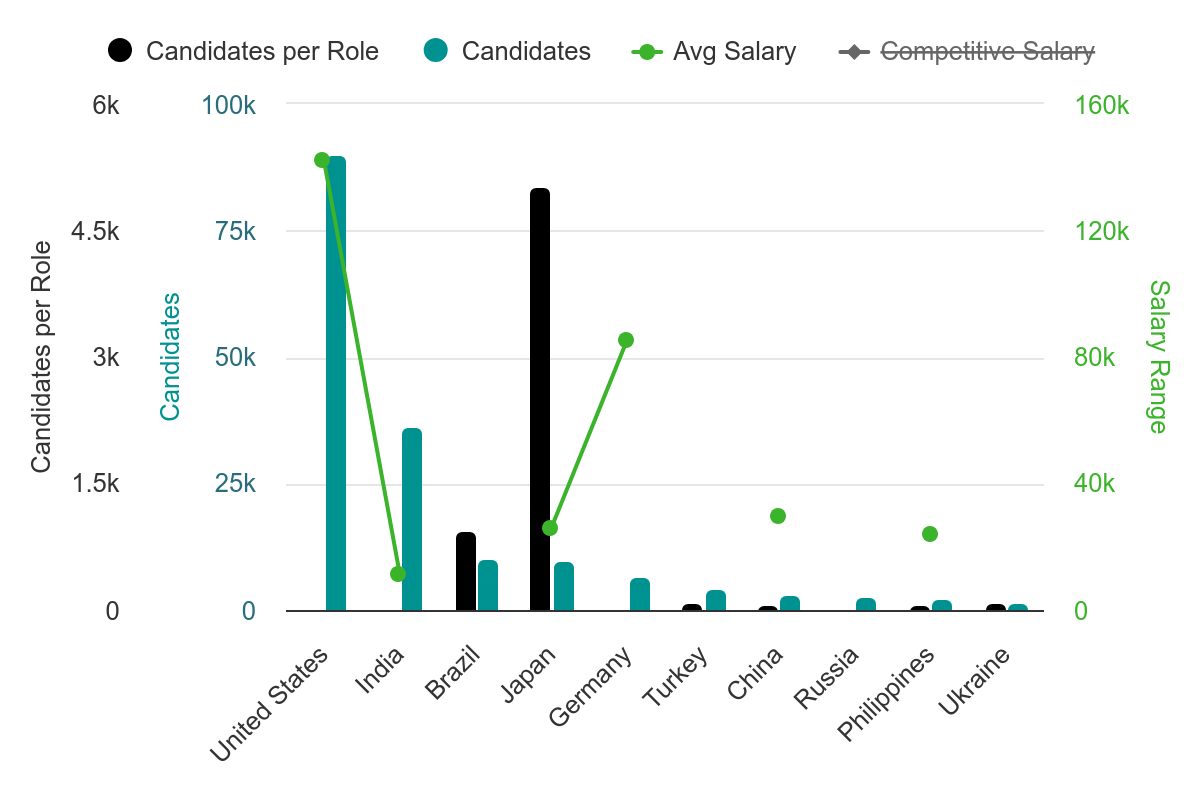
Image shows example of the Supply and Demand capability on the Horsefly platform
Training and Development ROI
Training ROI is harder to isolate but highly achievable with the right baseline approach.
Key metrics: performance scores pre and post training, retention rates among trained employees versus a control group, and productivity output (where measurable).
Calculation approach: Track performance improvement over a defined period (typically 6 to 12 months post-training). Assign a financial value to performance gains where possible, for example by using salary as a proxy for output value. Compare retention rates between trained and untrained cohorts to calculate avoided turnover costs.
A practical benchmark: studies by Dr. Jack Phillips, whose ROI Methodology has become a widely referenced standard in learning and development, consistently show that well-designed training programs generate ROI in the range of 100 to 700%, depending on the initiative and measurement rigor applied.
One note on skills alignment: training that targets the wrong skills or builds capabilities that are already abundant in the market delivers lower returns. Skills Insights within Horsefly enables teams to benchmark their workforce's existing skill sets against market demand, ensuring development investment is directed where it actually matters.
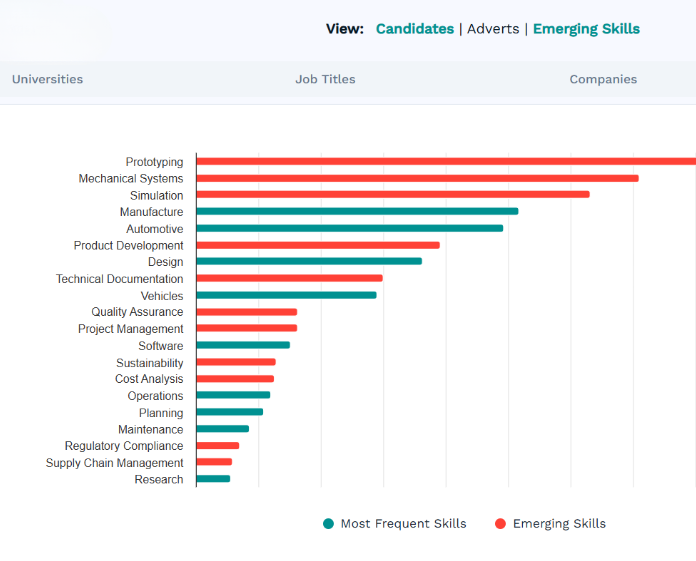
Image shows the Skills capability from Horsefly
Employee Engagement ROI
Engagement is often dismissed as a "soft" metric, which is a missed opportunity. The financial impact of disengagement is substantial.
Key metrics include, voluntary turnover rates, absenteeism levels, and, where measurable, productivity output. Gallup's research consistently finds that highly engaged teams show significantly lower turnover, lower absenteeism, and meaningfully higher productivity compared to disengaged counterparts.
Calculation approach: Estimate the annual cost of turnover among disengaged employees (typically 50 to 200% of annual salary, depending on role complexity). Apply engagement improvement data from surveys to model what a 10% improvement in engagement scores would save annually. Compare that figure to the cost of the engagement initiative.
Even a conservative estimate typically produces a compelling case.
Wellness Program ROI
Wellness programs have a reputation for being expensive and hard to measure. Done well, they are neither.
Key metrics are, healthcare claim costs (compare year-over-year among participants versus non-participants), absenteeism rates, and presenteeism indicators where your organization tracks them.
Calculation approach: Work with your benefits provider to pull average claim costs for participating versus non-participating employees over a 12-month period. Factor in the cost of the program itself. Even modest reductions in claims or absenteeism can offset program costs given the per-employee cost of healthcare in most markets.
Best Practices for Measuring and Reporting HR Analytics ROI
Define objectives before you launch, not after. The question "what does success look like?" needs an answer before an initiative starts. If you cannot define a measurable outcome upfront, reconsider whether you are ready to run the program.
Build data collection into program design. Measurement should not be an afterthought. Decide upfront which data you need, where it lives, and who owns capturing it.
Isolate HR's contribution honestly. Business performance is multi-causal. If the company had a great quarter, voluntary turnover naturally drops for reasons unrelated to your retention initiative. Use control groups where possible, or apply statistical controls to separate correlation from causation.
Translate findings into business language. "We reduced time-to-fill by 12 days" is a metric. "We returned $340,000 in avoided productivity loss to the business" is a business outcome. Present both, but lead with the latter in executive conversations.
Report regularly, not just at program end. Quarterly progress updates build stakeholder confidence and create opportunities to course-correct before you reach the end of a program with disappointing results.
Challenges in Measuring HR ROI and How to Overcome Them
Intangible benefits are real; they just need a proxy, but how do you measure ROI in HR? Culture, morale, and employer brand are harder to quantify than turnover costs, but they are not unquantifiable. Use leading indicators, such as Glassdoor scores, offer acceptance rates, time-to-fill in competitive markets. If your employer brand improves, you will see it in these numbers before it shows up in a spreadsheet.
Data quality is a legitimate barrier. Many HR teams are working with fragmented data across an HRIS, an ATS, a payroll system, and a learning management platform that do not talk to each other. The pragmatic fix: start with the data you have, be transparent about its limitations, and build the case for better systems on the back of what you demonstrate.
Isolating HR's impact from broader business factors is genuinely difficult. The key is to document your methodology and be upfront about confidence levels. Stakeholders respect honesty more than false accuracy.
Analytical capability gaps are closing, partly because better tools are making analysis more accessible. The barrier to entry for HR analytics has dropped significantly in recent years. Platforms like Horsefly are designed with a no-mastery-required interface, meaning practitioners can pull powerful insights without needing a data science background.

Leveraging HR Analytics Tools for Enhanced ROI Measurement
Analytics platforms have fundamentally changed what is measurable in HR, and how fast. Where previously a benchmarking exercise might take weeks of manual data collection, platforms like Horsefly provide access to over 1 trillion data points across 65 countries and 170,000 locations, refreshed daily.
That matters for ROI measurement because accuracy depends on good baselines, and good baselines depend on reliable external benchmarks - so where 40% ROI may be ‘good’ for one company, it may be terrible for another. Compensation Insights enables organizations to benchmark their pay packages against real market data, identifying gaps that drive turnover before those employees start looking elsewhere. Signal Skills Intelligence flags emerging skills trends before they become mainstream requirements, so workforce planning decisions are based on where the market is heading, not where it was 12 months ago.
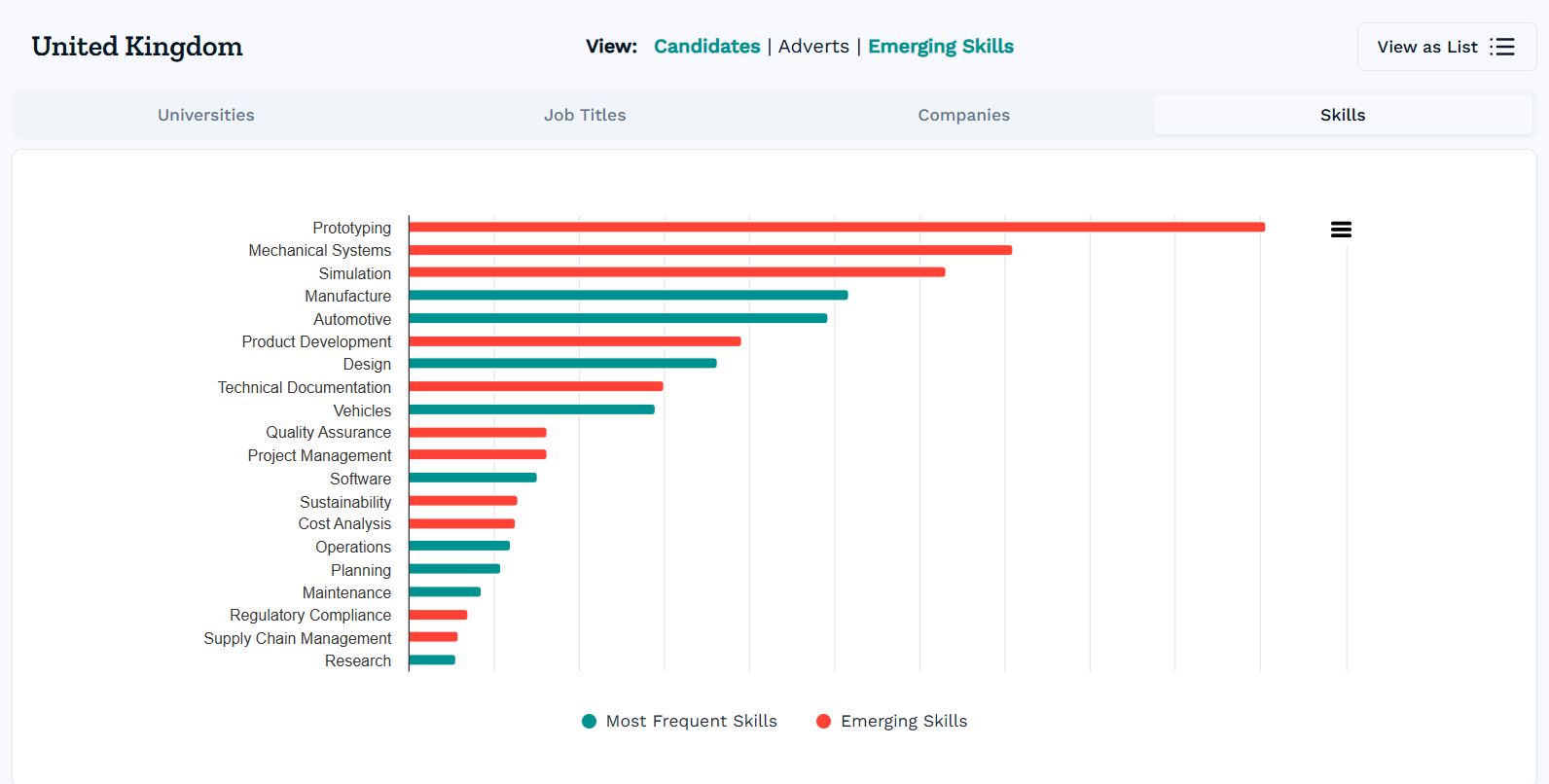
Image shows the Signal Skills capability within the Horsefly platform
Predictive capabilities also shift the ROI conversation from retrospective to forward-looking. Rather than only reporting on what an initiative achieved, you can model likely outcomes before committing budget, making the case for investment before it happens.
The Future of HR Analytics ROI: AI and Beyond
AI is not replacing HR analytics. It is making it faster, more accurate, and more accessible. Machine learning is improving the quality of labor market forecasting, enabling scenario modeling that would have been prohibitively complex even five years ago.
The more important shift is cultural. As AI handles more of the data processing, HR professionals are freed to focus on interpretation and strategy. The future of people analytics ROI is not more dashboards. It is better questions, answered faster, by people who understand both the data and the business context behind it.
HR's evolution into a genuinely strategic function depends on closing the loop between people decisions and financial outcomes. The methodology is here. The tools are here. The only thing left is to use them.
Ready to sharpen your HR analytics strategy with real labor market data? Arrange a strategic consultation with our team of experts.
Sources: Horsefly Analytics, Dr. Jack Phillips (ROI Methodology, Training Industry, Gallup, Glassdoor