.png?width=2000&name=Horsefly-Logo-NewTag_White%20(3).png)
An AI workforce isn't just automation with better PR; it’s automation in business, it's a deliberate combination of human intelligence and artificial intelligence, working together to get things done faster, smarter, and more consistently than either could alone - a hybrid AI workforce.
Think of it this way: traditional automation does what you tell it to, like a very obedient, very literal machine. An artificial intelligence workforce goes further. It can reason, adapt, learn from data, and handle tasks that require a degree of judgement. The result is something closer to a team than a tool.
The "workforce" framing is deliberate. These aren't passive systems sitting in the background. They're active, task-oriented entities that collaborate with your people, handle defined workloads, and operate continuously, without needing lunch breaks or calendar invites.
For HR and talent leaders, this distinction matters. An AI workforce isn't a replacement strategy. It's a capability strategy.
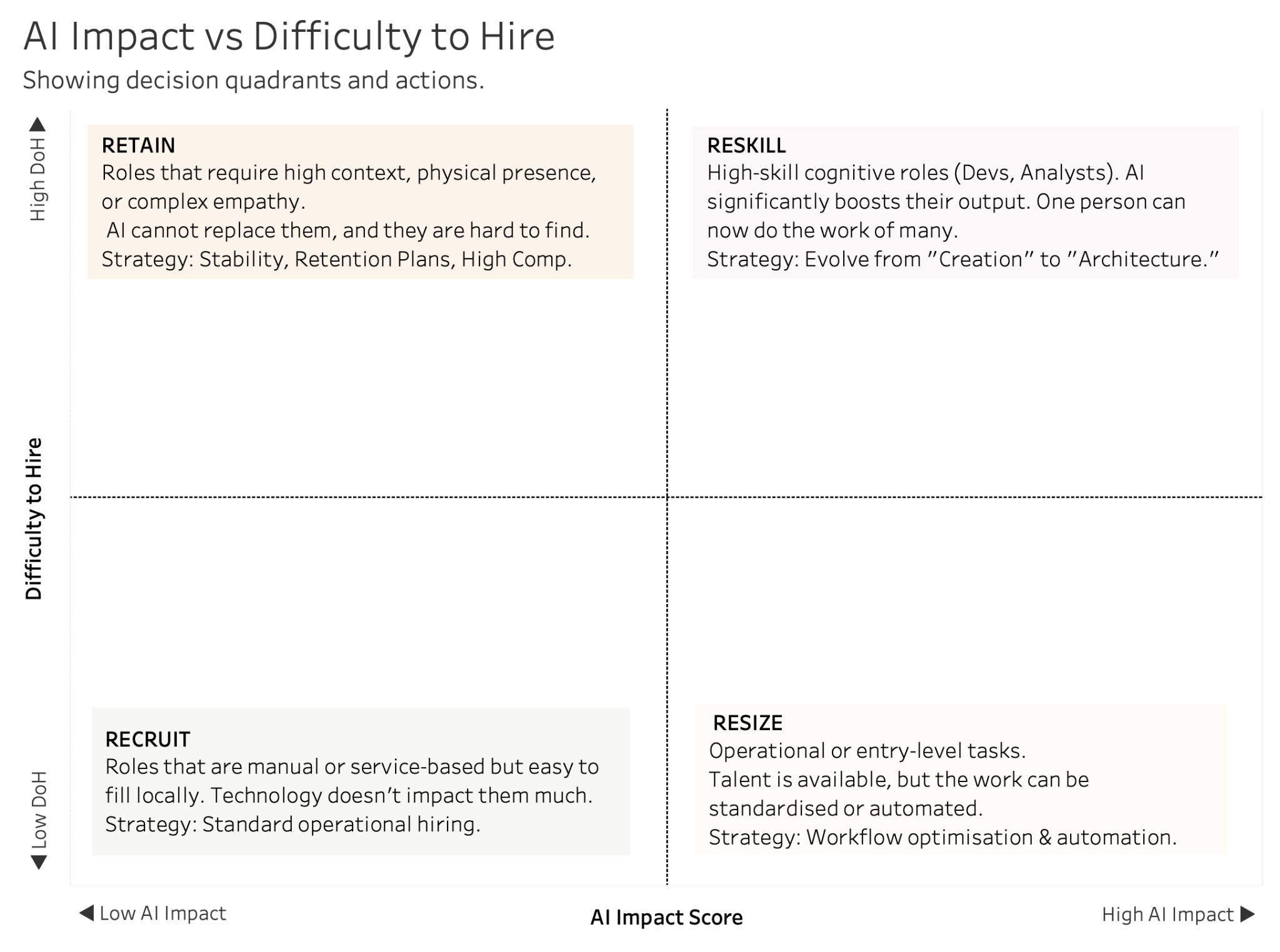
The image below is compiled from Horsefly data and highlights how teams can start to implement AI within their organizations, looking at which roles should be retained, reskilled, recruited for, etc. For those who would like more expert guidance on this, you can get in touch with Horsefly today.
Here are a few ways AI workforces can help automate your business, and how you can gain more AI workforce readiness:
Efficiency and productivity
Time-consuming, repetitive tasks get handled faster and more accurately. Workforce planning that used to take weeks of manual analysis can happen in minutes with the right tools.
Smarter decisions
AI systems can process and surface patterns across enormous datasets. For HR leaders, that means understanding labor market trends, skill availability, and hiring difficulty across locations before making expensive commitments. Platforms like Horsefly draw on over 1 trillion data points across 65 countries and 170,000 locations, refreshed daily. That's a level of labor market intelligence no human team could maintain manually.

Innovation through focus
When AI handles the operational heavy lifting, your people can focus on the work that actually requires human judgment: strategy, relationships, creative problem-solving. That's not a threat to your team. It's a better use of them.
Scalability
AI systems don't hit capacity the same way human teams do. You can scale operations in response to business demand without a proportional increase in headcount.
Cost discipline
Better information leads to better resource allocation. Whether that's knowing which roles will be difficult to hire for before you start recruiting, or understanding compensation benchmarks across markets, accurate data prevents expensive guesswork.
Let's be honest about the harder stuff - job displacement is a real concern. The evidence suggests that AI tends to change jobs rather than eliminate them wholesale, but the transition is real and often disruptive. Organizations that invest in reskilling and upskilling their people will handle it better than those who don't. Treating this as a change management challenge, not just a technology rollout, is non-negotiable.
Bias and fairness
AI systems learn from historical data, and historical data often contains historical biases. If your hiring data reflects past patterns of exclusion, your AI workforce will learn from that. Ethical AI workforce deployment means actively auditing systems for bias, ensuring transparency in decision-making, and building accountability into the process. DEI considerations need to be built in from the start, not retrofitted later.
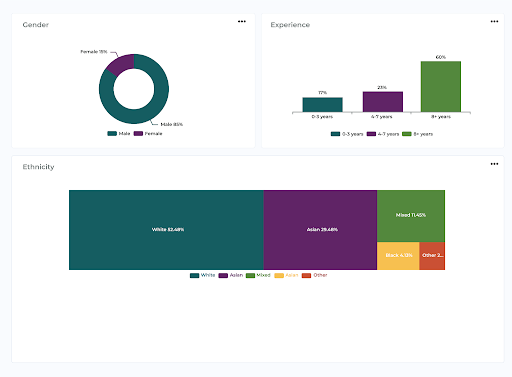
Image shows DEI data from the Horsefly platform
Integration complexity
Connecting AI systems with existing business processes, legacy technology, and established workflows is rarely straightforward. Expect friction. Plan for it.
Data security and governance
AI systems need data to function. The more sensitive that data, the higher the stakes. Robust data governance, clear internal policies, and alignment with relevant regulatory frameworks are essential, not optional.
Ready to move from concept to action? Here's a grounded approach.
Start with a workflow audit
Before you introduce AI anywhere, understand what your people actually spend their time on. Where are the bottlenecks? Where is human effort going into tasks that don't require human judgment? These are your AI opportunities.
Set clear objectives
"We want to use AI" is not an AI strategy. "We want to reduce the time our workforce planning team spends on manual data gathering by 60%" is. Tie every AI initiative to a specific business outcome.
Pilot first
Choose a defined use case, run a contained pilot, measure the results, and learn from it before scaling. Organizations that try to transform everything at once tend to succeed at nothing.
Invest in your people
The biggest implementation risk isn't the AI technology. It's your people not understanding, trusting, or knowing how to work alongside it. Dedicated training, clear communication, and genuine leadership buy-in are what separate successful rollouts from expensive ones.
Choose tools that give you accurate intelligence
AI workforce strategy is only as good as the data informing it. Tools with real-time labor market data, like supply and demand analytics, difficulty of hire scoring, and skills trend detection, let you make decisions with confidence rather than crossing your fingers.