.png?width=2000&name=Horsefly-Logo-NewTag_White%20(3).png)
Not all workforce analytics are created equal. There's a maturity curve, and most organizations are stuck lower on it than they'd like to admit.
Descriptive analytics answers "what happened?" This is your baseline reporting: headcount by region, turnover by department, time to hire by role. Useful, but backward-looking. If you're only here, you're managing the business by looking in the rearview mirror.
Diagnostic analytics answers "why did it happen?" Turnover spiked in your Southeast Asia customer support team: why? Maybe compensation fell behind the local market, maybe a competitor opened an office two blocks away and started poaching. Diagnostic analytics connects the dots between an outcome and its root cause, and it needs global context to do it properly. A turnover spike in Berlin and one in Bangalore rarely share the same explanation.
Predictive analytics answers "what will happen?" This is where things get genuinely useful for planning. Predictive models can flag flight risk before someone hands in notice, or forecast how many software engineers you'll need in Warsaw eighteen months from now based on your growth trajectory and the local talent pipeline.
Prescriptive analytics answers "what should we do about it?" This is the top of the pyramid: not just a forecast, but a recommendation. Should you open your new engineering hub in Krakow or Lisbon? Prescriptive analytics weighs talent supply, compensation, cost of living, and skills availability across dozens of cities and gives you an answer you can actually act on, not just a dashboard to stare at.
Most companies operate comfortably in descriptive and diagnostic territory. The strategic edge, and the reason this topic has landed on the C-suite agenda, lives in predictive and prescriptive analytics, where global labor market data turns workforce planning into genuine business forecasting.
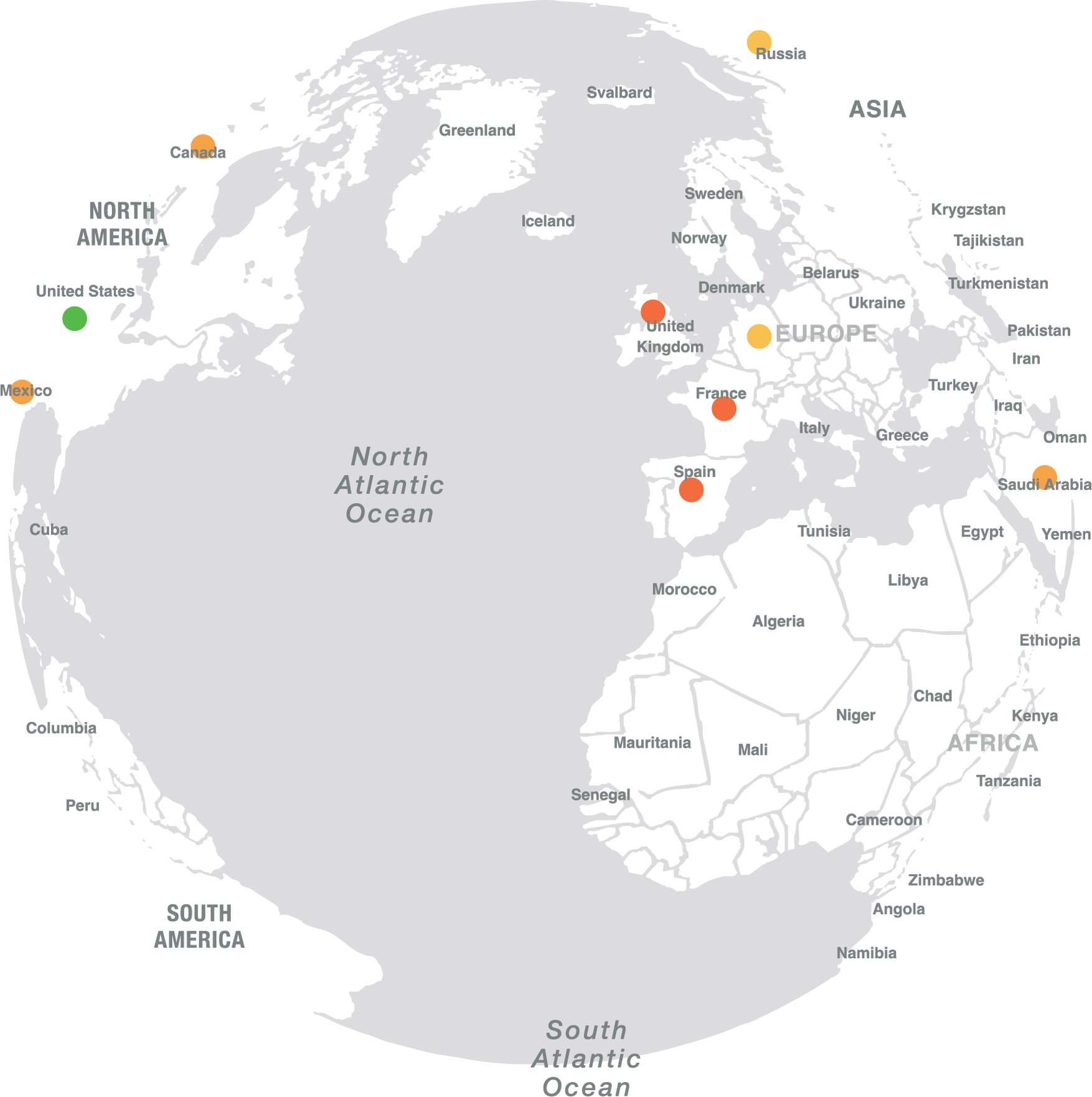
The Global Heatmap functionality for highlighting locations within Horsefly
Sizing the Opportunity: Market Trends and Growth Drivers
The market size for workforce or people analytics is expanding fast, and it's not hard to see why. Three forces are driving it.
First, the sheer complexity of managing a distributed global workforce has outgrown spreadsheets and gut instinct. When your talent pool spans dozens of countries, each with its own labor market dynamics, compliance rules, and compensation norms, you need data infrastructure that can keep up.
Second, AI and machine learning have made predictive and prescriptive analytics accessible in a way they simply weren't five years ago. What used to require a team of data scientists and months of modeling can now happen in a platform, with insights delivered in a format a workforce planning leader can actually use without a statistics degree.
Third, cloud-based deployment has removed the friction. Global organizations need analytics that work the same way whether someone is logging in from New York, Nairobi, or Singapore, and cloud infrastructure makes that scalability the default rather than a custom build.
Put together, these drivers explain why "workforce analytics" has moved from an HR line item to a board-level conversation about competitive positioning.
From Data to Dollars: Translating Analytics into Business Outcomes
None of this matters if it doesn't move the needle on business outcomes, so let's talk numbers.
Talent acquisition costs. When you know exactly where the talent you need lives, actually, and at what price, you stop overpaying for hard-to-fill roles in oversaturated markets. Tools like difficulty of hire insight flag which roles will take more time and effort to fill before you even start recruiting, so you can route budget and recruiter time to where it will actually pay off, rather than finding out three months into a search.
Employee Retention. Diagnostic and predictive analytics let you spot flight risk patterns before they become resignation letters, whether that's a compensation gap opening up in a specific region or a skills mismatch causing frustration on a particular team. Compensation insight built on global benchmarking data helps you identify and close pay disparities before they cost you good talent. By analyzing patterns in employee performance and employee engagement, you’re better equipped for understanding what’s needed when it comes to employee retention.
Productivity and workforce planning. Strategic workforce planning powered by accurate global data means you're not caught flat-footed by skill gaps. Longitudinal intelligence lets you track how roles, skills, and pay have shifted over time and overlay supply and demand in a single view, so you can see pressure building in a key region two years out and start building or buying that talent before it becomes a crisis.
The through line here is simple: analytics that only look inward tell you what's happening in your own four walls. Analytics that pull in external labor market data tell you what's happening in the market you're competing in for talent, and that's the difference between reacting and planning. Get in touch to see how simple the implementation process can be with the Horselfy platform and start making data-driven decisions straight away.

Navigating the Global Minefield: Data Privacy, Ethics, and Bias
Here's the part competitors tend to skate past, and it's exactly where a global strategy can go wrong fast.
Data privacy across borders. If you're collecting and analyzing employee data across multiple countries, you're not dealing with one compliance framework; you're dealing with dozens. GDPR in the EU, sector-specific rules in the US, and an evolving patchwork of national data protection laws elsewhere. What's compliant in one region can be a liability in another. The practical takeaway: your workforce or talent analytics partner needs to understand data residency and cross-border transfer rules as well as they understand talent data, not as an afterthought.
Ethical considerations when using employee data. Just because you can analyze something doesn't mean you should, at least not without a clear policy on consent, transparency, and purpose. Employees deserve to know what data is being collected about them and why, and organizations that skip this step erode trust fast.
Algorithmic bias. Predictive and prescriptive models are only as fair as the data and assumptions behind them. A model trained primarily on data from one region or one type of role can quietly bake in bias that then gets amplified at scale. Mitigating this isn't a one-time fix; it's an ongoing discipline: auditing models regularly, building in explainability so you can see why a recommendation was made, and involving diverse perspectives in how models get built and reviewed in the first place.
Get this section wrong and the rest of your workforce analytics strategy doesn't matter. Get it right and you've built a foundation that can scale globally without landing you in front of a regulator.
Building Your Global Workforce Analytics Capability: A Strategic Roadmap
Here's a practical framework for getting from "we have some spreadsheets" to "we have a genuine global workforce data capability."
1. Define the business questions first. Don't start with the data, start with the decision. Are you trying to figure out where to open your next hub? Reduce attrition in a specific market? Build a case for reskilling instead of hiring externally? Let the business question drive what data you collect, not the other way around.
2. Assess your data quality and integration. Global organizations almost always have fragmented HR systems: different tools in different regions, inconsistent job titles, patchy historical data. Before you can analyze anything meaningfully, you need a realistic picture of what you actually have and where the gaps are.
3. Decide on your technology stack. Buy or build? For most organizations, building a global labor market database from scratch is neither fast nor cost-effective. Partnering with a platform that already has that data at scale, and keeps it current, gets you moving faster and with less risk. Look for tools that turn raw data into a visual, usable format quickly; global heat maps that show where a skill actually lives, right down to niche skills you might not have thought to search for, are far more useful in a planning meeting than a spreadsheet of numbers.
4. Build the skills, or partner for them. You don't necessarily need to hire a team of data scientists in-house. Increasingly, the smarter move is partnering with a workforce intelligence platform that translates complex data into insights your HR professionals and talent teams can act on directly, without a translation layer. A good search builder tool, for instance, can take a job description and generate an optimized, skills-based search in seconds, work that used to take a recruiter hours of trial and error. If the gap isn't just insight but execution, whether that's speed, scale, or specialized recruiting capacity, RPO services can extend your team with hiring expertise built on the same global data, so the strategy and the delivery are working from one source of truth.
5. Build a data-driven culture. None of the above matters if leadership still makes decisions on instinct alone. Change management here means getting stakeholders comfortable with data-driven decision-making, not just admiring it in a quarterly report.
Case Study: How a Global Manufacturer Optimized Location Strategy
A global manufacturing company was facing a familiar problem: rising labor costs and a shrinking pool of specialized engineering talent in its traditional European hiring markets. Leadership needed to know whether to keep competing for the same shrinking talent pool, or whether there was a smarter location for its next engineering hub.
Using a global workforce analytics software, the company ran supply and demand insight and cost of living insight side by side, analyzing talent availability, compensation benchmarks, and living costs across more than 50 cities worldwide, rather than the handful of markets it had traditionally defaulted to.
The data pointed to an underused location in Eastern Europe: strong engineering graduate output, a growing supply of relevant skills, and considerably lower compensation benchmarks than the incumbent hub, without the drop-off in talent quality leadership had assumed they'd have to accept.
The results were measurable. The company reduced labor costs by 20 percent, cut time to hire for critical engineering roles by 40 percent, and built a talent pipeline in a market its competitors hadn't yet discovered. That's the kind of decision global workforce analytics is built to support: not a hunch about where talent might be, but an evidence-based answer about where it actually is.
Choosing Your Analytics Software: Key Capabilities to Demand
If you're evaluating workforce analytics platforms, a few capabilities separate the genuinely useful from the merely impressive-looking.
True global coverage. Plenty of platforms claim global reach but really mean a handful of major markets. Ask specifically about coverage: how many countries, how many locations, right down to city and town level, not just national averages that hide where the actual talent is. Horsefly Analytics covers 170,000 towns and cities across 65 countries, drawing on more than a trillion data points from thousands of online sources, so "global" actually means global.

Granular location data. National level data tells you almost nothing useful for a decision like where to open a new hub. You need location intelligence down to the city and even neighborhood level to make a real estate and hiring decision with confidence. Global heat maps make this instantly visual, letting you build a picture of where any skill lives, including the niche ones you wouldn't have thought to search for, and export the data as a PDF or CSV to drop straight into your own reports.
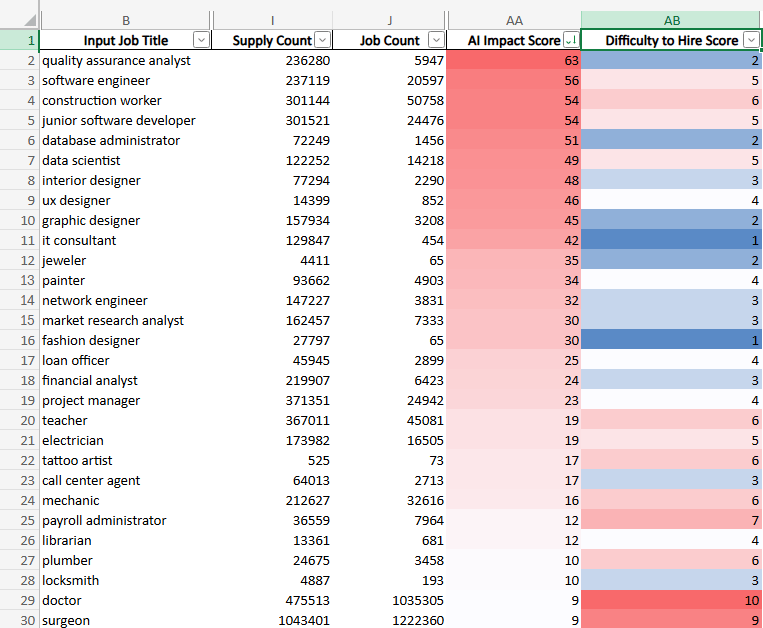
Image shows example Horsefly data in a CSV format
A robust job title and skills taxonomy. Talent data is only as useful as the taxonomy behind it. If a platform can't reliably match "software engineer," "SWE," and "backend developer" across regions and languages, its insights will be shakier than they look. Find a taxonomy that has a significant number of job titles, skills, and languages covered, making cross-border comparisons and searches actually reliable rather than approximate.
Skills and talent intelligence platforms that go beyond job titles. Skills insight lets you benchmark your workforce's skill sets against industry standards and competitors, while signal skills intelligence flags which skills are on the rise before they become mainstream requirements, so training and development can stay ahead of the market rather than chasing it. Horsefly’s X Ray Search Intelligence turns searches into ready-to-use Boolean strings and lets you test them against real profiles before you commit. Contact Horsefly to unlock more insights.
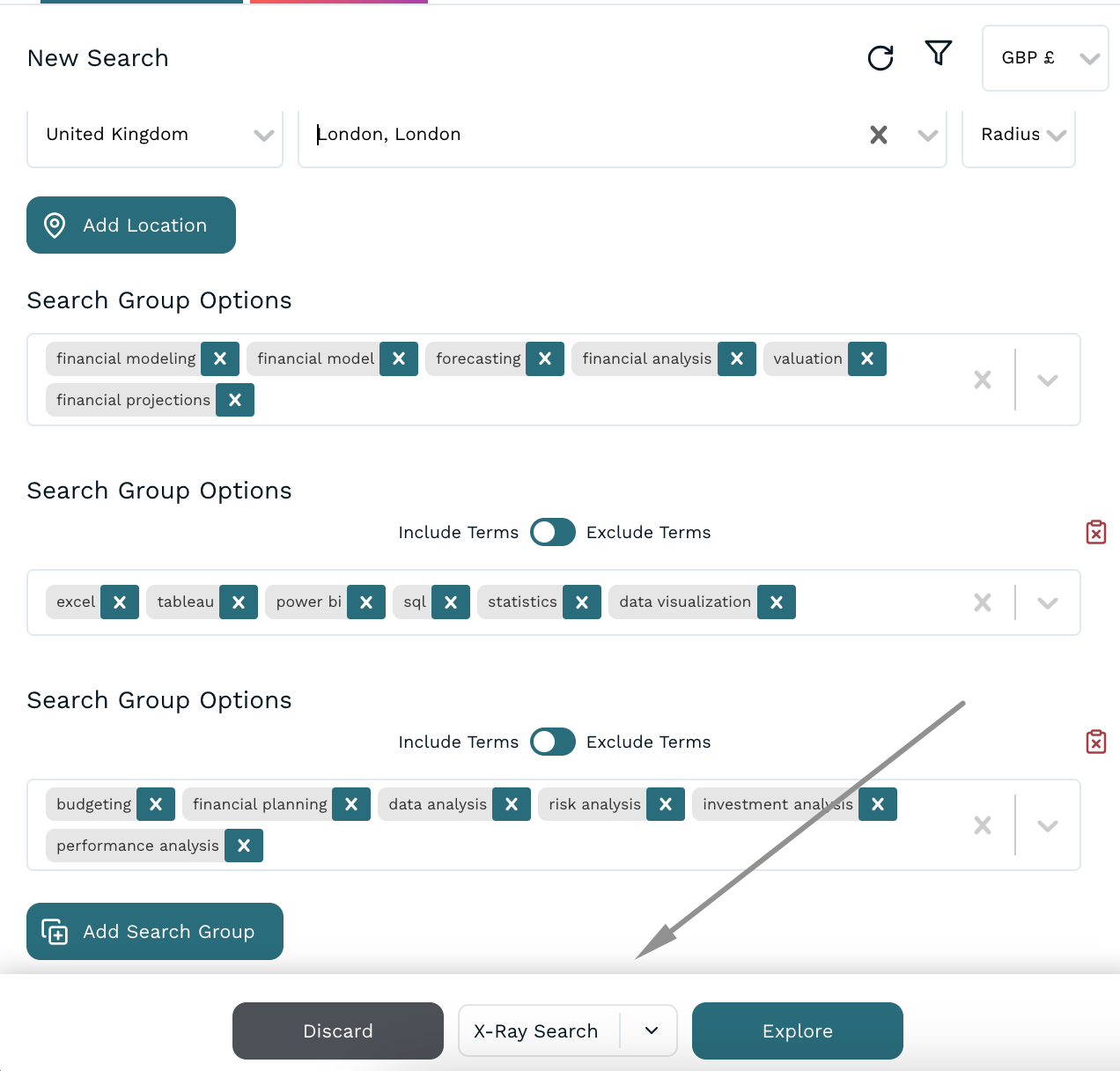
Image shows the Horsefly X-Ray Search functionality
Integration of internal and external data. The real strategic value comes from combining your own workforce data with external labor market intelligence, not from either data set alone. Seeing how AI may impact your workforce and looking at EVP intelligence both work this way, helping you understand how roles are likely to evolve and how your employee value proposition compares with the market, so decisions are grounded in what's actually happening outside your organization as well as inside it.
Strategic insight, not just raw numbers. The right partner delivers data analysis and recommendations, not just a database you're left to make sense of on your own. Businesses need to have context-aware insight tailored to their specific search, with clear next steps rather than a generic dashboard everyone else sees too. Look for a partner that also brings genuine expertise across the full talent lifecycle, covering recruitment, reward, retention, reskilling, resizing, and relocation, plus dedicated capability like DEI insight for diversity hiring and benchmarking, so you're getting a partner who understands the whole picture, not just one slice of it.
Responsive support and current data. Data platforms live or die by the support behind them, and by how current the data actually is. A platform refreshed and validated daily gives you a genuinely real-time view, rather than insight that's already a quarter out of date by the time it reaches your desk.
The Future of Work: Harnessing Analytics for a Competitive Edge
Looking ahead, a few trends are worth watching. DE&I analytics are becoming more sophisticated, moving past simple representation metrics toward genuine insight into equity across pay, promotion, and opportunity, and toward benchmarking and tracking progress over time rather than a one-off audit. Real-time labor market monitoring is replacing the annual benchmarking exercise, letting organizations respond to shifts in talent supply and compensation as they happen rather than a year later. AI impact analysis is also becoming a standing part of workforce planning, giving leaders a data-driven view of how roles are likely to evolve instead of guesswork. And as hybrid and remote work becomes permanent rather than provisional, working out where to hire remote employees based on where the relevant skills actually sit is turning into its own specialized discipline.

Image shows the AI impact analysis capability on the Horsefly platform
The organizations that will win the next decade of global talent competition aren't the ones with the biggest HR budgets. They're the ones looking for analytics to drive business, the ones treating workforce analytics as core business and HR strategy, on the same level as financial planning or market analysis, rather than an HR side project.
Global workforce analytics isn't a trend to watch from the sidelines. It's the infrastructure that decides whether your next big strategic bet, a new market, a new hub, a new product line, actually has the talent behind it to be a business success.
Looking to Find Out More?
Horsefly Analytics gives HR, talent acquisition, and workforce planning leaders the global data and insight needed to make confident, strategic decisions, backed by real labor market intelligence rather than guesswork. Schedule a strategic consultation today.
Sources: Horsefly Analytics, GDPR