.png?width=2000&name=Horsefly-Logo-NewTag_White%20(3).png)
So what actually is it? Global workforce intelligence is the practice of combining external labor market data with internal workforce data, then running it through predictive analytics to guide talent management strategy at the highest level.
Break it down into its parts, and it gets clearer fast:
🟢 External labor market data: talent supply, demand, compensation benchmarks, and skills availability across countries, industries, and roles
🟢 Internal workforce data: insights into workforce performance trends, attrition patterns, and existing skills within your own organization
🟢 Predictive analytics: models that connect the two, so you are planning for where the market is headed, not just where it currently stands
Here is where it differs from traditional HR analytics, and it is a meaningful difference, not a semantic one. Traditional HR analytics tends to look inward and backward: how did our people perform last quarter, who left, what did it cost. Useful information, but it only ever tells you what already happened inside your own four walls.
Global workforce intelligence looks outward and forward instead. It maps the external talent landscape, including where the talent actually is, what it costs, and how fast it is moving, then models future scenarios against that backdrop. That combination is what gives C-suite leaders the kind of talent intelligence that shapes business strategy, rather than a quarterly report that gets filed and forgotten.
Think of it this way: traditional HR analytics tells you why last year was hard. Global workforce intelligence tells you what is coming next year, and gives you enough runway to actually do something about it.

The Engine of Insight: AI and Big Data in Global Workforce Intelligence
None of this works without serious data, and even more importantly, without the AI capable of making sense of it. This is the part competitors like to talk about in the abstract. We would rather show our work.
Horsefly's AI platform draws on over 1 trillion data points pulled from thousands of online sources, mapped against a taxonomy of 815,000 job titles and skills across 39 languages. That scale is what turns a mountain of noisy, disparate information into a genuinely useful skills landscape, one you can act on rather than just admire.
Agentic AI plays a growing role here too, automating the heavy lifting with AI-enabled database analysis so your team spends less time wrangling data and more time acting on what it reveals. Instead of a talent analyst manually cross-referencing five data sources to answer one question, agentic AI can pull that answer together in seconds, freeing people up for the judgment calls that still need a human.
Natural language processing does something similarly useful. Upload a job description, and it reads past the title to identify the actual skills, tools, and experience implied within it, the kind of nuance that a simple keyword search would miss entirely. This is the same logic behind Horsefly's Search Builder Insights, which analyze historic data from specialized industries to build skills-based searches automatically, turning what used to take hours into a task that takes seconds.
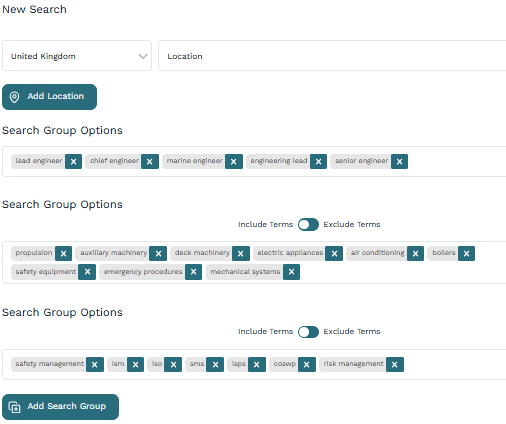
How the Search Builder Insights capability appears in the platform
The goal is simple, even if the technology behind it is not: take raw, chaotic global data and turn it into a clear, usable view of the talent landscape. That is what lets HR leaders make faster decisions with genuine confidence behind them, not a hunch dressed up as a strategy. And because the underlying data is refreshed and validated daily, that confidence is not based on a snapshot from six months ago either.
Navigating Key Global Workforce Trends
A handful of shifts are reshaping global talent right now, and any organization without global workforce intelligence is navigating them blind.
The skills-based economy is the big one, and job titles are becoming less useful as a hiring signal, while specific, verifiable skills are becoming the real currency. Two people with the same job title at two different companies might have wildly different skill sets, and organizations still hiring by title alone are missing talent that a skills-based search would have caught immediately. This shift also changes how internal mobility and upskilling get approached, since a skills-first view of your workforce often reveals talent already inside the organization that a title-based search would never have surfaced.
Then there is the talent supply chain, a phrase that is finally getting the attention it deserves. Just as companies map physical supply chains for risk and resilience, the smartest workforce planning leaders are now mapping their talent supply chain: where the right skills live, how they move, and where the pinch points are before they become a full-blown crisis.
Competition for niche skills, especially in tech and healthcare, is intensifying too, creating more in-depth skills profiles. Machine learning engineers, specialized clinicians, and other hard-to-find profiles are being pursued by every organization at once, in every market at once. Understanding skills adjacencies, meaning which nearby skills exist in a given talent pool, is often the difference between a six-month search and a six-week one.
Geography matters more than most organizations account for as well. Talent pools are not static. They grow, shrink, and relocate based on cost of living, remote work policy, and local market conditions. A location that looked ideal for a given skill set two years ago might be tapped out today, while an overlooked region has quietly become a talent hotspot. Without visibility into that movement, workforce planning becomes an exercise in guessing where things used to be true.
Treat these trends as risks if you are unprepared for them, or as opportunities if you have the right data. Global workforce intelligence is what tips the balance in your favor, and it does so before the talent supply chain problem shows up as a missed hiring target.

The Tangible ROI of Global Workforce Intelligence
Here is the part most competitor pages in this space miss: what does this actually get you? Let us answer that directly.
Talent acquisition gets faster and cheaper. With tools like Horsefly’s X-Ray Search Intelligence, you can assist your talent acquisition and build accurate, skills-based Boolean searches in seconds instead of wrestling with brackets and operators, cutting time to hire and cost per hire in one move.
Workforce planning gets de-risked. Difficulty of Hire Insights tell you which roles will be a fight to fill before you commit resources, so location and headcount decisions are based on real market conditions instead of hope, making for more realistic workforce planning strategies.
Retention improves. Longitudinal Intelligence tracks how roles, skills, and pay have shifted over time, helping you spot flight risk pressure building well before someone hands in their notice, and identify realistic ways to upskill employees to retain top talent.
Compensation stays competitive. Compensation Insights let you benchmark packages against the market and close pay equity gaps before they cost you talent.
DEI strategy gets measurable. DEI Insights turn diversity planning from a good intention into a tracked outcome, letting you set benchmarks, target the right talent pools, and measure real progress over time rather than reporting on effort alone.
Skills strategy gets ahead of the curve. Skills and jobs intelligence is key. Horsefly’s Signal Skills Intelligence flags which skills are trending upward before they become table stakes requirements, so training and development budgets get pointed at what the market will actually need next, not what it needed last year.
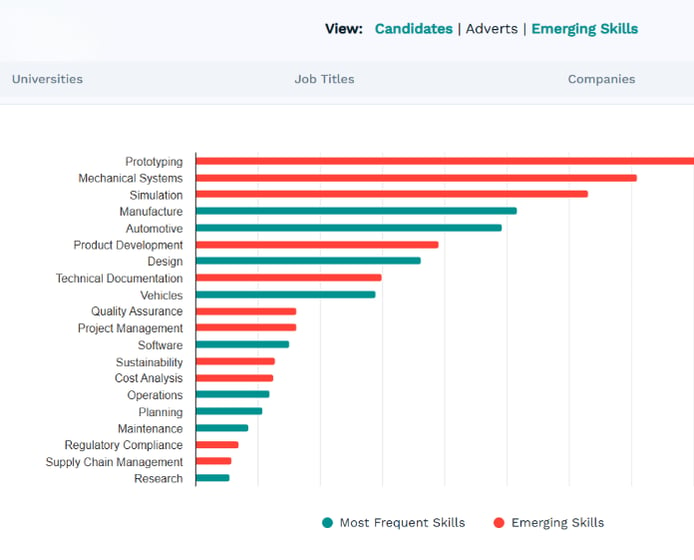
A view of the Signal Skills functionality from the Horsefly platform
Consider healthcare, an industry under acute pressure; the nursing shortage alone is projected to leave millions of care roles unfilled in the coming years, and organizations relying on traditional recruiting methods are simply not equipped to solve a gap of that scale. Global workforce intelligence gives organizations the data to build new operating models for talent instead, including finding qualified people in locations nobody thought to look, whether that means expanding remote eligibility or identifying training pipelines in adjacent regions. That is the kind of insight that turns a talent shortage from a crisis into a solvable problem, and it applies well beyond healthcare to any industry facing a similar squeeze on specialized skills.
Add it all up, and the financial targets and ROI case is not abstract. It shows up in faster hiring, lower cost per hire, fewer surprise departures, and compensation packages that hold up against the market rather than lagging behind it. That is a business case any CHRO or CFO can get behind.
Choosing Your Global Workforce Intelligence Platform: A Comparative Framework
Plenty of thought leadership exists on why it’s a good idea to implement workforce intelligence, and particularly on a global scale. Very little exists on how to actually pick a platform. Here is a straightforward framework, built around the criteria that matter most.
Global data coverage and granularity. How many countries, cities, and roles does the platform actually cover?
AI and predictive capabilities. Does the platform just report on the past, or does it model what is coming? Look for Longitudinal Intelligence and AI Impact Analysis that forecast how roles and skills will evolve, not just dashboards that describe where things stand today.
Data integration. Can it plug into your existing HRIS and ATS without months of setup, or does every insight require exporting to a spreadsheet first? Horsefly's Global Heat Maps, for example, let you download data as PDF or CSV and drop it straight into your own reporting.
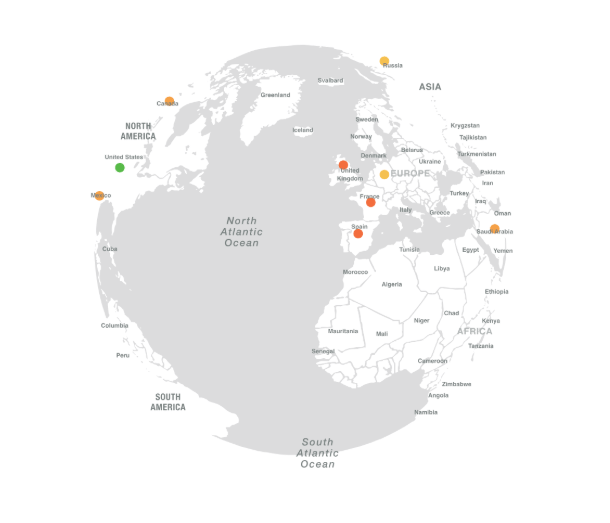
Image shows the Global Heat Map capability from the Horsefly platform
User interface and reporting. A platform is only as useful as your team's willingness to actually open it. Look for tools that surface context-aware, actionable recommendations rather than generic dashboards everyone sees the same version of. If your team needs a manual to get value out of it, that is a warning sign, not a feature.
Breadth of use case coverage. A platform that only handles sourcing, or only handles compensation, will leave gaps that force your team back into spreadsheets for everything else. Look for coverage across the full talent lifecycle: search, difficulty of hire, compensation, skills, DEI, and employee value proposition, all working from the same underlying data set so the numbers actually agree with each other.
Security and compliance. For enterprise and public sector organizations especially, this is non-negotiable. Confirm the platform meets the compliance standards your industry requires.
Pricing and total cost. Platforms vary widely here, from per-seat licensing to enterprise-wide agreements. Ask what is actually included, whether that is full global coverage or a limited regional slice, since the cheaper option on paper is not always the better value once you factor in what it leaves out.
Run any platform, including ours, through this checklist. It is the difference between buying a dashboard that looks impressive in a demo and buying an actual strategic advantage that your team still relies on a year from now.
Putting Global Workforce Intelligence into Practice: A Strategic Roadmap
Buying the platform is the easy part. Getting real value out of it takes a plan. Here is the roadmap we recommend to clients:
-
Define strategic objectives. Get specific: reduce attrition by 15 percent, cut time to hire in a key region by a third, whatever matters most to your business right now.
-
Consolidate and integrate data sources. Bring internal HRIS and ATS data together with external labor market intelligence so you are working from one accurate picture, not several conflicting ones.
-
Build the business case. Ground it in ROI: cost per hire, time to hire, retention gains, and compensation accuracy all make for a stronger pitch than vague promises of being "more data-driven."
-
Run pilot projects. Prove value on a contained scope, whether that is one region, one department, or one urgent hiring challenge, before rolling out further.
-
Drive adoption. The best insights are worthless if nobody uses them. Build a team that can adapt to change and invest in training and change management so global workforce intelligence becomes part of how your team actually works, not a tool that gathers dust after the initial rollout.
A word of caution on sequencing: skipping straight to the pilot without a clear objective is the most common way these rollouts stall. Teams get excited about the technology, run a broad pilot with no defined success metric, and then struggle to justify expanding it. Anchor every step to the objective you set in step one, and the rest of the roadmap tends to fall into place.
Done well, this positions your workforce planning function as a genuine strategic partner to the business, not a support desk that reacts to headcount requests. That shift, from reactive service function to strategic advisor, is often the biggest organizational change that comes out of adopting global workforce intelligence, and it tends to matter just as much as any single metric improvement.

Building Your Future Workforce with Horsefly
The modern talent landscape has outgrown spreadsheets, gut instinct, and outdated reports. Global workforce intelligence is not a nice-to-have anymore. It is the strategic imperative for any organization serious about competing for talent.
A strong global workforce intelligence platform takes the uncertainty out of talent strategy and replaces it with genuine competitive advantage: faster hiring, smarter location planning, stronger retention, and compensation that keeps your best people in place.
This is exactly what Horsefly is built for. Unmatched global data across 65 countries, an AI platform trained on over 1 trillion data points, and a team that understands talent strategy, not just workforce analytics software. Our platform is designed so no mastery is required to get value from it. Insights are ready to use immediately, and the underlying data is refreshed and validated daily, so the picture you are planning against is never stale.
Whether you are exploring RPO services, tightening up talent acquisition, or building an internal workforce planning function from the ground up, we give you the accuracy and confidence to act. No guesswork, no stale reports, and no settling for a platform that only tells you what already happened.
Looking to find out more and boost business productivity? Contact us for a strategic consultation today.
Sources: Horsefly Analytics