.png?width=2000&name=Horsefly-Logo-NewTag_White%20(3).png)
Market intelligence is the systematic collection and analysis of information about your market, other companies within the industry, and customers to inform strategic decision-making. Think of it as your business's radar system, constantly scanning the environment for opportunities, threats, and shifts you need to know about.
Here's what sets market intelligence apart from traditional market research: market research asks specific questions about a particular topic or problem. Market intelligence is ongoing. It's a continuous process of gathering, analyzing, and applying insights to stay ahead of market changes and competitive moves.
For businesses today, market intelligence isn't a luxury or a nice-to-have; it's fundamental to survival. Markets move fast, customer preferences shift overnight, and competitors launch new strategies without sending you a courtesy email. Market intelligence gives you the visibility you need to make proactive decisions rather than reactive scrambles.
The difference between companies that thrive and those that merely survive often comes down to one thing: they know what's happening in their market before everyone else does.
Types of Market Intelligence
Market intelligence isn't one-size-fits-all. It breaks down into four distinct categories, each serving a specific strategic purpose.
Competitor Intelligence focuses on understanding what others in your industry are doing, planning, and capable of. This includes tracking their product launches, pricing strategies, marketing campaigns, hiring patterns, and organizational changes. When a competitor opens three new offices in a region you're targeting, that's competitive intelligence you can work with.
Product Intelligence involves analyzing product performance, features, and market positioning both for your offerings and your competitors'. This helps you identify gaps in the market, understand which aspects matter most to customers, and spot opportunities for differentiation. It's about knowing what's working, what's not, and what's next.
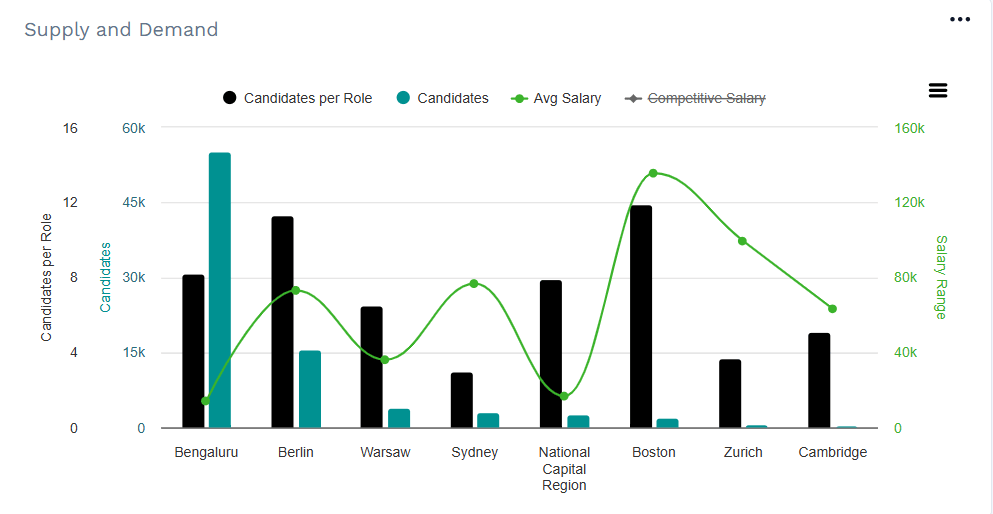
Market Understanding provides the big-picture view of industry trends, regulatory changes, economic factors, and emerging opportunities. This intelligence helps you anticipate market shifts before they become obvious. When an entire industry starts pivoting toward a new technology or approach, you want to know about it early, not after the fact. Horsefly Analytics can help you with this, and if you want to gain more insights into trends in your industry, you can get in touch for more advice and guidance.

Customer Understanding digs into customer behaviors, preferences, pain points, and evolving needs. This goes beyond basic demographics to uncover why customers make the decisions they do, what drives loyalty, and where dissatisfaction lurks beneath the surface.
Together, these four types create a comprehensive view of your business environment. Miss one, and you're flying blind in at least one critical dimension.
Benefits of Market Intelligence Software
Let's talk about what market intelligence actually delivers beyond impressive dashboards and data visualizations.
Competitive Advantage
This is the most obvious benefit. When you know what competitors are doing before the market does, you can respond strategically rather than reactively. If a competitor is ramping up hiring in a specific skill area, you can infer their product roadmap and adjust your strategy accordingly. If they're expanding into a new region, you can decide whether to defend your territory or let them have it while you focus elsewhere. A competitive analysis platform gives you clear and actionable insights into how to move forward within your industry.
Risk Mitigation
This might be less exciting than competitive advantage, but it's equally valuable. Market intelligence helps you spot threats early, whether that's a new competitor entering your space, a shift in customer preferences, or regulatory changes that could impact your business model. Early warning systems give you time to adapt rather than forcing you into crisis mode.
Identifying New Opportunities
This is where market intelligence really shines. Identifying new opportunities requires a strong understanding of market signals and trends. The best opportunities aren't always obvious. They emerge from patterns in the data: an underserved customer segment, a gap in competitor offerings, or an emerging trend that aligns perfectly with your capabilities. Market intelligence tools help surface these opportunities before they become crowded.
Better Decision-Making
This underpins everything else. When you replace gut feelings and assumptions with actual data about your market, your success rate improves dramatically. You stop wasting resources on strategies that won't work and start investing in initiatives with real potential. Your board meetings get shorter and more productive because everyone's working from the same factual foundation.
Market Intelligence Tools: Turning Data Into Insight
The market intelligence tool landscape has exploded in recent years, with solutions ranging from broad platforms to highly specialized applications. Here's how to make sense of it all.
Customer Intelligence Tools
These tools help you understand who your customers are, what they want, and how they behave. These platforms collect data from surveys, social media, customer interactions, and behavioral analytics to build comprehensive customer profiles. Some tools excel at experience management, while others focus on predictive analytics to forecast customer behavior and identify churn risk.
These types of tools track everything your competitors do publicly, from website changes and pricing updates to social media activity and job postings. These tools automate the tedious work of monitoring competitors so you can focus on analysis and strategy. Some platforms even use artificial intelligence to predict competitor moves based on historical patterns.
Market Trend Analysis Tools
These tools identify and track broader industry movements, emerging technologies, and shifting consumer preferences.
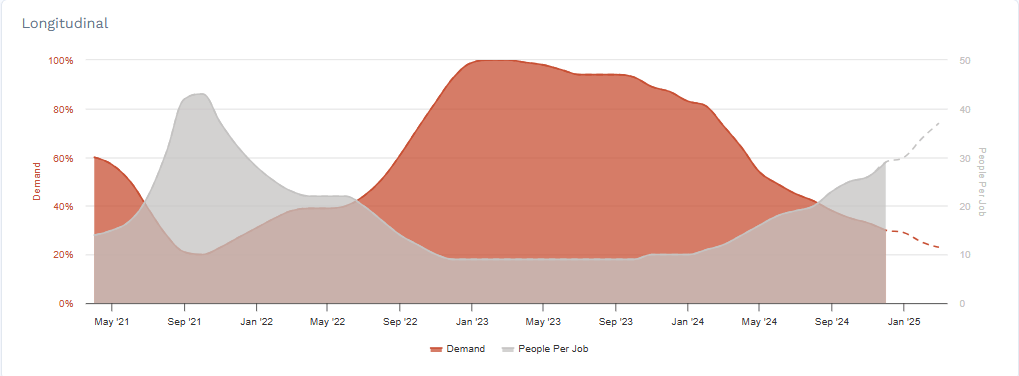
When it comes to workforce and talent market trends specifically, this is where Horsefly Analytics excels in providing AI-powered insights. Our longitudinal analysis capabilities let you track talent market changes over time, revealing patterns that would be impossible to spot from a single snapshot. You can monitor how skill demands evolve across regions, identify emerging talent hotspots before anyone else does, and understand long-term shifts in workforce availability. This historical perspective transforms reactive hiring into proactive workforce planning. Instead of scrambling when you can't find the talent you need, you've already seen the trend developing and adjusting your strategy accordingly. These tools help you understand where your industry is heading so you can position accordingly.
Strategic Intelligence Tools
Tools such as these will take a more comprehensive approach, combining multiple intelligence types into integrated platforms. These enterprise-grade solutions often include features for data integration, custom reporting, and collaborative analysis. They're designed for organizations that need a single source of truth for all their market intelligence activities.
What matters most isn't which category a tool falls into, but whether it addresses your specific intelligence needs. A small sales team might need nothing more than a good competitor monitoring tool, while an enterprise organization might require a full strategic intelligence platform.
How to Choose the Right Market Intelligence Tool
Choosing a market intelligence tool isn't about finding the one with the most features or the slickest interface. It's about finding the one that solves your actual problems:
- Define Your Goals
Before you even start looking at tools, make sure your goals are clear. What decisions do you need to make better? What questions do you need answered? If you're primarily focused on competitive positioning, your needs differ drastically from someone trying to identify new market segments. Write down the top three intelligence questions you need answered regularly. Your tool should make answering those questions easy.
- Evaluate Data Coverage
A tool is only as good as the data it provides. Does it cover your industry? Your geographic markets? Your competitor set? Some tools excel at technology companies, but struggle with manufacturing. Others have deep coverage in North America but limited visibility into Asian markets. Ask for specifics about data sources and coverage before committing.
- Prioritize Compliance
Data privacy regulations aren't going away. Ensure any tool you consider complies with GDPR, CCPA, and other relevant regulations. Ask about their data collection methods, storage practices, and how they handle requests for data deletion. A tool that puts you at legal risk isn't worth any amount of intelligence value.
- Assess Scalability
Think about where you’ll be in two years’ time, not just about your current needs. Will the tool grow with you? Can it handle increased data volumes, more users, and additional use cases? Switching tools is painful and expensive, so choose something that can evolve as your needs expand.
Market Intelligence Tools in Action: Marketing & Sales Use Cases
Theory is great, but let's talk about how a market intelligence company's analysis tool could work in practice.
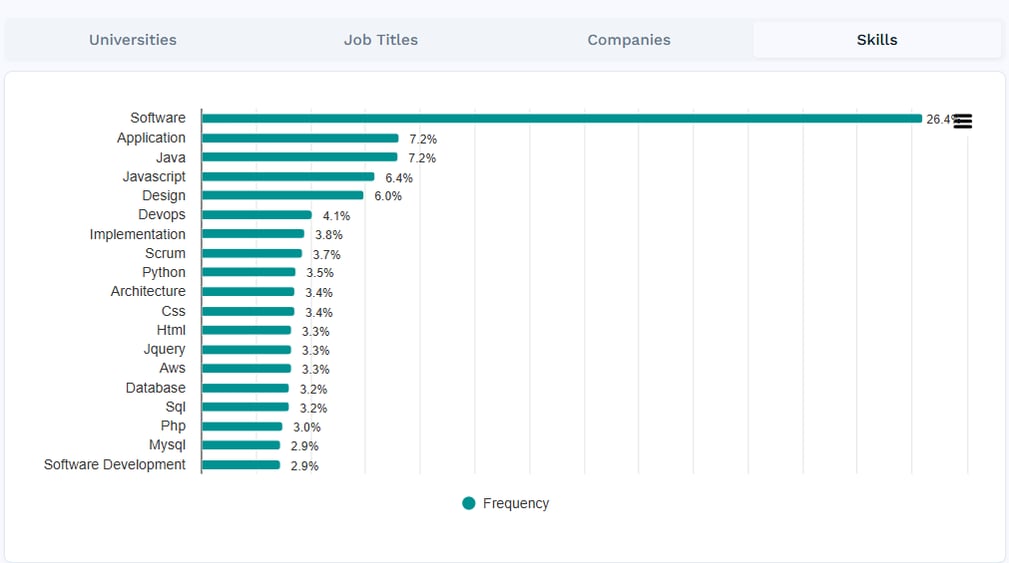 Lead Generation becomes dramatically more effective when powered by market intelligence. Instead of casting a wide net and hoping, you can identify companies showing intent signals like hiring patterns, technology adoption, or expansion activities. For example, Horsefly Analytics enables you to identify organizations actively hiring for specific skills, indicating potential demand for your solutions. This targeted approach increases conversion rates while reducing wasted outreach. Gain more expert guidance by contacting us today with your specific challenges.

Campaign Optimization relies on understanding what resonates with your audience. Market intelligence tools track which messages work, which channels perform best, and how your campaigns compare to competitor efforts. You can identify trends in customer engagement, adjust messaging in real-time, and allocate budget to the highest-performing channels. No more guessing why a campaign flopped or wondering if you should double down on what's working.
Account-Based Marketing (ABM) depends entirely on intelligence quality. You need to know which accounts to target, who the decision-makers are, what challenges they're facing, and when they're in-market for solutions like yours. The right market intelligence tool provides this context, enabling personalized outreach that addresses specific pain points rather than generic value propositions. In the HR technology space specifically, labor market intelligence platforms like Horsefly Analytics helps reveal which organizations are actively building teams in specific skill areas, providing a clear signal of accounts that may need workforce planning solutions, recruitment technology, or talent development services.
Competitive Monitoring keeps you aware of what competitors are doing without requiring a team of analysts. Automated alerts notify you when competitors launch products, change pricing, or shift strategy. You can track their marketing campaigns, analyze their messaging, and identify gaps in their approach that you can exploit. Just as traditional market intelligence tracks competitor product launches and market positioning, labor market intelligence tracks competitor hiring practices. With Horsefly Analytics, you can see which companies are hiring, where they're expanding their workforce, and what skills they're prioritizing. This intelligence reveals strategic intentions that might not be apparent from public announcements alone.
A Sales Enablement tool gives your sales team the insights they need to have intelligent conversations with prospects. Instead of walking into meetings blind, they arrive armed with information about the prospect's business challenges, competitive landscape, and likely objections. This intelligence transforms sales conversations from product pitches into strategic discussions about solving real problems.
The Rise of AI in Market Intelligence
Artificial intelligence has fundamentally changed what's possible in market intelligence. What used to require teams of analysts can now happen automatically, faster, and often more accurately.
AI Automation handles the repetitive tasks that used to consume hours of analyst time. These systems can monitor thousands of data sources simultaneously, identifying relevant changes and flagging them for human review. They never get tired, never miss an update, and process information at speeds humans simply can't match.
Large Language Models (LLMs) like GPT-4 and Claude are transforming how we interact with market intelligence. Instead of running queries and interpreting results, you can ask questions in plain English and receive comprehensive answers. These models can synthesize information from multiple sources, such as to:
-
Identify patterns across disparate data sets
-
Generate hypotheses about market dynamics
Different AI models offer distinct advantages, and the best market intelligence tool leverages multiple AI models, using each for its strengths. In labor market intelligence specifically, AI enables predictive insights about future talent shortages, skill evolution (identifying which skills are rising in demand), and how automation might impact specific roles. This transforms workforce planning from reactive to proactive.
Content Creation powered by AI helps you act on intelligence faster. Once you've identified a trend or opportunity, AI can help draft reports, create presentations, or generate messaging that capitalizes on the insight. This dramatically reduces the time between insight and action.
Sentiment Analysis uses AI to understand how customers and markets feel about your brand, products, and competitors. By analyzing social media posts, reviews, news articles, and other text sources, these systems gauge overall sentiment and identify specific concerns or points of enthusiasm. This emotional intelligence complements traditional metrics.
Data Analysis becomes more sophisticated with AI. Machine learning algorithms can identify correlations humans might miss, predict future trends based on historical patterns, and segment markets in ways that reveal new opportunities. The technology handles the computational heavy lifting while analysts focus on strategic interpretation.
Data and Compliance in Market Intelligence
Market intelligence lives and dies by data quality and ethical use. Get this wrong, and everything else falls apart.
A market intelligence report tool uses several types of data. First-party data comes from your own customer interactions, website analytics, and sales records. Second-party data involves partnerships where you access another organization's first-party data. Third-party data comes from external providers who aggregate information from multiple sources.
The challenge is that data privacy regulations like GDPR and CCPA have fundamentally changed what's permissible. You can't just collect and use data however you want anymore. GDPR requires explicit consent for data collection and gives individuals rights to access, correct, and delete their data. CCPA provides California residents similar protections and requires transparency about data usage.
Compliance isn't optional, and the penalties for violations are severe. Organizations can face fines of up to 4% of annual global revenue under GDPR. Beyond legal requirements, there are ethical considerations. Just because you can collect certain data doesn't mean you should. Consider the impact on individuals, whether your data collection practices are transparent, and if you're using information in ways people would reasonably expect.
Best practices include:
-
Obtaining proper consent
-
Being transparent about data usage
-
Implementing strong data security
-
Allowing individuals to access and control their data
-
Regularly auditing your practices for compliance
When in doubt, err on the side of privacy and transparency.
ROI of Market Intelligence Tools
Let's address the question every executive asks: what's the return on investment?
Key Metrics for Measuring ROI include revenue impact from intelligence-driven decisions, cost savings from avoided mistakes, time saved through automation, improved win rates in competitive situations, and faster time-to-market for new products or campaigns. The trick is establishing baseline metrics before implementation so you can measure actual impact. For labor market intelligence specifically, organizations measure ROI through lower cost-per-hire, improved quality of hire, and better retention rates when compensation is benchmarked against real-time market data.
Factors Affecting ROI can vary significantly. Organizations that integrate market intelligence into decision-making processes see dramatically better returns than those that treat it as a separate activity. User adoption matters enormously. A powerful tool that nobody uses delivers zero ROI. Data quality and coverage directly impact the value of insights generated, and the speed at which your organization can act on intelligence determines whether insights translate into competitive advantage. The granularity of data matters too when analyzing competitive edge in the market. Labor market intelligence that provides insights down to the city level, such as Horsefly Analytics (across 65+ countries) enables location strategy decisions that broader tools simply can't support.
Strategies for Maximizing ROI start with clear objectives. Define specific business questions your market intelligence should answer. Ensure strong integration with existing systems so insights flow into decision-making processes automatically. For workforce planning, this means bridging internal data from your ATS and HRIS with external market data to create a holistic view, which is something the Horselfy platform can help you with. Invest in training so users actually leverage the tool's capabilities. Start with high-impact use cases that demonstrate clear value, then expand. And measure everything so you can prove ROI and identify opportunities for improvement.
The organizations seeing the best returns aren't necessarily those with the fanciest tools. They're the ones that have embedded market intelligence into how they operate, making data-driven decisions the default rather than the exception.
Ready to transform your decision-making with market intelligence? Discover how Horsefly Analytics provides the workforce and talent market insights you need to stay ahead. Contact us for a custom, strategic consultation.
Sources - Horsefly Analytics, LinkedIn, GDPR Advisor, GDPR, CCPA