.png?width=2000&name=Horsefly-Logo-NewTag_White%20(3).png)
Workforce intelligence is the strategic use of data, analytics, and AI to make smarter decisions about your people and your talent strategy. It's about understanding not just who you have today, but what skills you'll need tomorrow, where to find them, and how to build a workforce that's resilient, adaptable, and ready for whatever comes next.
At its core, workforce intelligence brings together five key components:
Data Collection: Pulling together information from multiple sources - internally from your HRIS (Human Resource Information System), ATS (Applicant Tracking System), LMS (Learning Management System), as well as from your external labor market data, and more - to create a complete picture of your talent landscape.
Horsefly Enterprise pulls together internal and external data and unites the two - enabling stronger data driven decisions that will reduce costs, drive productivity, and secure market leadership. If you’d like more workforce insights into how Horsefly Enterprise can help you, contact us today, and let’s discuss your needs:

Talent Management: Understanding where your talent is, where they're going, and how to keep them engaged and growing. This includes everything from acquisition to retention, succession planning to internal mobility.
Skills Management: Mapping out the skills you have, the skills you need, and the gaps in between. A robust skills ontology - basically a smart correlation of skills to other skills and job titles - helps you spot transferable skills and alternative talent pools you might have missed.
AI and Machine Learning: Using intelligent technology to spot patterns, predict trends, and surface insights that would take humans months to uncover. This includes predictive analytics (forecasting future trends), descriptive analytics (understanding what's happened), and prescriptive analytics (recommending what to do next).
Strategic Planning: Turning all that data into action. Building workforce plans that actually work, making location decisions based on real talent availability, and preparing for market shifts before they hit.
How Workforce Intelligence Differs from Traditional HR Analytics
Traditional HR or people analytics tends to be backward-looking: what happened last quarter, how many people left, what our average time-to-fill was. It's useful, but it's essentially driving while looking in the rearview mirror.
Workforce intelligence flips the script. It's forward-looking, predictive, and strategic. Instead of just reporting on what happened, it helps you understand what's coming and what you should do about it. It combines internal data with external labor market intelligence, so you're not making decisions in a vacuum. And it focuses on how to provide actionable insights - recommendations you can actually use, not just dashboards full of numbers.
Think of it this way: HR or workforce analytics tells you that you have a retention problem. Workforce intelligence tells you which roles are at risk, why people are leaving, where you can find replacements, what it'll cost, and what you need to offer to keep your best talent from walking out the door.
Why is Workforce Intelligence Important?
The benefits of workforce intelligence aren't theoretical - they're tangible, measurable, and often the difference between organizations that thrive and those that struggle to keep up.
Improved Decision-Making
Data-driven workforce insights mean you're no longer flying blind. You know which roles will be nightmares to fill before you post the job. You understand where the talent actually lives, not where you assume it is. You can make confident decisions about where to open offices, which skills to prioritize, and when to hire versus when to hold off.
Efficient Talent Acquisition
Stop wasting time on searches that were never going to work. Workforce intelligence shows you the real talent supply for any role, skill set, or location. You can see accurate salary benchmarks so you're competitive without overpaying. You can identify alternative talent pools and transferable skills you hadn't considered. And you can spot hard-to-fill roles early, so you can plan ahead instead of scrambling when the requisition hits. The Horsefly platform is powered by data and can help you to identify the best place for sourcing talent pools for the roles you’re looking for. Get in touch to find out more from a custom consultation.

Higher Employee Engagement
When you understand what your people need - what skill development they need, where they want to grow, what keeps them engaged - you can create better experiences. Use workforce intelligence to build career paths that make sense, offer learning opportunities that matter, and show employees you're invested in their future.
Smarter Workforce Planning
Plan for economic uncertainty. Use cost-of-living data to work out where your workforce needs to shift before market forces make the decision for you. Build resilience so you're not knocked sideways when things get messy. And be ready to jump on opportunities when the market picks back up.
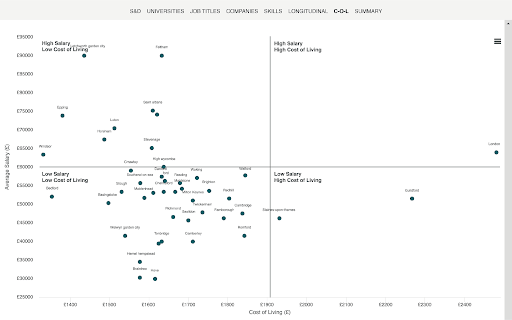
Image: Cost of living data from the Horsefly Analytics platform.
Better Leadership and Succession Planning
Identify high-potential talent before they're poached by competitors. Spot skill gaps in your leadership pipeline. Build succession plans based on data, not politics. And ensure you've got the right people in the right roles to drive your business forward.
Increased Operational Efficiency
Automate the grunt work with RPA (Robotic Process Automation) and RDA (Robotic Desktop Automation). Let AI handle the heavy lifting on data analysis. Free up your HR teams to focus on strategy instead of spreadsheets. And eliminate the redundant processes that waste everyone's time.
Future-Proofing the Workforce
Use AI impact data to see which roles are changing and what skills you'll need tomorrow. Spot positions that need fixing now versus ones you can plan for down the line. Build training programs based on what's actually happening in the market, not guesswork. And make smart decisions on reskilling and upskilling that highlight any skills gaps and match where the skills landscape is headed.
Competitive Advantage Powered by Data
Organizations with workforce intelligence move faster, hire smarter, and adapt quicker. They're not reacting to talent shortages, they're anticipating them. They're not losing talent to competitors, they're attracting the best people with data-backed EVPs (Employee Value Propositions). They're building workforces that are ready for tomorrow, not stuck in yesterday.
According to this McKinsey research, embedding this intelligence into your core business operations will mean companies can “better anticipate workforce needs, respond to changing demands, and ensure long-term agility and resilience,” which will help set your organization apart.
Key Components of Workforce Intelligence
Let's break down what makes workforce intelligence actually work.
Data and Analytics
This is where the magic happens. Modern workforce intelligence platforms pull together data from thousands of sources - job boards, social profiles, company websites, public datasets - and update it daily. That means you're working with live numbers, not last year's guesses.
AI-powered analysis helps you spot patterns and trends across millions of data points. It can identify which industries are hiring for similar skills, where talent is moving, and what's driving market shifts.
Predictive analytics shows you what's coming. Which roles will be hardest to fill? Where will talent shortages emerge? What skills will be in demand six months from now?
Descriptive analytics gives you the full picture of what's happening right now. Talent supply and demand for any role, any location, any skill set. Gender representation for specific roles. Salary benchmarks across industries.
Prescriptive analytics is essential for understanding workforce trends and making informed decisions. It tells you what to do about it. Where to hire, what to offer, which skills to prioritize, when to reskill versus recruit.
All of this needs to be presented in ways you can actually use - visual heat maps showing where talent lives, downloadable reports you can plug into your presentations, dashboards that surface insights without requiring a PhD in data science.
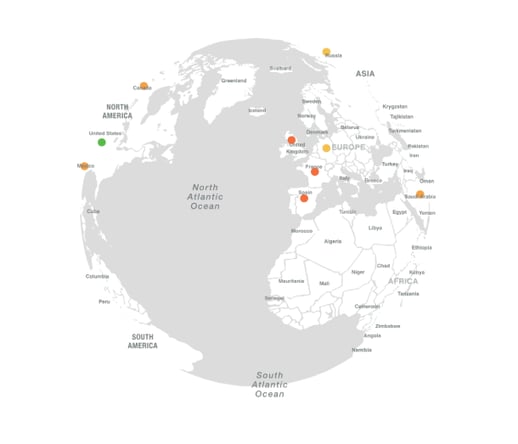
Image: Global heat map from the Horsefly Analytics platform.
Skills and Workforce Planning
Skills are the currency of the modern workforce. Not job titles, not degrees - skills.
Skills gap analysis shows you where your workforce has gaps. What skills you need for future roles. What your people have today. And the delta between the two.
Skills intelligence helps you crack open your talent pool by finding people with the right skills hiding under different job titles. Based on millions of real roles analyzed, AI can identify transferable skills and alternative pathways you'd miss with traditional keyword searches.
Talent marketplace capabilities connect employees with internal opportunities based on their skills, not just their current job title. This improves mobility, engagement, and retention.
Skills development strategies based on real market data ensure you're building skills that matter, not just checking boxes on a training plan.
Career pathing becomes clearer when you can map skills to opportunities. Show employees what they need to learn to get where they want to go.
Upskilling and reskilling programs work better when they're targeted. Use workforce intelligence to identify which roles are being impacted by AI, what skills those employees can develop, and where they can move within your organization.
Talent Management
Workforce intelligence transforms every aspect of talent management.
Talent acquisition becomes more strategic when you understand real market dynamics. See where talent lives, what they're earning, what competitors are offering, and where you have the best chance of success.
Talent retention improves when you understand what makes people stay versus leave. Use sentiment analysis and engagement data to spot risks before people hand in their notice.
Succession planning moves from guesswork to data-backed decisions. Identify high-potential employees based on skills and workforce performance, not just tenure or relationships.
Employee development gets personalized. Build learning paths based on individual skills, career goals, and market opportunities.
Talent mobility increases when you can identify internal talent with adjacent skills who could move into open roles with minimal training.
How to Implement Workforce Intelligence
Implementing workforce intelligence doesn't have to be overwhelming. Here's how to approach it.
Data Integration
Start by identifying all your data sources: your HRIS (Human Resource Information System used for data collection), ATS, LMS (Learning Management System used for training and development data), CRM (Customer Relationship Management system), performance management systems, and any other places where talent intelligence data lives. The goal is to bring it all together so you're working from one source of truth.
Look for platforms that can integrate with your existing tech stack without requiring months of IT resources. The best workforce intelligence solutions pull in external labor market data automatically, so you're benchmarking against the real world, not just your internal numbers.
Skills Ontology
A skills ontology is basically a smart map of how skills relate to each other, to job titles, and to industries. It's what lets you search for "data analyst" and also surface people with SQL, Python, statistical modeling, and data visualization skills who might have completely different job titles.
Building a skills ontology from scratch is a nightmare. Look for solutions with pre-built taxonomies covering hundreds of thousands of job titles and skills across multiple languages and countries. Platforms like Horsefly leverage a unique taxonomy of 815,000 job titles and skills in 39 languages, so the heavy lifting is already done.
Stakeholder Engagement
Workforce intelligence only works if people actually use it. That means getting buy-in from HR, talent acquisition, learning and development, finance, and business leaders.
Show them what's in it for them: faster hiring, lower costs, better retention, smarter, more strategic workforce planning. Give them access to the platform and let them explore. Nothing sells workforce intelligence better than someone running their first search and realizing they can get answers in seconds that used to take weeks.
Platform Selection
Not all workforce intelligence platforms are created equal. Look for:
-
Global coverage: Can it give you insights for all the markets where you operate? Horsefly covers 170,000 towns and cities across 65 countries.
-
Real-time data: Is it updated daily, or are you looking at stale information?
-
User-friendly interface: Can your team actually use it without a manual the size of a phone book?
-
Comprehensive functionality: The Horsefly platform includes product enhancements such as, X-Ray search, difficulty of hire scoring, DEI analytics, compensation benchmarking, skills intelligence, supply and demand analysis, heat maps, longitudinal perspectives.
-
AI capabilities: Does it use machine learning to surface actionable insights and recommendations, or just present raw data?
Step-by-Step to Implement Workforce Intelligence
Identify data sources: Map out where your talent marketplace data lives today.
Define organizational goals: What problems are you trying to solve? Faster hiring? Better retention? Smarter location decisions?
Start with a pilot: Pick one use case - maybe hard-to-fill tech roles or a critical location expansion - and prove the value before rolling it out everywhere.
Train your team: Make sure people know how to use the platform and understand what insights they should be looking for.
Integrate into workflows: Build workforce intelligence into your regular planning cycles, not as a one-off project.
Measure and iterate: Track the impact - quality of hire, cost per hire, retention rates etc. and refine your approach based on what's working.
Addressing the Challenges of Workforce Intelligence
Workforce intelligence is powerful, but it's not without challenges. Here's how to navigate them.
Data Privacy and Security
Workforce data is sensitive. Full stop. Make sure any platform you use is compliant with GDPR, CCPA, and other relevant regulations. Look for strong encryption, access controls, and clear policies on how workforce data is used and stored.
Be transparent with employees about what data you're collecting and how you're using it. When done right, workforce intelligence benefits everyone - but only if there's trust.
Data Quality and Integration
If your source data is incomplete, outdated, or inconsistent, your insights will be too.
Invest in data quality processes. Regular audits, validation checks, and governance frameworks ensure your data is accurate. And choose platforms that validate and refresh data daily, so you're always working with current information.
Integration can be tricky if you have legacy systems that don't play well with others. Look for platforms that can connect to or work with whatever tech stack you're running.
Ethical AI and Bias Mitigation
Artificial intelligence is only as good as the data it learns from. If your historical hiring data is biased, your AI will perpetuate those biases unless you actively work to prevent it.
Choose platforms with built-in bias detection and mitigation. Use diverse data sources. Regularly audit artificial intelligenceI recommendations to ensure they're fair. And remember: AI should augment human decision-making, not replace it.
Change Management and Adoption
The biggest implementation challenge is usually human, not technical. People are comfortable with the way things have always been done, even if it's inefficient.
Address this head-on with clear communication about why workforce intelligence matters, training that actually prepares people to use it, quick wins that demonstrate value, and ongoing support to answer questions and troubleshoot issues.
Over-Reliance on Automation
Workforce intelligence is a tool, not a replacement for human judgment. Workforce data can tell you where the talent marketplace is situated and what skills are emerging, but it can't tell you about company culture fit, someone's potential to grow, or whether a person will thrive in your organization.
Use the insights to inform decisions, challenge assumptions, and open up possibilities you hadn't considered. But always pair data with human expertise, context, and intuition. This is why, with use of the Horsefly platform, you will also have your own Customer Success Manager who will run through your own particular issues and concerns, tailoring training around what matters to you and your business. Contact us today for expert guidance.

Real-World Applications of Effective Workforce Intelligence
Let's look at some hypothetical examples of how organizations across different industries could use workforce intelligence to solve real problems.
Healthcare
A large healthcare system was struggling to fill nursing positions across multiple facilities. Using workforce intelligence, they identified geographic areas with higher concentrations of qualified nurses, analyzed compensation benchmarks to ensure competitive offers, and discovered adjacent healthcare roles where people had transferable skills and could be recruited with targeted messaging. Result: 30% reduction in time-to-fill for critical nursing roles.
Technology
A growing tech company needed to expand internationally but wasn't sure where to set up new offices. Workforce intelligence showed them which cities had the strongest supply of software engineers with their specific tech stack, cost of living data that impacted total compensation costs, and diversity analytics to ensure they could build inclusive teams. They made a data-backed decision that set them up for successful growth.
Finance
A financial services firm was facing high turnover in mid-level roles. Workforce intelligence revealed that competitors were offering better benefits packages and that certain skills were becoming more valuable in the market, making their employees attractive targets for poaching. Armed with this data, they revamped their EVP, adjusted compensation for at-risk roles, and created development programs that improved retention by 18%.
Cost-Benefit Analysis
The ROI of workforce intelligence is measurable. What if your organization could see:
-
Reduced time-to-fill: 20-30% faster hiring by focusing on locations and talent pools with actual availability
-
Lower cost per hire: 15-25% reduction by eliminating wasted effort on searches that won't work
-
Improved quality of hire: Better talent decisions leading to stronger workforce performance
-
Higher retention: 10-20% improvement when you can address issues before people leave
-
Increased productivity: Stronger strategic workforce planning means the right people in the right roles
This could have a significant impact on your business strategy planning going forward.
The Future of Effective Workforce Intelligence
The future is already here - it's just not evenly distributed yet. Here's what's coming next for future workforce needs.
Employee Feedback and Sentiment Analysis
Real-time sentiment analysis will help organizations understand how employees are feeling, what's driving engagement or disengagement, and where intervention is needed before small issues become big problems.
Tools that analyze communication patterns, survey responses, and feedback can surface actionable insights about culture, leadership effectiveness, and organizational health.
Advanced AI and Machine Learning
Next-generation artificial intelligence will provide even more accurate predictions, more nuanced recommendations, and more sophisticated analysis. Expect to see AI that can simulate workforce scenarios (What happens if we expand into this market versus that one?), identify optimal team compositions based on skills and working styles, and automatically flag risks and opportunities.
Integration with Other Business Systems
The future of workforce intelligence is seamless integration with your entire business ecosystem. Your effective workforce intelligence platform will talk to your financial planning tools, your CRM, your project management systems, and your business intelligence dashboards.
This means talent decisions can be made in the context of business strategy, budget constraints, and market opportunities - not in isolation.
Ready to Move from Guesswork to Intelligence?
The talent landscape is only getting more complex. Skills are evolving faster, competition for talent is fiercer, and the old ways of working simply don't cut it anymore.
Workforce intelligence gives you the edge. Real-time data, with actionable insights and strategic advantage to improve workforce productivity.
Organizations that embrace workforce intelligence are already pulling ahead - hiring faster, planning smarter, and building workforces ready for whatever comes next.
The question isn't whether you need workforce intelligence. It's whether you can afford to keep making talent decisions without it.
Want to see what workforce intelligence can do for your organization? Schedule a strategy session with Horsefly today and discover how data-driven talent decisions can transform your hiring, planning, and competitive position.
Sources: Horsefly Analytics, GDPR, CCPA, McKinsey