.png?width=2000&name=Horsefly-Logo-NewTag_White%20(3).png)
Here's the truth about workforce planning: most organizations are still doing it on gut feel and outdated spreadsheets. That's a problem when the labor market moves faster than your annual headcount review cycle.
Workforce planning software changes the equation. At its core, it's a technology platform that helps organizations analyze their current workforce, forecast future talent needs with talent management software, identify gaps, and make strategic decisions about where, when, and how to hire, develop, or restructure their people.
The difference between using dedicated software and winging it with manual methods is significant. Manual planning is slow, prone to error, disconnected from real-time market data, and almost impossible to scale. Purpose-built workforce planning software integrates supply and demand signals, skills data, compensation benchmarks, and predictive analytics into a single, actionable view.
The result is that HR leaders stop reacting and start planning and CFOs get the headcount justification they need. Business managers know exactly where talent gaps are forming before they become hiring emergencies.
In a market defined by skills shortages, AI disruption, and constant organizational change, that kind of foresight isn't a luxury. It's a competitive requirement.

Key Features and Criteria for Evaluating Workforce Planning Software
Not all strategic workforce planning tools are built in the same way or for the same needs. Before you commit to a workforce planning platform, here's what actually matters.
Core capabilities are non-negotiable. Look for robust employee forecasting software or headcount forecasting (predicting future employee numbers based on growth, attrition, and strategic initiatives), scenario planning (modeling different business futures and their workforce implications), skills gap analysis, and capacity planning. If a workforce planning tool can't do these things well, the rest doesn't matter.
Integration and scalability are where a lot of platforms fall short. Your workforce planning software needs to talk to your HRIS (Human Resources Information System), ERP, and financial systems without a team of consultants to make it happen. It should also scale with your organization, not become a bottleneck when you expand into new markets or geographies.
Data quality and coverage deserve more attention than they usually get. A platform is only as good as the data behind it. Ask how often data is refreshed, how many markets it covers, and whether it draws from diverse sources or a single data feed.
User experience and reporting matter more than buyers admit during procurement. A platform with powerful workforce analytics tools buried behind a complex interface will collect dust. Prioritize intuitive dashboards, customizable reports, and insights that non-data scientists can actually interpret and use.
Compliance and security round out the checklist. With workforce data spanning salary information, demographic data, and headcount plans, you need confidence that data privacy standards are met and access controls are properly managed.
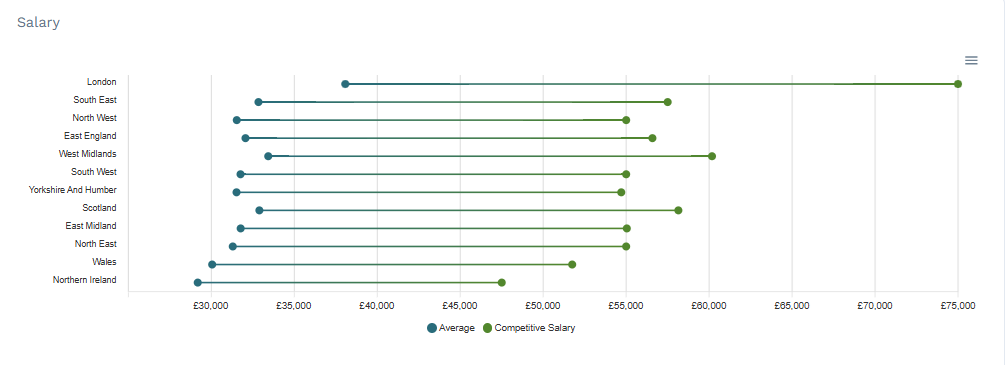
Image shows salary data from the Horsefly platform
Best Workforce Planning Software Solutions: A Detailed Comparison
Workday Adaptive Planning: Overview and Key Strengths
Workday Adaptive Planning is a well-established name in enterprise workforce planning software for financial and workforce planning. Built primarily for finance teams, it has expanded into HR planning through tight integration with the broader Workday HCM ecosystem.
Standout features: Scenario modeling is a genuine strength, allowing teams to run multiple "what if" planning models simultaneously. Collaborative planning workflows make it easier to align HR and finance. The platform handles complex organizational hierarchies well.
Pros: Deep integration with Workday HCM, strong financial modeling capabilities, widely adopted at enterprise scale.
Cons: High implementation complexity and cost. Requires significant configuration. Best results depend on already being embedded in the Workday ecosystem. Less suited to organizations that need granular external labor market data to inform their planning.
Best for: Large enterprises already invested in the Workday ecosystem that need tight HR-finance integration.
Hibob: Overview and Key Strengths
Hibob (also known as Bob) is a modern HR platform aimed at mid-market companies. It covers core HR functions with workforce planning features built in, presenting everything through a clean, consumer-grade interface.
Standout features: Strong employee engagement and retention analytics, well-designed org chart and headcount planning tools, and a user experience that employees and managers actually enjoy using.
Pros: Relatively fast to implement, intuitive UI, good coverage of the employee lifecycle from onboarding through to workforce analytics.
Cons: Workforce planning depth is more limited compared to dedicated planning platforms. Less suited to complex, multi-country scenario modeling. External labor market data integration is minimal.
Best for: Mid-market organizations that want a single people platform covering HR operations and basic workforce planning without a heavy technical lift.
UKG Pro Workforce Management: Overview and Key Strengths
UKG brings together workforce management (scheduling, time, and attendance) with broader HR and workforce planning capabilities. Its strength lies in industries with complex hourly workforce operations.
Standout features: Strong scheduling and labor optimization for shift-based workforces. Strong compliance management across multiple jurisdictions. Workforce analytics geared toward operational efficiency.
Pros: One of the best for workforce management applications and depth, strong compliance features, good for specific industries like healthcare, retail, and manufacturing.
Cons: Strategic workforce planning capabilities (scenario modeling, skills forecasting, external market analysis) are less developed compared to specialist tools. Implementation is substantial.
Best for: Organizations in operationally intensive industries that need to optimize large hourly workforces while adding strategic planning capabilities over time.
Horsefly Analytics: Overview and Key Strengths
Horsefly Analytics sits in a distinct category from the tools above. Where most workforce planning platforms focus inward (analyzing your existing workforce), Horsefly looks outward, giving organizations the external labor market intelligence needed to make strategic workforce decisions based on what's actually happening in the market.
Standout features: Horsefly's platform covers a depth of granularity across 65+ countries and 170,000 towns and cities, with over 1 trillion data points drawn from thousands of online sources. Its taxonomy spans 815,000 job titles and skills in 39 languages. Core capabilities include supply and demand analytics, skills gap identification, longitudinal intelligence (tracking how roles and skills have shifted over time), compensation benchmarking, DEI insights, difficulty of hire scoring, and AI impact analysis.
The platform's Longitudinal Intelligence module lets teams track demand and supply over time, overlay both on a single view to understand market balance, monitor geographic talent movement, and model forward scenarios using predictive analytics grounded in real historical data. That's strategic foresight built on evidence, not assumptions.
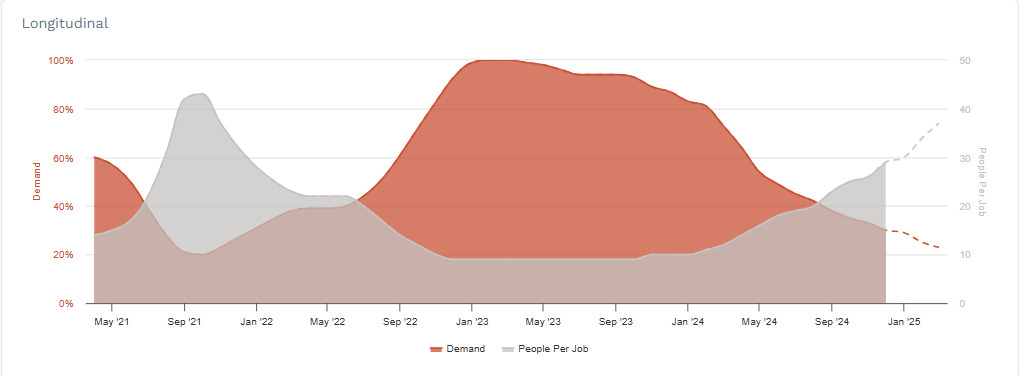
Image shows an example of the Longitudinal capability within Horsefly
Horsefly's AI Impact Analysis module directly addresses one of the most pressing planning challenges right now: instead of guessing how AI will affect your workforce, you get data-driven insights into how roles are likely to evolve, which skills your teams need to develop, and how to plan proactively rather than reactively.
The platform also features Global Heat Maps that let planners build visual representations in seconds to see where any skill lives globally, including niche skills that traditional searches would miss. Supply and Demand Insights reveal talent availability and scarcity across different regions, industries, and roles, helping organizations tailor hiring strategies to target areas with a higher concentration of qualified talent.
Signal Skills Intelligence spots skills trending upward before they become mainstream requirements, giving workforce planners the lead time to build pipelines before competitors even recognize the gap.
For organizations managing compensation, Horsefly's Compensation Insights module benchmarks packages against industry standards globally, helps identify pay disparities, and supports budget optimization by revealing the true cost of talent across markets.
The X-Ray Search Intelligence capability simplifies Boolean search string building, validates searches against real profiles, and integrates directly with Google, cutting hours of sourcing prep down to seconds. This pairs with Difficulty of Hire Insights, which tells recruiters and planners which roles will be hard to fill before they start the process.
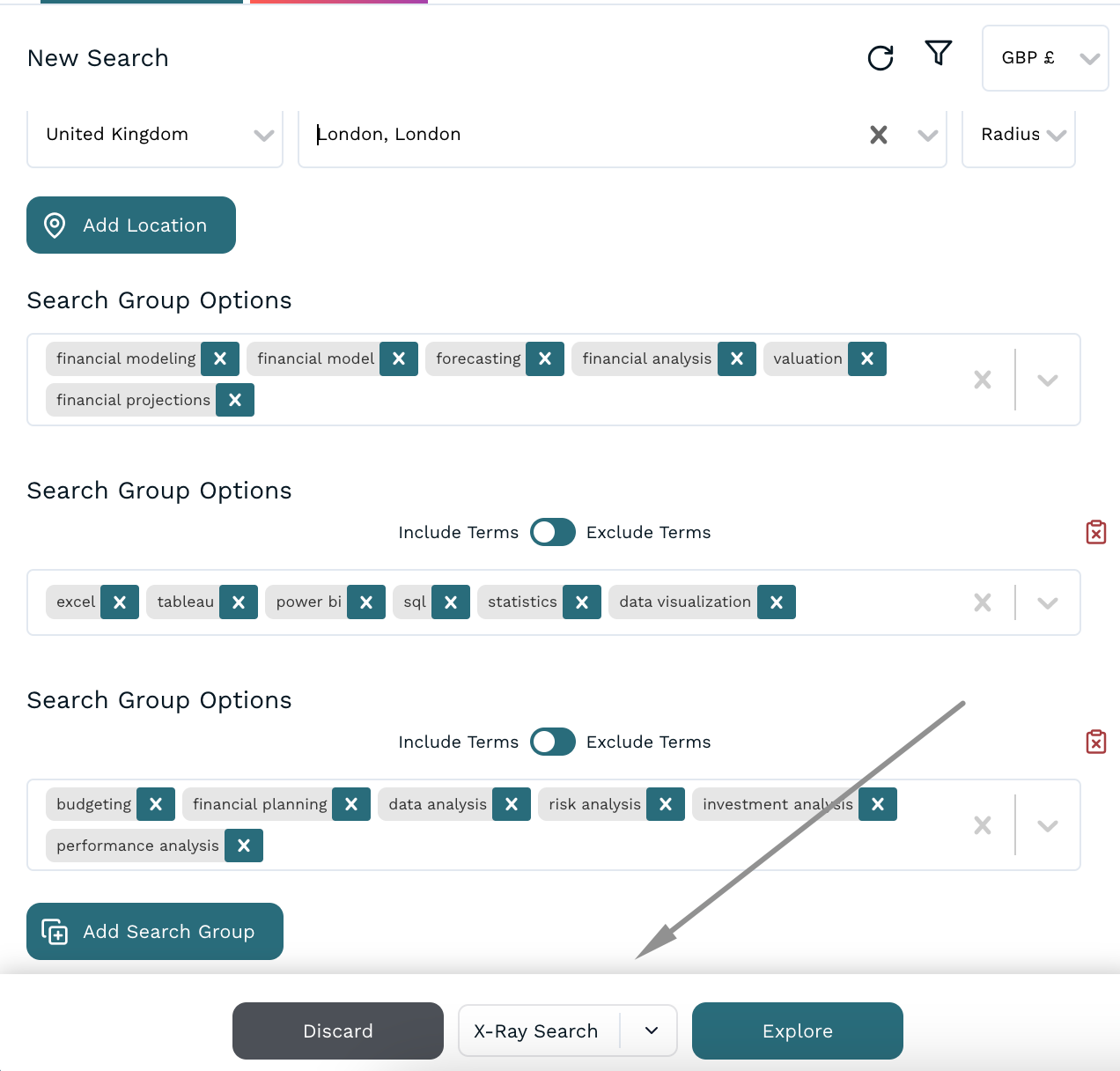
Image shows the X-Ray intelligence capability in the Horsefly platform
Pros: Unmatched breadth of external labor market data, genuine global coverage, daily data refresh, intuitive interface requiring no data science background, supports both strategic workforce planning and operational sourcing decisions.
Cons: Horsefly is designed as a market intelligence platform to support the workforce planning process rather than an all-in-one HCM system. Organizations looking for a single platform to manage payroll, scheduling, and workforce planning in one tool will need to integrate it with their core HR workforce planning system.
Best for: HR leaders, talent acquisition teams, RPOs, and business analysts at mid-to-large organizations that need accurate external labor market intelligence to drive strategic workforce decisions. Particularly strong for organizations planning global expansion, managing hard-to-fill roles, building strategies with skills-based workforce planning software, or operating in competitive talent markets where insider knowledge of supply and demand is a genuine advantage.

How to Choose the Right Workforce Planning Software for Your Business
Getting this decision right comes down to being honest about what you actually need before you fall in love with a demo.
Start by defining your specific organizational needs. Are you trying to improve headcount forecasting accuracy? Identify skills gaps before they become crises? Understand how AI is likely to reshape your workforce over the next three years? Your primary use case should drive your shortlist.
Assess your current HR planning software, resource management software, strategies in place and IT infrastructure. A platform that doesn't integrate with your existing HRIS is going to create as many problems as it solves. Map your data flows before you evaluate vendors.
Run real scenarios in demos, not the vendor's canned presentation. Bring your own data challenges. Ask how the platform would handle your specific planning problems. A tool that looks impressive on a slide deck may not hold up when you push it on the questions you actually need to answer.
Evaluate data quality as rigorously as you evaluate features. Ask how frequently data is updated, what sources it draws from, and how many markets it covers. For any organization operating internationally or planning to, global data coverage isn't optional.
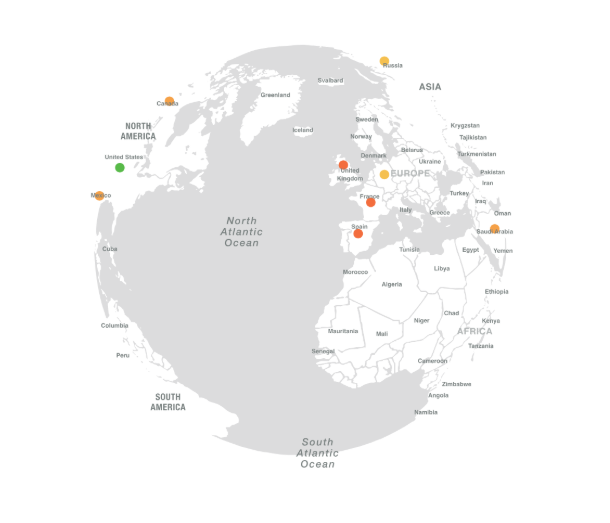
Image shows an example of the global heat map functionality in Horsefly
Consider the total cost of ownership, not just licensing fees; implementation, training, and ongoing configuration costs can dwarf the headline price. Factor in the time-to-value, too - a platform that takes 18 months to implement may cost you opportunities you can't afford to miss.
Plan for change management from day one, because the best workforce planning software in the world delivers nothing if your team doesn't use it. Build adoption into your implementation plan, not as an afterthought.
Addressing Common Challenges in Workforce Planning and Implementation
Data integration is the most common stumbling block. Prioritize platforms with pre-built connectors to your core HR and finance systems, and establish clear data governance standards before go-live.
Resistance to new technology is usually resistance to change in disguise. Involve end users early, demonstrate tangible value quickly, and tie platform adoption to outcomes people actually care about, like faster hiring decisions or better budget justification.
Forecasting with limited historical data is a real challenge, particularly for fast-growing organizations or those entering new markets. Platforms with access to rich external market data can compensate for thin internal datasets by grounding forecasts in what's actually happening in the labor market.
Maximizing user adoption depends on making insights genuinely accessible. Look for platforms designed for HR and business professionals, not just data analysts. If pulling a report requires IT involvement, adoption will suffer.

Frequently Asked Questions About Workforce Planning Tools
What is workforce planning software?
Workforce planning software is a technology platform that helps organizations analyze their current workforce, forecast future talent needs, identify skills gaps, and make data-driven decisions about hiring, development, and restructuring.
What is the best workforce management software?
The best fit depends on your specific needs. Workday Adaptive Planning and UKG suit large enterprises needing integrated HCM and planning. Hibob works well for mid-market organizations. For external labor market intelligence to power strategic workforce decisions with strategic workforce planning software, Horsefly Analytics provides unmatched global data coverage across 65 countries with over 1 trillion data points.
What are the four pillars of workforce management?
Generally recognized as: workforce planning (forecasting and strategy), talent management (acquisition, development, retention), performance management (measuring productivity and outcomes), and compliance (ensuring adherence to labor laws and regulations).
What are the 5 R's of workforce planning?
The 5 R's are: Right people, Right skills, Right place, Right time, and Right cost. These principles form the foundation of effective workforce planning, ensuring organizations align their talent strategy with business objectives.
Investing in Your Future Workforce
The organizations winning on talent aren't the ones with the biggest HR teams. They're the ones making smarter, faster decisions grounded in data. The right workforce planning software gives you that edge.
Know the market before your competitors do. Plan for the skills your business will need, not just the roles you're filling today. Turn workforce strategy from a reactive function into a genuine competitive advantage.
Ready to see what your labor market actually looks like? Schedule a strategic consultation with Horsefly Analytics and start planning with confidence.
Sources: Horsefly Analytics, Workday, Hibob, UKG Pro